'Every voter had valid photo ID': Trump recalls talk with CEC, praises India's poll system
Source Entity
TOI NEWS DESK
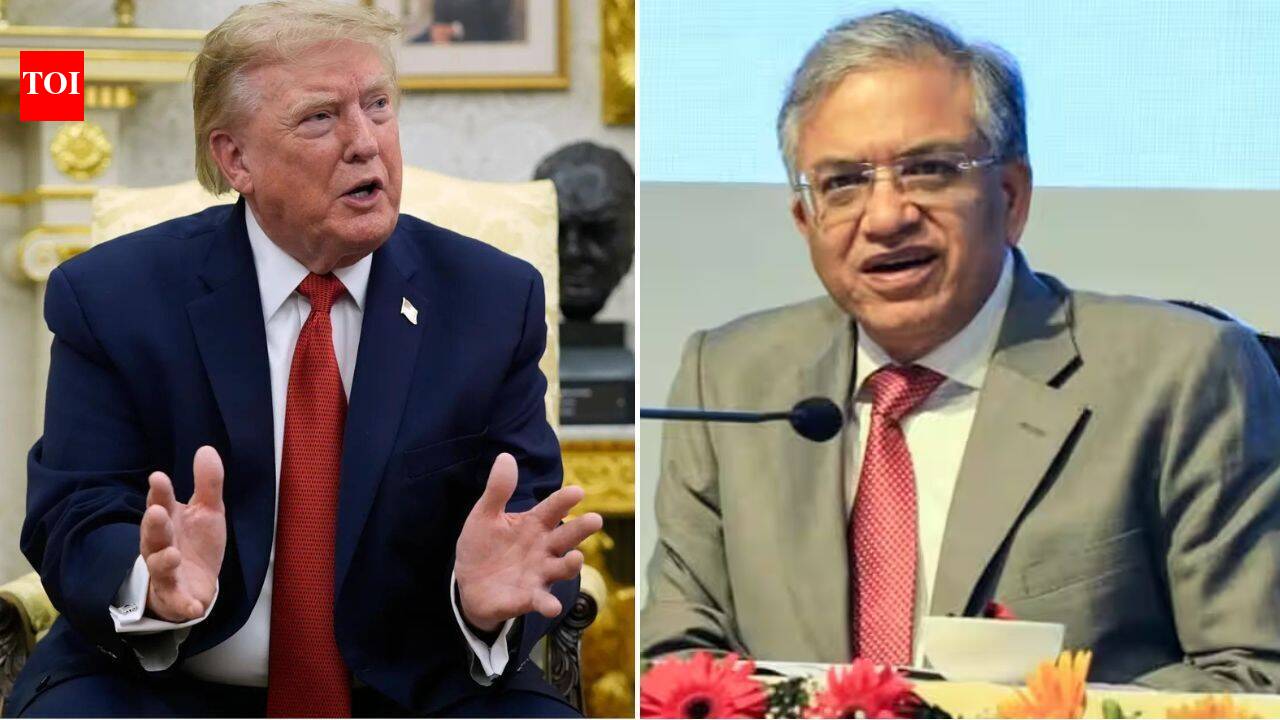
President Donald Trump has cited India's rigorous photo identification requirements for voters as a model for the U.S. to follow. He is leveraging this comparison to advocate for the passage of the SAVE America Act to tighten electoral security.
Examining the Global Influence of India's Voter ID System
United States President Donald Trump has recently turned his attention to the electoral practices of the world’s largest democracy, India, as a primary reference point for domestic election reform. By citing a conversation with India’s Chief Election Commissioner (CEC), Gyanesh Kumar, President Trump is positioning India’s robust voter identification requirements as a gold standard that the United States should emulate to bolster the integrity of its own electoral processes.
The SAVE America Act and Voter Integrity
At the heart of this discourse is the proposed SAVE America Act, a legislative effort supported by President Trump that aims to mandate stricter voter identification and citizenship verification for federal elections. The President’s argument rests on the premise that if India—a nation with a massive electorate of approximately 646 million voters—can successfully implement a mandatory photo ID system, the United States should be capable of achieving a similar standard to eliminate potential vulnerabilities in the voting process.
The Dialogue Between Global Election Officials
This initiative gained momentum following a recent meeting between CEC Gyanesh Kumar and U.S. Ambassador to India, Sergio Gor. According to President Trump, the conversation highlighted a stark contrast in electoral methodology: while India relies almost exclusively on in-person voting with mandatory valid photo identification, the U.S. system maintains a much higher reliance on mail-in ballots and varied state-level identification standards. The President’s public emphasis on this dialogue underscores a concerted effort to shift the U.S. political narrative toward more centralized and stringent verification requirements.
Comparing Electoral Scales and Systems
Comparing the two systems reveals significant differences in scale and administrative structure. India’s electoral success is largely attributed to the Election Commission of India's ability to standardize documentation across a diverse population. By noting that less than one percent of Indian voters utilize mail-in ballots, Trump is highlighting a preference for traditional, in-person, document-verified voting. This comparison serves as a strategic rhetorical tool to challenge the current U.S. reliance on decentralized and diverse methods of voter verification.
Implications for Future U.S. Election Policy
The push for the SAVE America Act represents a broader movement to harmonize election laws at the federal level. By invoking India's system, proponents of the act are seeking to normalize the idea that strict photo identification is a global best practice rather than an impediment to voter turnout. Whether this rhetoric will lead to a bipartisan consensus in Congress remains to be seen, but it is clear that international models are becoming central to the debate over U.S. electoral security.
Conclusion
President Trump’s recent remarks serve as a bridge between international administrative practices and domestic policy goals. By framing India’s electoral success as a direct indictment of current U.S. protocols, he has significantly raised the stakes for the upcoming legislative debate surrounding the SAVE America Act. As the discourse continues, the tension between accessibility and security in the U.S. voting system will likely remain a defining feature of the political landscape.