Donald Trump reminds fans how his Gianni Infantino talk led to Folarin Balogun's controversial red card reversal
Source Entity
Latest News: Today's Latest News Headlines from India & World | Hindustan Times | Hindustan Times
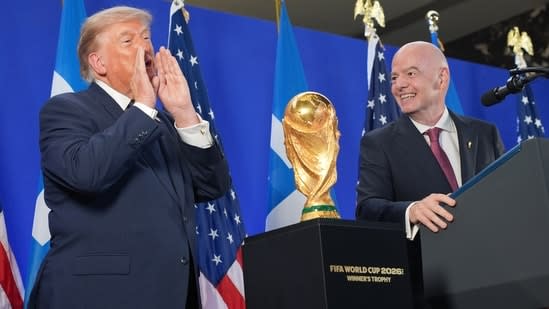
Donald Trump claimed credit for influencing FIFA President Gianni Infantino to overturn Folarin Balogun's red card suspension. Despite the controversial reversal and subsequent protests from international football bodies, the US ultimately lost their match against Belgium.
The Intersection of Political Influence and Global Football
The recent revelation regarding Donald Trump’s intervention in the suspension of Folarin Balogun highlights the rare, yet contentious, intersection of high-level political posturing and international sports governance. According to reports, Trump engaged directly with FIFA President Gianni Infantino to contest a red card issued to Balogun during a match against Bosnia and Herzegovina. This intervention effectively bypassed standard disciplinary protocols, leading to an overturned suspension that allowed the player to participate in the subsequent Round of 16 match against Belgium.
The Mechanics of the Intervention
At the heart of this controversy is the question of institutional autonomy within FIFA. By reaching out to Infantino, Trump sought to protect the competitive integrity of the US team, arguing that the absence of a key player would have unfairly impacted the outcome of the tournament. While the US President’s move was framed as a defense of the squad, it raised significant eyebrows among football traditionalists who prioritize the independence of officiating bodies from political interference.
Institutional Backlash and International Relations
The decision to overturn the card did not go unnoticed by the international community. Both the Belgian Football Association and UEFA lodged formal protests, signaling a broader concern regarding the influence of political figures on FIFA’s disciplinary committees. This friction underscores the delicate power balance between national political leaders and the transnational governing bodies that oversee the sport, suggesting that the precedent set here could complicate future disciplinary processes.
The Sporting Outcome vs. The Political Narrative
Despite the successful lobbying effort to get Balogun back onto the pitch, the outcome of the match against Belgium served as a humbling reminder of the limitations of political influence. The US team, even with their reinstated star, failed to secure a victory. This creates a fascinating narrative arc where the political capital expended to ensure the player's presence ultimately yielded no competitive advantage, leaving the decision to overturn the card as a purely symbolic—and highly controversial—gesture.
Broader Implications for FIFA Governance
Moving forward, this event serves as a case study for the risks associated with direct communication between heads of state and sports administrators. If FIFA is seen as susceptible to external pressure, it risks undermining the perceived impartiality of the game. For the future of the sport, this incident likely signals a need for more robust, transparent, and insulated disciplinary channels that can withstand even the highest levels of political scrutiny.
Conclusion
In summary, the episode involving Donald Trump and Gianni Infantino reflects the volatile mix of sports and politics. While the suspension was overturned, the resulting protests and the team's eventual defeat highlight the complexities inherent in challenging established sporting protocols. Whether this incident leads to stricter governance or remains an outlier in sports history remains to be seen, but it serves as a stark reminder of the global visibility and sensitivity of major football tournaments.
Verification Required?