Trump threatens Iran with '1000 missiles' as both sides shoot their mouth in Gulf spat
Source Entity
CHIDANAND RAJGHATTA
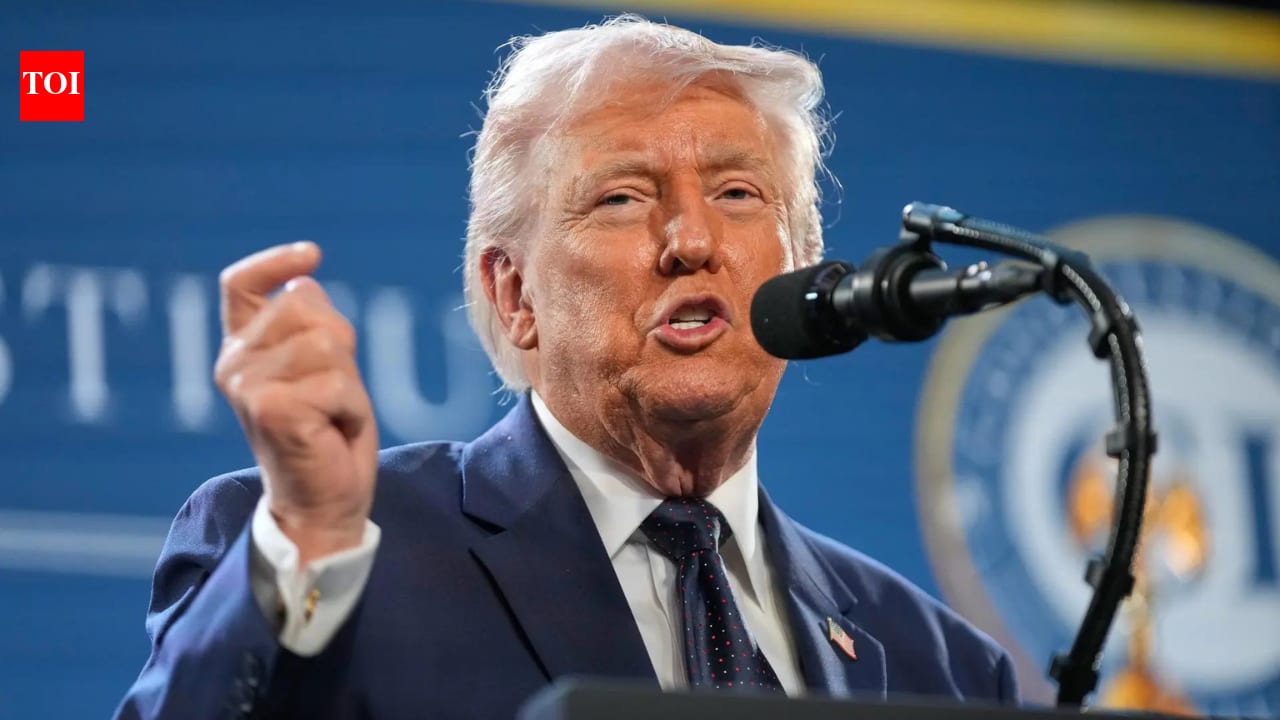
President Trump threatened Iran with massive missile strikes if assassination plots are pursued. This warning dramatically escalated tensions between the two nations. Disagreements over a maritime deal's interpretation fueled renewed military exchanges. Iran vowed revenge for past actions and perceived US treaty violations. Ambiguity and mistrust now threaten another fragile understanding between them.
Escalation in the Gulf: Analyzing the Trump-Iran Missile Standoff
The geopolitical landscape of the Persian Gulf has entered a period of acute volatility following President Trump's explicit threat to deploy '1,000 missiles' against Iranian targets. This escalation marks a dangerous pivot in the ongoing confrontation between Washington and Tehran, transforming a diplomatic stalemate into a high-stakes military standoff. The trigger for this rhetoric appears to be a combination of intelligence reports regarding assassination plots and a breakdown in the interpretation of maritime agreements, creating a volatile environment where a single miscalculation could spark a regional conflict.
The Rhetoric of Deterrence and Assassination Plots
Trump's specific mention of a massive missile strike serves as a blunt instrument of deterrence. By quantifying the threat, the administration is attempting to signal an overwhelming capacity for force to discourage Iran from pursuing clandestine operations, specifically assassination plots. This dynamic suggests that the conflict has moved beyond traditional statecraft and into the realm of asymmetric warfare. When a superpower threatens large-scale kinetic action in response to intelligence-driven fears of targeted killings, it indicates a profound lack of trust and a reliance on 'maximum pressure' to ensure security.
Maritime Disputes and Strategic Chokepoints
The core of the current 'spat' lies in the ambiguous interpretation of a maritime deal. The Persian Gulf and the Strait of Hormuz are among the most critical maritime chokepoints in the world, facilitating the transit of a significant portion of the global oil supply. Disagreements over territorial waters, shipping lanes, and the adherence to maritime treaties often serve as proxies for broader political grievances. In this instance, the dispute over the deal's interpretation provides a legalistic veneer for military posturing, allowing both sides to justify the deployment of naval assets under the guise of protecting sovereign rights.
Iran's Cycle of Revenge and Perceived Violations
Iran's response—vowing revenge for past actions and citing US treaty violations—reflects a long-standing narrative of victimization and resistance. From Tehran's perspective, US actions are viewed as illegal interventions and breaches of international law. This 'revenge' cycle is a critical component of Iran's regional strategy, where perceived slights are answered with proportional or asymmetric responses to maintain domestic credibility and regional influence. The insistence that the US has violated treaties further complicates any potential diplomatic off-ramp, as Iran now frames its aggression as a legitimate defense of its sovereignty.
Historical Context of the 'Maximum Pressure' Campaign
To understand this event, one must look at the broader history of the Trump administration's approach to Iran. The withdrawal from the Joint Comprehensive Plan of Action (JCPOA) and the reimposition of heavy sanctions set the stage for this confrontation. The current threats are not isolated incidents but are extensions of a policy designed to force Iran back to the negotiating table on US terms. However, the shift from economic sanctions to threats of '1,000 missiles' suggests that economic pressure alone may not have achieved the administration's goals, leading to a more aggressive military posture.
Global Economic and Security Implications
A conflict of this magnitude would have immediate and devastating effects on global energy markets. Any kinetic action in the Gulf would likely lead to a spike in oil prices, destabilizing global economies and triggering inflation. Beyond economics, the risk of a wider regional war involving allied nations increases exponentially. The ambiguity mentioned in the reports is particularly dangerous; when communication channels are closed and mistrust is high, 'accidental' escalations—such as a misinterpreted naval maneuver—can rapidly spiral into full-scale war.
Conclusion: The Fragility of Peace
In summary, the current standoff is a culmination of intelligence failures, diplomatic breakdowns, and a clash of ideological wills. The move from maritime disputes to threats of massive missile strikes underscores the fragility of the current understanding between the US and Iran. While the rhetoric may be intended as a deterrent, it simultaneously increases the incentive for Iran to harden its defenses and seek further asymmetric advantages. Without a return to structured diplomatic dialogue, the Gulf remains a powder keg where the line between a 'spat' and a war is perilously thin.