‘We’ll just finish it off...’: Trump hints at final Iran showdown as missiles keep flying over Gulf
Source Entity
Latest News: Today's Latest News Headlines from India & World | Hindustan Times | Hindustan Times
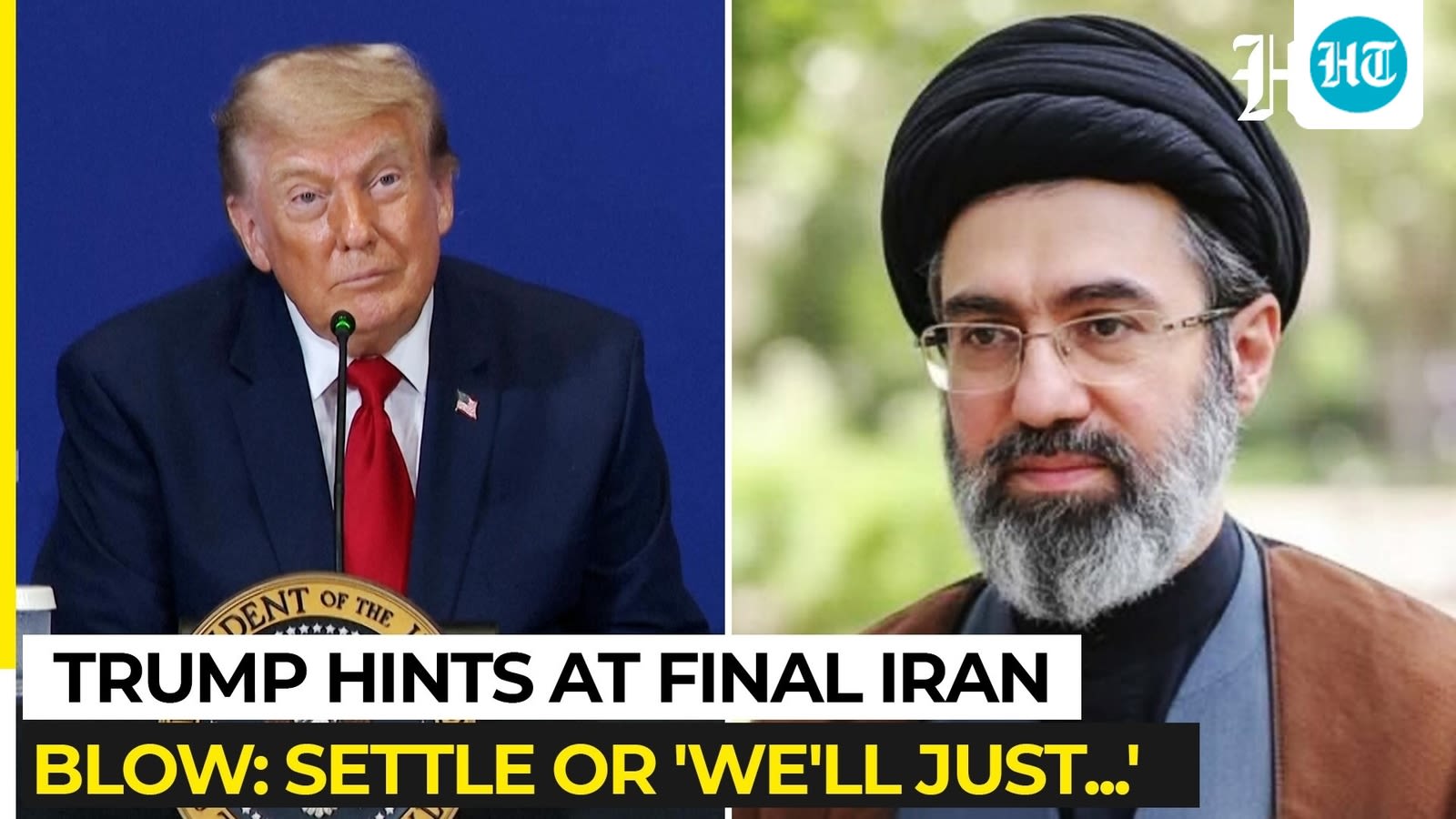
President Trump has signaled a potential final confrontation with Iran during a speech at the U.S. Army War College, asserting that Iran will be 'defeated soon' while discussing the intersection of defense technology, economic stability, and military strategy in the Gulf region.
Escalation and Rhetoric: Analyzing Trump's Stance on Iran
In a recent address at the U.S. Army War College in Pennsylvania, President Donald Trump delivered a series of pointed remarks regarding the ongoing conflict with Iran, suggesting that a definitive resolution—characterized as "finishing it off"—is imminent. By stating that Iran will be "defeated soon," Trump has shifted the rhetorical landscape from one of containment or strategic competition to one of total victory. This shift occurs against a volatile backdrop of continued missile activity over the Gulf, indicating that the U.S. administration views the current state of instability as a precursor to a final strategic showdown.
The Strategic Significance of the Venue
Speaking at a defense technology gathering at the U.S. Army War College is a calculated choice of venue. The War College is a hub for high-level military strategy and leadership training; by addressing this specific audience, Trump is signaling that his rhetoric is backed by the institutional machinery of the U.S. military. The focus on "defense investments from technology companies" suggests that the administration is looking toward a technologically superior approach to warfare—likely incorporating AI, drone capabilities, and advanced missile defense systems—to ensure that any final confrontation with Iran is decisive and minimizes U.S. casualties.
The Interplay of Energy, Economy, and Geopolitics
Crucially, Trump linked the military situation in the Gulf to the broader strength of the U.S. economy and future energy prices. This highlights the intrinsic link between Middle Eastern stability and global oil markets. By asserting that the U.S. economy remains strong despite global uncertainty, Trump is attempting to project an image of domestic resilience that allows the U.S. to take aggressive external risks. The mention of energy prices implies a strategic confidence that the U.S. can withstand or even manipulate energy market fluctuations that typically accompany conflicts in the Gulf, thereby neutralizing Iran's primary lever of global influence: the disruption of oil supplies.
The Paradox of Diplomacy and Force
Despite the aggressive language of "defeat," the President's mention of "possible negotiations" reveals a continuing adherence to the "maximum pressure" campaign. This strategy utilizes the threat of overwhelming military force to coerce an opponent into favorable diplomatic terms. By simultaneously discussing military actions and negotiations, Trump is employing a classic "carrot and stick" approach. The goal is to convince Tehran that the alternative to a negotiated settlement is a total military collapse, thereby forcing Iran to accept terms that would fundamentally alter its regional posture and nuclear ambitions.
Regional Implications and Future Trends
These statements are likely to send shockwaves through the Gulf region, where allies and adversaries alike must now recalibrate their expectations. For Gulf allies, Trump's rhetoric provides a sense of security but also increases the risk of being drawn into a wider regional war. For Iran, the explicit mention of a "final showdown" may lead to two divergent paths: a desperate escalation to deter U.S. action or a sudden pivot toward diplomacy to avoid the predicted defeat. Historically, such high-stakes rhetoric has often served as a prelude to either a significant military operation or a breakthrough diplomatic agreement.
Conclusion: A High-Stakes Gamble
Ultimately, President Trump's remarks at the Army War College represent a high-stakes gamble on the projection of power. By blending military threats with economic confidence and technological optimism, the administration is attempting to dictate the terms of the end-game with Iran. Whether this leads to a diplomatic resolution or a kinetic conflict will depend on Iran's perception of U.S. resolve and the actual readiness of the defense technologies Trump highlighted during his address.
Verification Required?