'I'd like to have him': Trump on Putin's possible G20 visit amid Ukraine war
Source Entity
KANCHAN YADAV
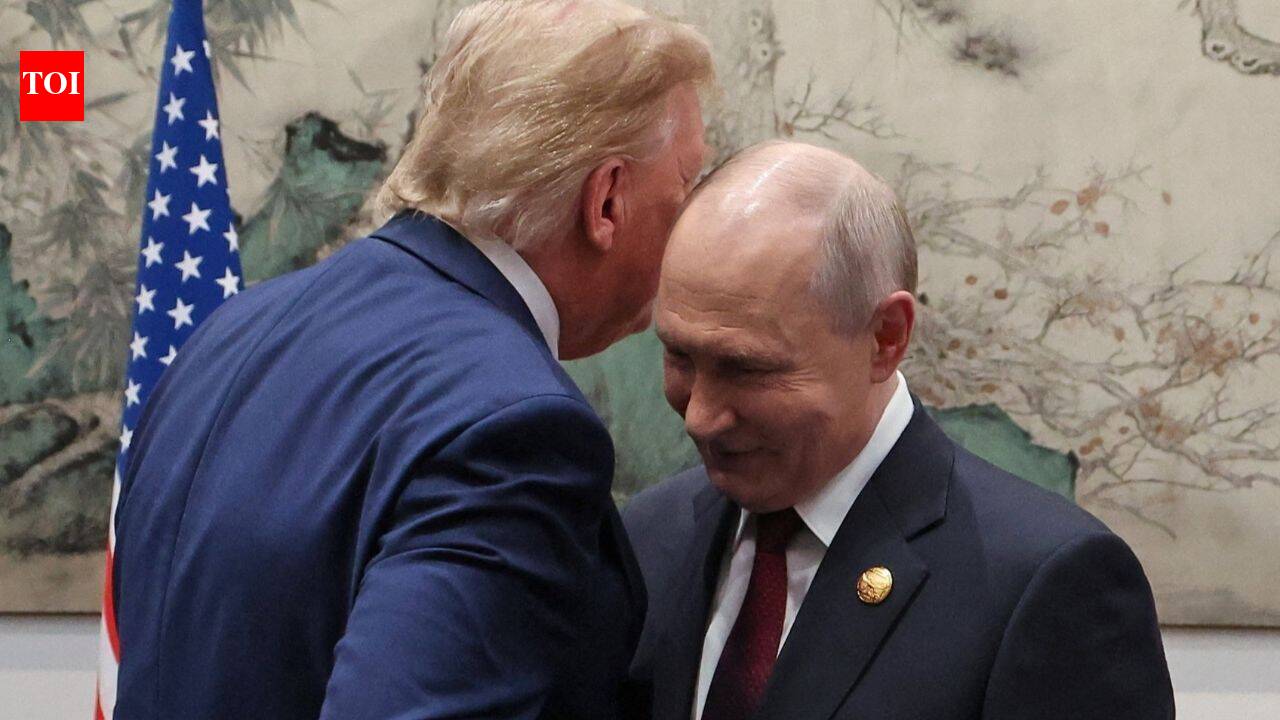
US President Donald Trump has signaled openness to Vladimir Putin's participation in the G20 summit, citing the necessity of diplomacy. Conversely, Ukrainian President Volodymyr Zelenskyy has strongly condemned this approach, labeling the rhetoric as 'strange' and characterizing Putin as an aggressor.
The Diplomatic Divide: Trump, Putin, and the G20
Recent statements from U.S. President Donald Trump regarding the potential attendance of Russian President Vladimir Putin at the G20 summit have sparked a significant diplomatic firestorm. Trump has signaled that Putin would be welcome at the summit, framing the invitation through the lens of necessary diplomacy to address the Russia-Ukraine war. By suggesting that maintaining a cordial relationship is a prerequisite for successful negotiations, Trump is positioning his administration toward a strategy of direct engagement with the Kremlin.
Zelenskyy’s Sharp Rebuttal
Ukrainian President Volodymyr Zelenskyy has responded to these overtures with deep skepticism and public condemnation. In a recent interview with the BBC, Zelenskyy characterized the perceived 'bonhomie' between Trump and Putin as 'strange,' explicitly rejecting the notion that an aggressor responsible for the ongoing violence in Ukraine could be considered a friend. Zelenskyy’s rhetoric highlights the profound moral and political chasm between the two leaders, with the Ukrainian president emphasizing that the atrocities committed during the conflict preclude any form of personal friendship or diplomatic normalization.
The 'Friendship' Narrative and Its Implications
Central to this tension is a widely circulated image on Truth Social showing Trump and Putin embracing, with the accompanying caption labeling the Russian leader as a friend. This public display has intensified the concerns of the Ukrainian government, which views such messaging as a direct threat to the legitimacy of their defensive war. Zelenskyy’s comparison of Putin to historical aggressors underscores the existential nature of the conflict from Kyiv’s perspective, making Trump’s friendly overtures a source of significant political friction between the U.S. and its ally.
Strategic Divergence in Conflict Resolution
Trump’s stated belief that Putin genuinely seeks to end the war serves as the foundation for his diplomatic approach. By advocating for face-to-face dialogue at the G20, Trump suggests that the current impasse can only be broken through high-level personal rapport. However, this strategy stands in direct opposition to the Ukrainian position, which maintains that Russia’s actions are inherently predatory and that diplomatic concessions are not a viable pathway to lasting peace.
Future Trends in Transatlantic Relations
Looking forward, this divergence suggests a volatile period for U.S.-Ukraine relations. As Trump continues to prioritize direct negotiation with Moscow, the pressure on Kyiv to accept terms that it deems unfavorable will likely increase. The G20 summit may become a focal point for this tension, serving as either a stage for a breakthrough in negotiations or a catalyst for further estrangement between Washington and its European allies who remain staunchly committed to isolating the Russian leadership.
Conclusion
The interplay between Trump’s diplomatic outreach and Zelenskyy’s moral condemnation represents a fundamental disagreement on the nature of modern statecraft. While Trump views personal diplomacy as the primary lever for ending global conflict, the Ukrainian government warns that such an approach ignores the reality of aggression. As the international community watches these developments, the future of the Russia-Ukraine conflict remains tied to whether these clashing philosophies can reach a synthesis or if they will continue to drive the involved parties further apart.