Trump-backed Russia sanctions bill, championed by Lindsey Graham, eases tariff threat on China, India – what to know
Source Entity
Latest News: Today's Latest News Headlines from India & World | Hindustan Times | Hindustan Times
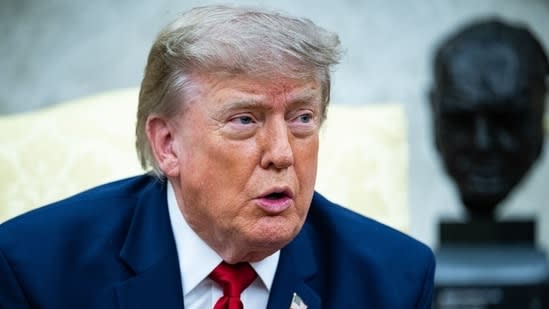
A Trump-backed Russia sanctions bill, championed by Senator Lindsey Graham, has been updated to ease proposed tariff threats on nations that import Russian oil and gas, specifically benefiting China and India.
Strategic Recalibration: Analyzing the Updated Russia Sanctions Bill
The geopolitical landscape surrounding the containment of Russia has entered a phase of complex recalibration. The latest update to the Trump-backed Russia sanctions bill, championed by Senator Lindsey Graham, represents a significant shift in the United States' approach to economic warfare. By easing the original proposal's tariff threats on importers of Russian oil and gas—most notably China and India—the U.S. is moving away from a 'maximum pressure' blanket strategy toward a more nuanced, pragmatic framework of selective sanctions.
Balancing Energy Security and Geopolitical Leverage
The original iteration of the bill likely sought to create a rigid barrier around Russian energy exports, utilizing tariffs to coerce third-party nations into abandoning Russian hydrocarbons. However, the revised version acknowledges a harsh reality: the global energy market is too interconnected for such a blunt instrument to work without causing severe collateral damage. If the U.S. were to impose tariffs on any nation purchasing Russian energy, it would risk triggering a global energy price spike and alienating critical strategic partners. This adjustment suggests a tactical pivot to avoid destabilizing global markets while still maintaining a legislative mechanism to penalize Moscow.
The Strategic Importance of India
For India, the easing of these tariff threats is a vital diplomatic reprieve. New Delhi has consistently pursued a policy of 'strategic autonomy,' balancing its partnership with the U.S. against its historical and energy-based ties with Russia. India's continued purchase of discounted Russian crude is driven by the necessity of ensuring energy security for its massive and growing population. By removing the threat of tariffs, the U.S. avoids penalizing a key pillar of the Indo-Pacific strategy. Maintaining a strong relationship with India is paramount for the U.S. to counter Chinese hegemony in Asia, and this legislative flexibility ensures that energy disputes do not derail broader security cooperation.
Navigating the U.S.-China Energy Paradox
The decision to ease tariff threats for China is perhaps the most complex aspect of this bill. While the U.S. and China remain locked in a systemic rivalry, the energy sector operates on a different set of incentives. Forcing China to completely decouple from Russian energy could inadvertently push Beijing and Moscow into an even tighter, more integrated Eurasian energy bloc that is entirely immune to Western financial systems. By moderating the tariff approach, the U.S. avoids providing China with a catalyst to accelerate the creation of an alternative global financial architecture, thereby preserving some level of U.S. leverage over the global economy.
The Influence of Trump and Graham
The collaboration between Donald Trump and Senator Lindsey Graham on this bill reflects a blending of 'America First' transactionalism and traditional security hawkishness. Senator Graham's role as a champion of the bill ensures that the core objective—punishing Russian aggression—remains intact. Simultaneously, the Trump-backed influence introduces a pragmatic trade-off: the understanding that tariffs should be used as leverage rather than as a permanent wall that harms U.S. trade interests or allies. This synthesis results in a policy that is aggressive toward the target (Russia) but flexible toward the intermediaries.
Future Trends in Global Sanctions
Looking ahead, this event signals a broader trend in international relations where sanctions are becoming more 'surgical' and less 'blunt.' We are likely to see an increase in 'carve-outs' and exemptions based on national security necessities. The future of economic statecraft will likely involve a tiered system of penalties, where the severity of the sanction is calibrated against the strategic value of the partner country. This approach prevents the formation of a 'sanctions-resistant' bloc of nations and ensures that the U.S. can maintain a coalition of the willing without imposing unsustainable economic costs on its partners.
Conclusion
In summary, the updated Russia sanctions bill is a calculated move to maintain pressure on the Kremlin without triggering a wider trade war or alienating essential global powers. By easing the tariff threats on India and China, the U.S. acknowledges the primacy of energy security and the necessity of strategic flexibility. This legislative shift ensures that the fight against Russian influence does not come at the expense of U.S. diplomatic stability or global economic health.
Verification Required?