US-Iran talks: What was discussed in Trump's 'good meeting' on the sidelines of UNGA
Source Entity
AADRITA HALDER
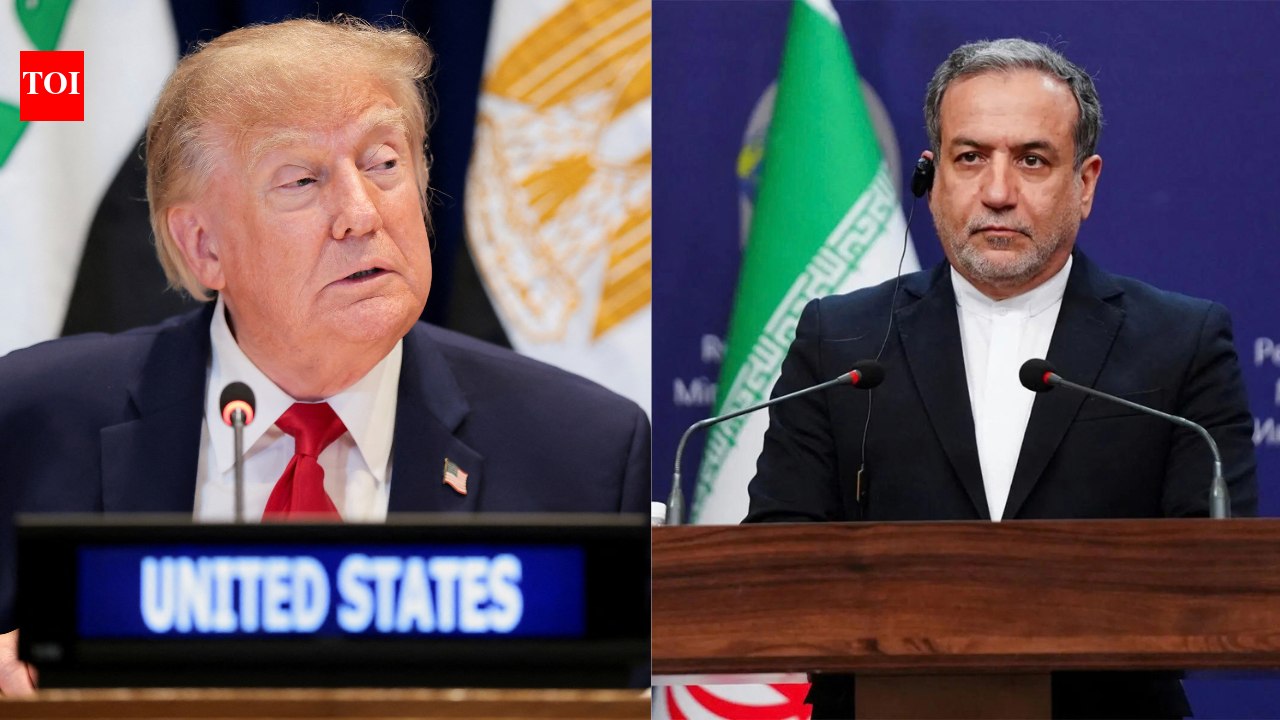
At the UNGA, Donald Trump framed his Iran policy as a binary choice between a diplomatic deal and total annihilation. He simultaneously addressed the Russia-Ukraine conflict, expressing confidence in a swift resolution while framing himself as a central mediator in global crises.
The Binary of Diplomacy and Destruction: Trump’s UNGA Stance
During his address at the United Nations General Assembly (UNGA), former President Donald Trump presented a stark and highly polarized vision of his administration's foreign policy approach toward the Islamic Republic of Iran. By framing his strategic options as either reaching a transformative economic deal or resorting to the 'annihilation' of the nation, Trump utilized the global stage to amplify his 'maximum pressure' doctrine. This rhetoric highlights a dual-track strategy that oscillates between the threat of total military devastation and the promise of economic prosperity for Tehran, provided they meet his specific conditions regarding nuclear proliferation.
The Strategic Gamble of 'Maximum Pressure'
Trump’s explicit mention of 'annihilation' serves as a calculated rhetorical device intended to signal resolve to both domestic and international audiences. By positioning himself as a leader willing to pursue both extreme military action and high-stakes diplomacy, he attempts to leverage the fear of conflict to force Iran to the negotiating table. This approach is rooted in the belief that the Iranian regime, under the weight of severe economic sanctions and the credible threat of total war, would eventually find a negotiated agreement more palatable than the existential risk of conflict.
Iran’s Diplomatic Retaliation
The immediate reaction from the Iranian delegation—walking out during the President’s address—underscores the profound diplomatic chasm between Washington and Tehran. This protest signifies a rejection of the legitimacy of Trump’s ultimatum, reflecting the deep-seated mistrust that characterizes the bilateral relationship. For the Iranian leadership, being presented with a choice between 'annihilation' or a deal is viewed not as a genuine diplomatic opening, but as an affront to national sovereignty, further complicating any potential for back-channel negotiations.
Bridging Conflicts: Iran and Ukraine
Beyond the Iranian theater, Trump utilized his UNGA appearance to tie his foreign policy successes to the broader global stage, specifically referencing the ongoing Russia-Ukraine conflict. By claiming that he is working closely with both parties to secure a quick peace deal, he is cultivating an image as a global deal-maker capable of resolving protracted wars. This narrative is central to his political identity, as he takes pride in his self-styled role as a mediator who can bypass traditional diplomatic channels to force resolutions to complex geopolitical disputes.
Future Implications and Global Stability
The assertion that a deal with Iran might be reached after the November midterm elections suggests that Trump views these international crises through the lens of domestic political timing and electoral cycles. This intersection of foreign policy and domestic politics creates a volatile environment where international stability is contingent upon internal American political developments. As the international community watches, the central question remains whether such aggressive brinkmanship can actually produce sustainable peace, or if it merely pushes the world closer to the brink of the very 'annihilation' the President describes.
Conclusion: The Rhetoric of Power
In summary, Trump’s UNGA address was a deliberate exercise in power projection. By openly debating the destruction of a nation against the possibility of its rebirth, he has redefined the parameters of modern statecraft. Whether this approach leads to a historic diplomatic breakthrough or an escalation into irreversible conflict remains the defining uncertainty of his current foreign policy posture. The world now awaits to see if the promised 'big decision' will manifest as a lasting peace or a shift toward military confrontation.
Multiple Citing Sources