‘Praise be to Allah’: Trump warns 1,000 missiles are locked & loaded to ‘nuke’ Iran? | USA, Mojtaba
Source Entity
Latest News: Today's Latest News Headlines from India & World | Hindustan Times | Hindustan Times
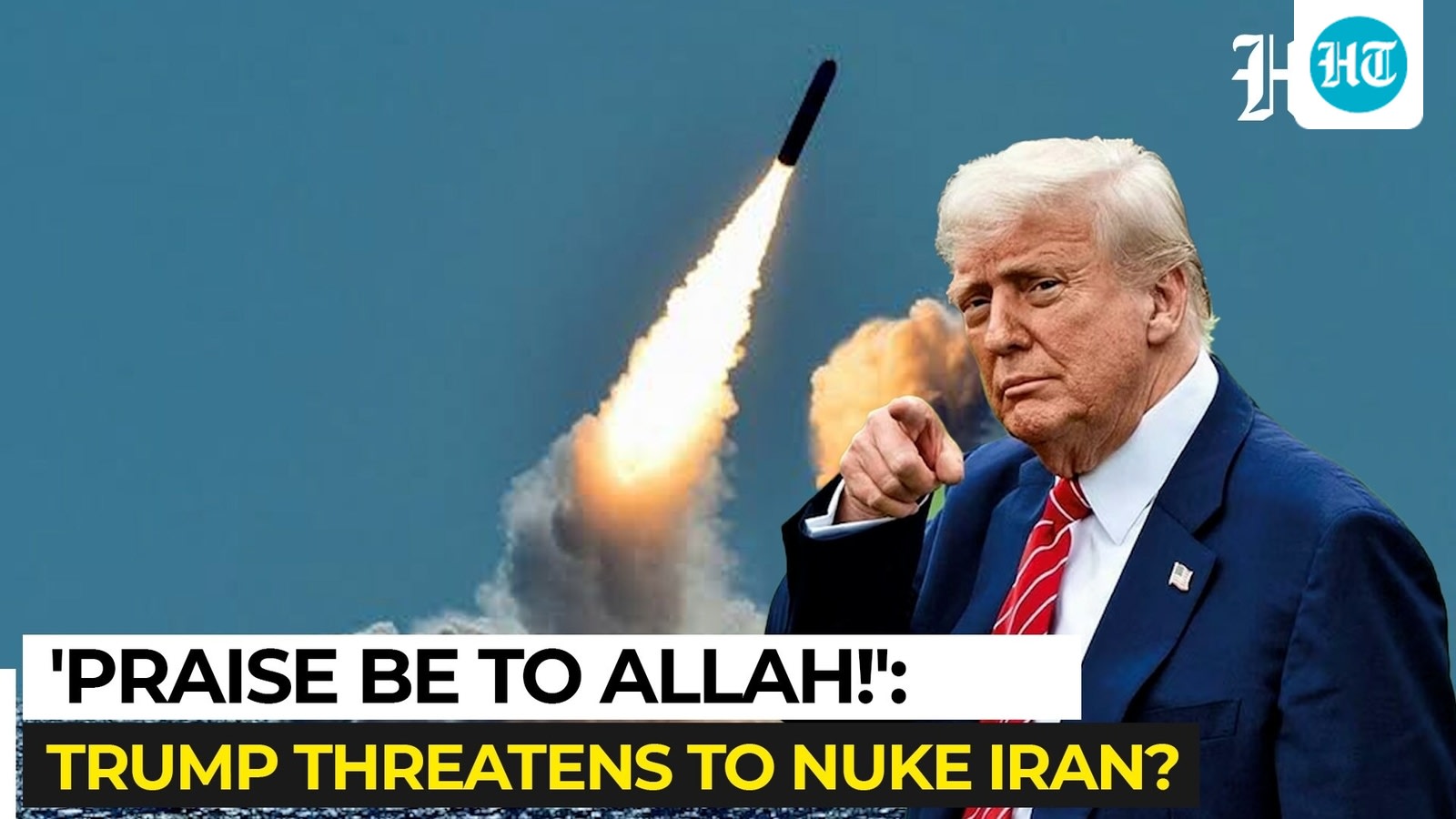
President Donald Trump has issued a new, highly incendiary warning to Iran, claiming on Truth Social that “1,000 missiles are locked and loaded” and aimed at the Islamic Republic, with thousands more ready to follow if Tehran acts on alleged threats to assassinate him, and saying U.S. forces are prepared for up to a year to “completely decimate and destroy all areas of Iran”.
Analysis of Donald Trump's Missile Warning to Iran
Escalation of Rhetoric via Digital Platforms
In a recent and highly inflammatory post on Truth Social, Donald Trump has significantly escalated his rhetorical posture toward the Islamic Republic of Iran. By claiming that "1,000 missiles are locked and loaded" and aimed directly at the nation, Trump is utilizing his preferred method of unmediated communication to signal a posture of extreme readiness. This type of discourse is characteristic of his approach to diplomacy and deterrence, where public, high-stakes threats are used to create uncertainty and project strength. The specificity of the number—1,000 missiles—serves to amplify the perceived scale of the threat, regardless of the immediate operational reality.
The Catalyst: Alleged Assassination Threats
The core justification provided for this aggressive stance is the claim that Tehran has issued threats to assassinate him. This introduces a personal dimension to the geopolitical friction between the United States and Iran. Historically, the relationship between the two nations has been defined by state-level conflict, including the 2020 assassination of General Qasem Soleimani. By framing the potential military action as a response to personal threats, Trump shifts the narrative from a purely strategic or national security concern to one of personal retaliation and survival, which further heightens the volatility of the situation.
Strategic Implications of 'Total Decimation'
Trump's assertion that U.S. forces are prepared for up to a year to "completely decimate and destroy all areas of Iran" suggests a shift from surgical strikes to a strategy of comprehensive attrition. This language mirrors the "Maximum Pressure" campaign of his previous administration, which sought to isolate Iran economically and politically. However, the threat of a year-long campaign of destruction implies a level of military commitment that would go beyond targeted operations, potentially suggesting a full-scale conflict. This rhetoric is designed to intimidate the Iranian leadership by suggesting that the U.S. is not only capable of a first strike but is prepared for a sustained war of annihilation.
Historical Context and the US-Iran Cycle
To understand this event, one must look at the cyclical nature of U.S.-Iran tensions. From the 1979 hostage crisis to the current disputes over nuclear proliferation and regional proxy wars, the two nations have existed in a state of perpetual hostility. Trump's current warnings are an extension of his long-standing skepticism of the Joint Comprehensive Plan of Action (JCPOA) and his belief that only overwhelming force or extreme economic pressure can alter Tehran's behavior. By invoking the threat of missiles, he is tapping into a historical pattern of brinkmanship that has defined the region's security architecture for decades.
Predicting Future Trends and Geopolitical Stability
Looking forward, such statements are likely to trigger a reciprocal response from Iran, potentially leading to increased activity by their regional proxies or a hardening of their nuclear posture. While these statements may be viewed by some as political posturing, the risk of miscalculation remains high in an environment of extreme tension. If this rhetoric continues, it could complicate future diplomatic efforts to stabilize the Middle East and may force regional allies to reconsider their security alignments. The primary trend to watch will be whether these social media threats translate into actual policy shifts or remain as tools of psychological warfare.
Summary of the Current Crisis
In conclusion, Donald Trump's claims regarding the deployment of 1,000 missiles against Iran represent a peak in inflammatory political communication. By tying the threat of total national decimation to alleged personal assassination plots, he has created a high-tension narrative that blends national security with personal vendetta. While the actual movement of assets remains to be verified by military intelligence, the psychological impact of such warnings contributes to a climate of instability in an already fragile geopolitical landscape.
Verification Required?