'1,000 missiles aimed at Iran': Trump warns 'orders given' if Tehran tries to assassinate him
Source Entity
TOI WORLD DESK
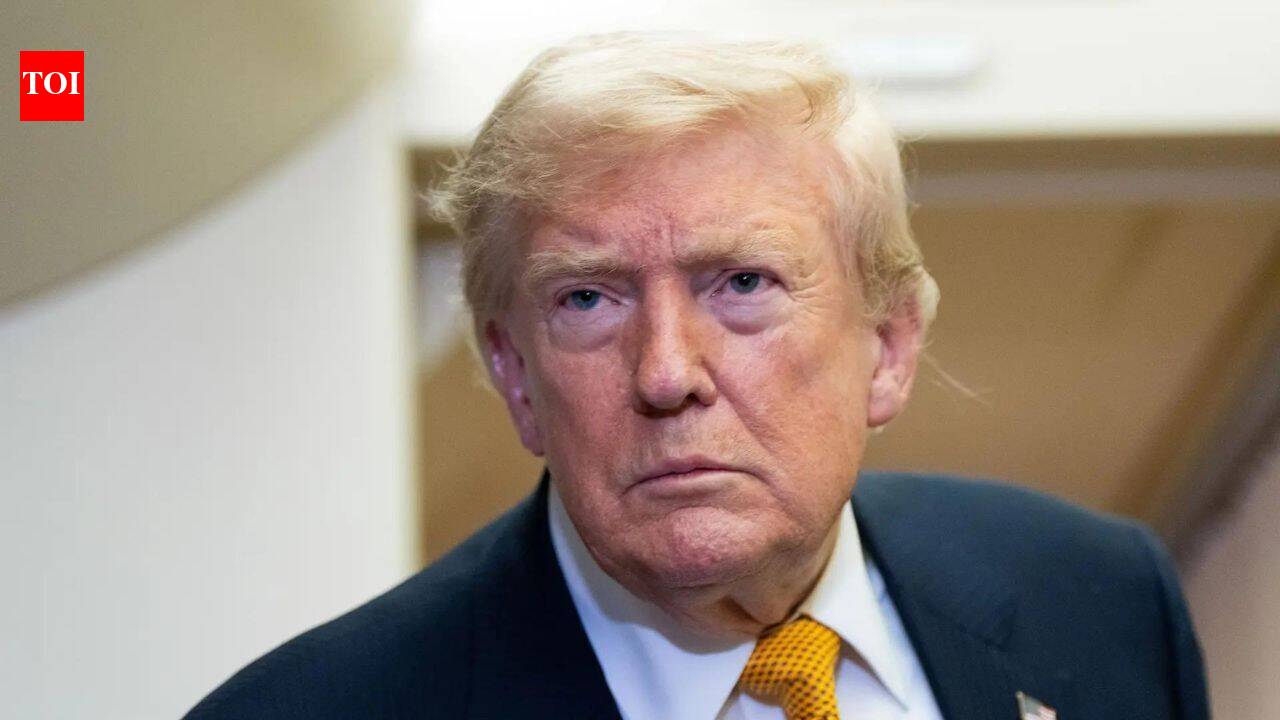
'1,000 missiles locked & loaded': Trump warns Iran, claims 'orders given' if Tehran tries to assassinate him...
Escalation of Rhetoric: Trump's Missile Warning to Tehran
In a startling escalation of geopolitical tension, Donald Trump has publicly asserted that the United States possesses "1,000 missiles locked and loaded" and ready for deployment against Iran. This warning is specifically contingent upon any attempt by the Iranian government to assassinate him, with Trump claiming that "orders have been given" to ensure a devastating response. This statement represents a significant shift back toward the "maximum pressure" rhetoric that characterized much of his previous administration's foreign policy, framing the security of his person as a direct trigger for large-scale military action.
The Strategic Use of Deterrence and Hyperbole
From an analytical perspective, the specific mention of "1,000 missiles" serves as a classic example of strategic deterrence through hyperbole. By quantifying the threat, Trump aims to create a psychological barrier for Iranian leadership, attempting to make the perceived cost of any hostile action prohibitively high. Historically, the relationship between the U.S. and Iran has been defined by such brinkmanship. This rhetoric mirrors the tension seen in early 2020 following the U.S. assassination of General Qasem Soleimani, an event that brought the two nations to the precipice of all-out war. By linking his personal safety to national military deployment, Trump is signaling that he views the conflict not just as a state-level dispute, but as a personal confrontation.
Historical Context of U.S.-Iran Hostility
To understand the gravity of this warning, one must look at the long-standing animosity between Washington and Tehran. Since the 1979 Islamic Revolution, the two nations have engaged in a cycle of sanctions, proxy wars, and clandestine operations. Trump's previous decision to withdraw from the Joint Comprehensive Plan of Action (JCPOA), or the Iran Nuclear Deal, effectively dismantled the diplomatic framework intended to curb Iran's nuclear ambitions in exchange for sanctions relief. This vacuum of diplomacy has left military threats as the primary tool of communication, making statements about "locked and loaded" missiles a recurring theme in the geopolitical landscape of the Middle East.
Regional Implications and Proxy Dynamics
Such provocative statements do not exist in a vacuum; they resonate deeply across the Middle East. Iran's network of regional proxies—including Hezbollah in Lebanon, the Houthis in Yemen, and various militias in Iraq—often react to U.S. threats with increased activity or targeted strikes on U.S. assets. A credible or perceived threat of 1,000 missiles could inadvertently trigger a preemptive escalation from these actors, who may feel the need to disrupt U.S. capabilities before such an order is executed. Furthermore, allies like Israel and Saudi Arabia, who share a mutual goal of containing Iranian influence, may find themselves caught in the volatility of this personalized deterrence strategy.
Future Trends and Political Trajectory
Looking forward, this development suggests that the trajectory of U.S.-Iran relations will remain highly volatile and susceptible to the personal whims and rhetoric of leadership. If this posture continues, the likelihood of a diplomatic breakthrough regarding nuclear proliferation decreases, replaced by a state of "permanent brinkmanship." We can expect Iran to respond with its own displays of missile capability or cyber-warfare to demonstrate that it is not intimidated by the threat of retaliation. The shift toward linking personal security to national military orders sets a precarious precedent for how future presidential candidates or leaders may handle foreign adversaries.
Conclusion
In summary, Donald Trump's warning to Iran is more than a mere comment on personal security; it is a calculated use of military threat to establish a red line. While the actual deployment of 1,000 missiles remains a theoretical extreme, the communication of such an intent ensures that the tension between the U.S. and Iran remains at a boiling point. The intersection of personal grievances and national security policy continues to define this adversarial relationship, leaving the region in a state of fragile instability.