Trump tries to rename AI 'super intelligence' as polls show him sinking on key issue
Source Entity
US Top News and Analysis
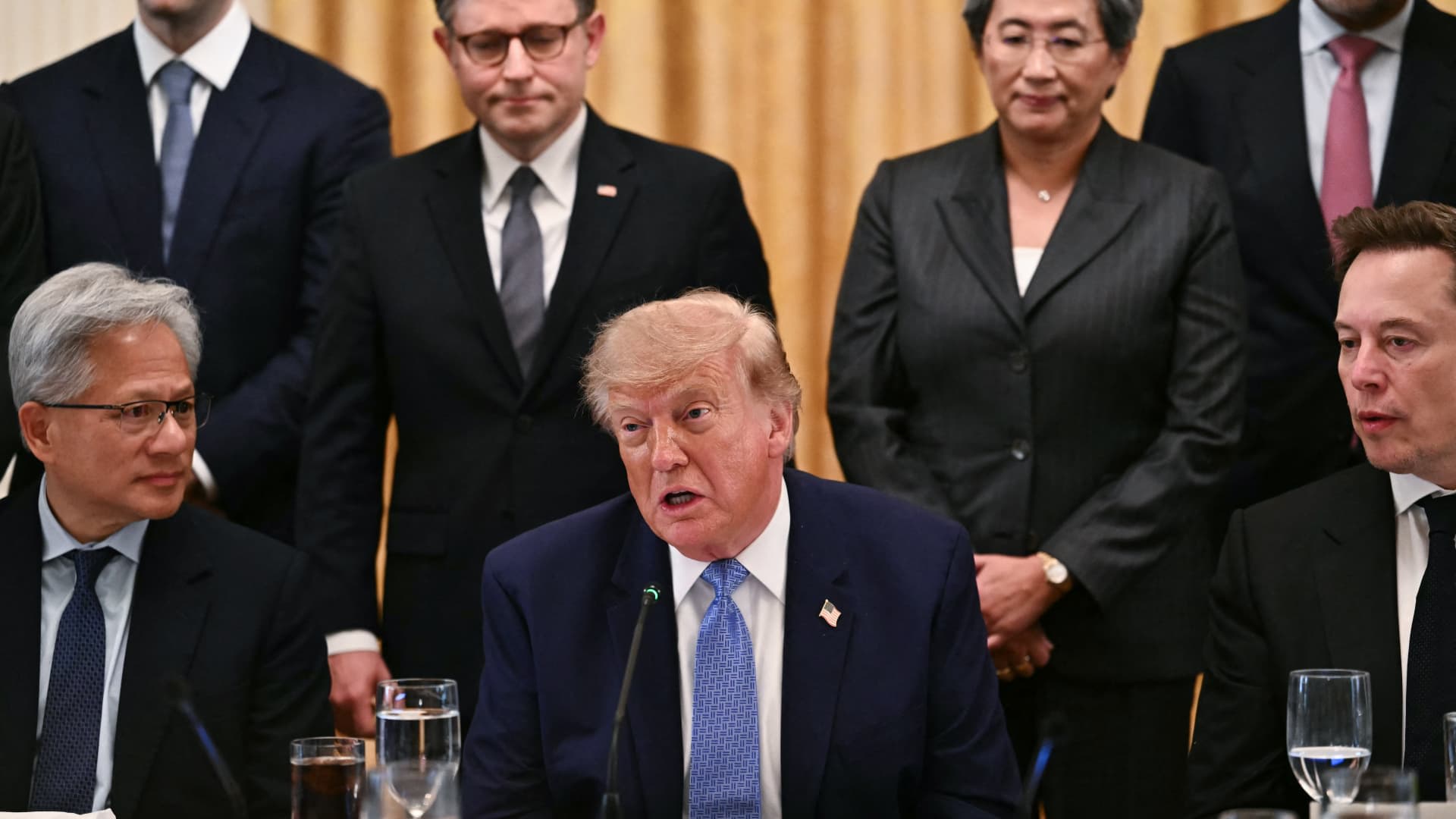
President Trump signed an accord with tech executives to promote 'super intelligence,' a rebranding of artificial intelligence. The document contained a notable typo, labeling him 'President of the Unites States.'
The White House AI Accord: A Branding Shift and a Typographical Oversight
In a significant move to reshape the narrative surrounding emerging technology, President Donald Trump recently hosted a high-profile meeting with leaders from the technology sector, including Nvidia CEO Jensen Huang and SpaceX CEO Elon Musk. The primary outcome of this gathering was the signing of an accord intended to address the rapid evolution of artificial intelligence. However, the event quickly drew attention for two distinct reasons: the President’s aggressive attempt to rebrand the entire field of AI and a glaring typographical error found within the official document itself.
The Rebranding of Artificial Intelligence
President Trump has made a concerted effort to shift public perception by referring to artificial intelligence as "super intelligence." This terminology was first introduced during a visit from Chinese President Xi Jinping and was subsequently reinforced during an address at the United Nations General Assembly. By attempting to force this nomenclature change through an "official" document signed by industry leaders, the administration is signaling a desire to frame AI as a tool of unprecedented power, potentially to distinguish his policy approach from the traditional discourse surrounding the technology.
The 'Unites States' Typographical Error
Despite the gravity of the meeting, the administration faced embarrassment when it was discovered that the document contained a spelling error under the President's signature. The text identified him as the "President of the Unites States." While the exact source of this error remains unclear, it raises questions regarding the internal vetting processes for official presidential documents. Furthermore, it remains to be seen whether this specific version of the document will be entered into the Federal Register, which serves as the official repository for government actions.
Industry Concerns and Regulatory Volatility
The accord itself represents a voluntary commitment between the White House and six major tech executives to pursue the safe development of AI. This initiative comes at a time when industry leaders have expressed profound anxiety that AI technology is evolving too rapidly for current regulatory frameworks to manage. Despite these warnings, President Trump has largely brushed aside fears regarding the potential for AI to cause harm to humans, choosing instead to focus on the economic and strategic potential of the technology.
Political Implications and Public Sentiment
This push for "super intelligence" occurs against a backdrop of declining public confidence. Reports indicate that the President’s firm stance on AI and his support for massive data center infrastructure projects may be negatively impacting his standing in polls, particularly as the midterm elections approach. By doubling down on this rebranding, the administration is making a calculated bet that the long-term benefits of AI will eventually supersede current public skepticism, even if the current messaging faces criticism or mockery.
Future Outlook on AI Governance
Looking ahead, the focus will remain on whether this voluntary accord will lead to concrete safety standards or if it will be viewed merely as a symbolic gesture. The tension between the administration’s optimistic branding and the public's growing concern over the rapid proliferation of AI suggests that future policy debates will likely be contentious. The survival of the "super intelligence" label in the national lexicon will depend on both the industry's ability to maintain safety and the President's persistence in pushing the new terminology despite political headwinds.
Multiple Citing Sources