US appeals court halts Trump ballroom project paving way for Supreme Court showdown
Source Entity
BBC News
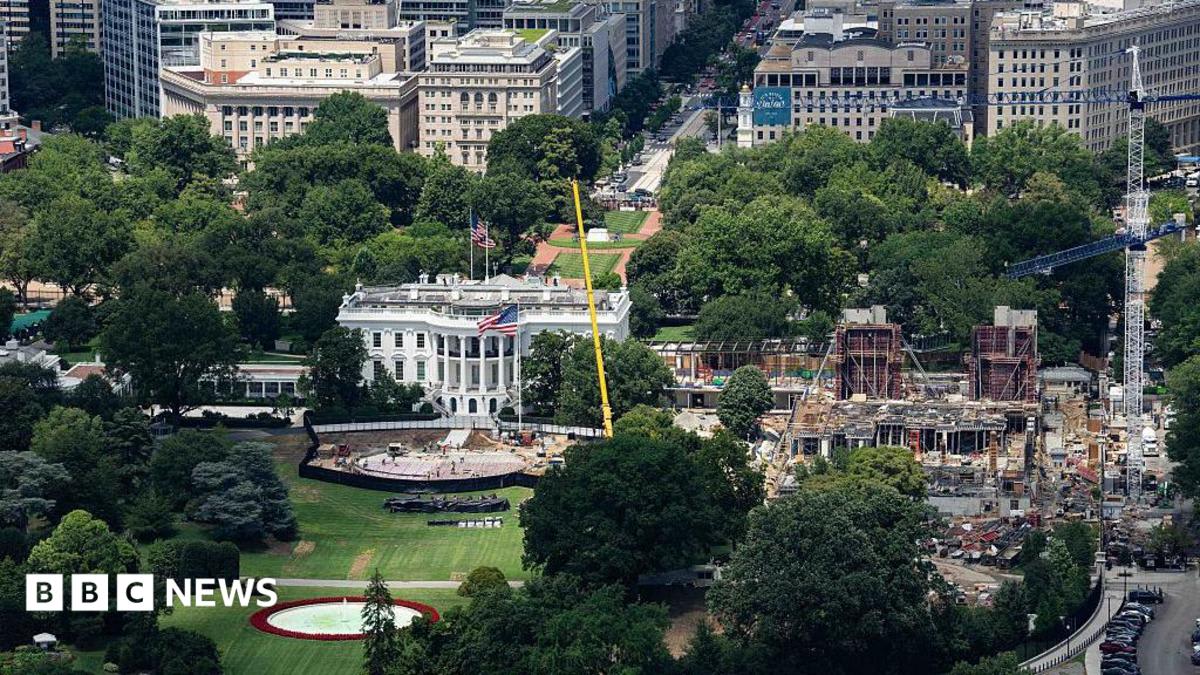
A U.S. appeals court has blocked President Trump's controversial White House ballroom project, citing a need for Congressional approval. Trump has denounced the ruling, arguing the facility is essential for national security and event hosting.
The Legal and Constitutional Impasse Over the White House Ballroom
The recent decision by a U.S. appeals court to halt the construction of a massive ballroom at the White House marks a significant constitutional standoff regarding the limits of executive power. The court's majority explicitly stated that the authorization for such a substantial structural change resides with Congress, not the executive branch. This ruling effectively stalls a project that President Trump has championed since July 2025 as a necessary upgrade for hosting state visits and grand parties.
Security Justifications vs. Legislative Oversight
President Trump has defended the project by emphasizing its dual function: a large entertaining space above ground and a comprehensive security complex below ground. His administration has framed the project as vital for national security, particularly in the wake of an assassination attempt at the White House Correspondents' Association dinner in April. By elevating the project to a matter of national security, the administration is attempting to bypass typical oversight; however, the court’s intervention underscores the judiciary's role in ensuring that the executive branch adheres to established legislative protocols when modifying historic federal properties.
Historical Impact and Architectural Preservation
If completed, the ballroom would represent the most significant structural alteration to the presidential residence in over seven decades. The controversy intensified in October when the Trump administration initiated the demolition of the East Wing—a structure dating back to 1902—to clear space for the new development. This destruction has fueled public and political outcry, with critics viewing the loss of original architecture as a permanent scar on a national landmark, while the administration views it as a necessary evolution for modern governance.
Political Rhetoric and the Path to the Supreme Court
In response to the appellate ruling, President Trump has forcefully criticized the court, labeling the decision a "National Security Threat" and a "National Disgrace." This aggressive rhetoric signals that the administration intends to treat the ruling as a direct challenge to its authority. By framing the court's intervention as a threat to the nation, Trump is successfully rallying his base while simultaneously preparing the legal groundwork for an appeal to the Supreme Court.
Future Implications for Executive Authority
A Supreme Court showdown now seems inevitable, as the administration seeks to overturn the appellate court's finding that the project requires Congressional approval. The outcome of this case will likely set a lasting precedent regarding the degree of autonomy a President possesses to alter the White House. If the Supreme Court rules in favor of the administration, it could grant future presidents broad latitude to renovate federal assets without legislative interference. Conversely, a ruling upholding the lower court would reinforce the principle of separation of powers and ensure that historic modifications remain subject to the oversight of the elected representatives of the people.