Trump Calls Putin His "Friend", Says Not Sure If He Is "To America"
Source Entity
NDTV News Search Records Found 1000
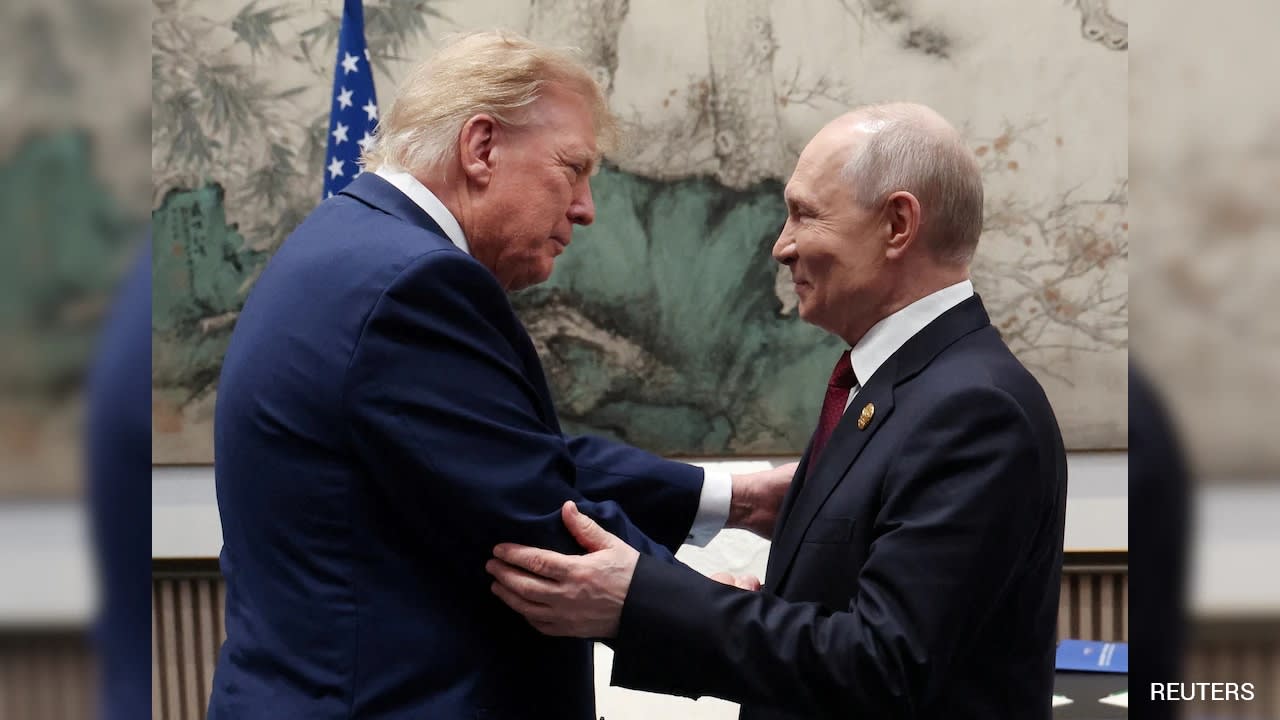
US President Donald Trump, China's Xi Jinping, and Russia's Vladimir Putin are convening in Shenzhen to address critical global issues, including nuclear arms control and ongoing conflicts in Ukraine and Iran. This high-stakes meeting aims to navigate complex trade and tech rivalries while potentially reshaping the global geopolitical order.
A New Geopolitical Pivot: The Shenzhen Summit
The gathering of US President Donald Trump, Chinese President Xi Jinping, and Russian President Vladimir Putin in Shenzhen marks a potential inflection point in 21st-century diplomacy. As these leaders convene alongside the APEC Economic Leaders Summit, the meeting is framed by the urgent need to address the destabilizing effects of two major ongoing conflicts—the Russia-Ukraine war and the nine-month-old Iran war—which continue to exert significant pressure on global energy markets and international security architectures.
The Nuclear Challenge and Trilateral Diplomacy
A primary pillar of President Trump’s agenda in Shenzhen is the initiation of substantive three-way talks regarding nuclear arms control. Bringing Washington, Moscow, and Beijing to a single negotiating table is a monumental task, given their divergent security interests and historical reliance on bilateral treaties. The success of these discussions will depend on whether the leaders can transcend existing distrust to establish a framework that addresses the modern reality of multi-polar nuclear proliferation.
Trade, Tech, and Strategic Rivalry
Beyond security, the summit is deeply colored by the intensifying US-China trade tensions and the global race for dominance in Artificial Intelligence. The backdrop of Washington’s ongoing scrutiny regarding Nvidia’s chip sales to China illustrates the high stakes of the 'tech cold war.' These economic and technological friction points are inextricably linked to the broader diplomatic discussions, as each nation seeks to balance its need for economic stability with the imperative of national security and industrial sovereignty.
Navigating Regional Instability
In addition to the global conflicts, the summit must contend with localized escalations that threaten regional stability, most notably the rising tensions between China and Japan. The Shenzhen meeting serves as a critical pressure release valve, where the leaders have the opportunity to engage in direct dialogue to prevent these localized disputes from spiraling into broader regional crises that could further disrupt global supply chains.
Personal Relationships vs. Strategic Realism
The effectiveness of this trilateral meeting will likely hinge on the interplay between the leaders' personal diplomatic styles and their rigid national strategic interests. While the 'welcome banquet' in Shenzhen provides a veneer of traditional statecraft, the substantive outcomes will be measured by concrete shifts in policy regarding nuclear non-proliferation and conflict resolution in the Middle East and Eastern Europe.
Implications for the Future Global Order
This meeting is being compared to the historic Yalta Conference, suggesting that the outcomes could influence the global order for decades. If the three powers can reach a consensus on even a narrow set of security issues, it may signal a shift toward a more managed, albeit competitive, international system. Conversely, a failure to find common ground could entrench existing rivalries, leaving the world to navigate a period of heightened uncertainty and fragmented global governance.
Multiple Citing Sources
Verification Required?