C Raja Mohan: AI is now a great-power game. That poses a test for India
Source Entity
C. Raja Mohan
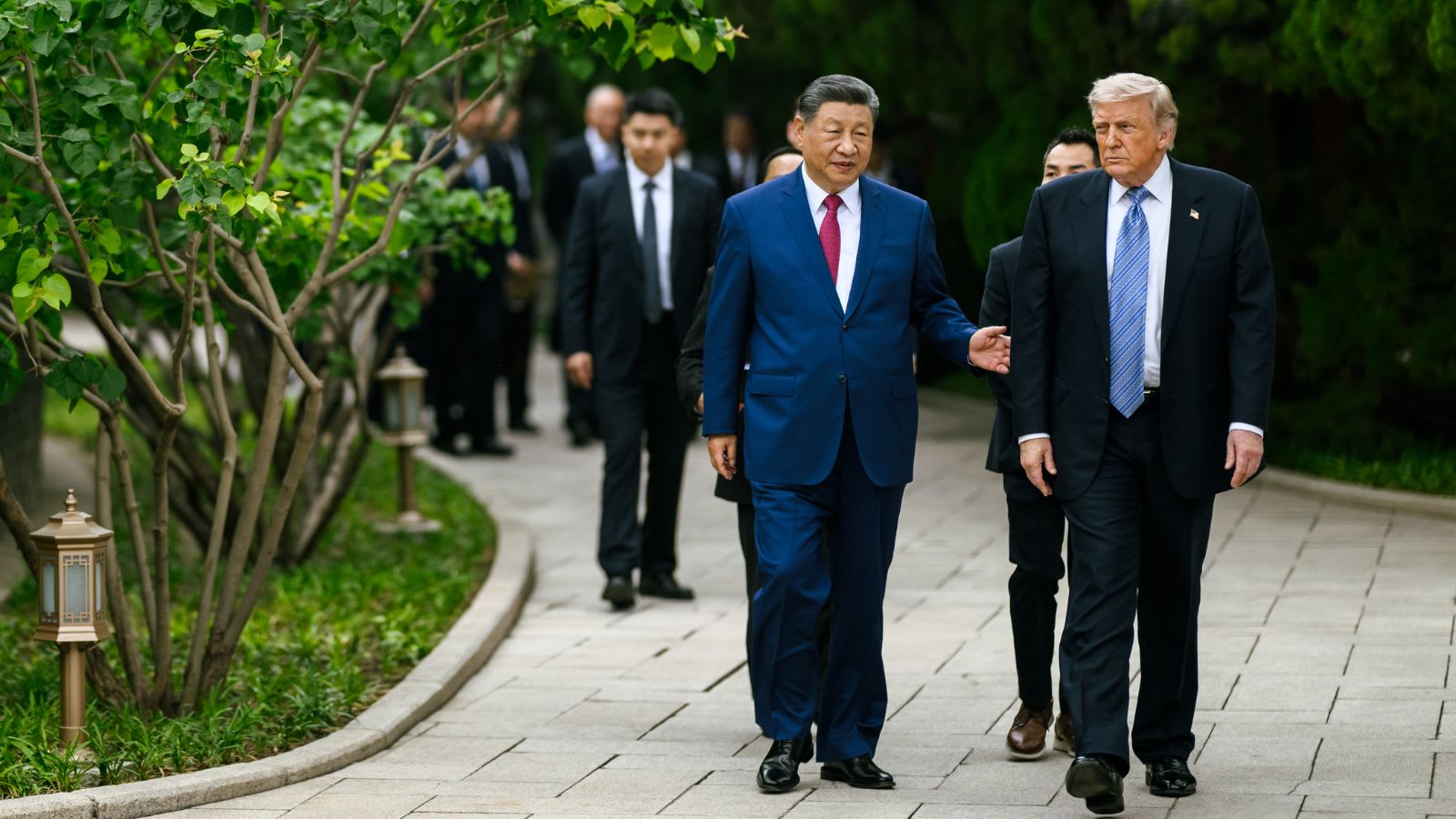
The upcoming Trump-Xi summit on AI and trade signals a potential thaw in US-China relations that could challenge India's strategic position. This shift risks undermining the 'China+1' manufacturing strategy and India's growing importance in global supply chains.
The Shifting Geopolitical Landscape: US-China Thaw and India's Strategic Dilemma
The upcoming summit between U.S. President Donald Trump and Chinese President Xi Jinping in Washington marks a critical juncture in global diplomacy. Following Xi’s recent participation in the Delhi BRICS summit, where he articulated a Chinese vision for AI cooperation, his direct dialogue with Trump underscores that the governance of artificial intelligence remains a duopoly dominated by Washington and Beijing. This development signals a potential shift from the intense decoupling of recent years toward a more managed, albeit uneasy, coexistence.
The AI Frontier and Great-Power Dynamics
Artificial intelligence has emerged as the defining arena of modern great-power competition. While multilateral forums like BRICS attempt to frame AI as a multipolar issue, the reality is that the core technological frontier is concentrated within the U.S. and China. By initiating a formal bilateral dialogue on AI risks, the two leaders are effectively bypassing broader international consensus to establish their own rules of the road. For India, this concentration of power poses a significant test, as it must navigate a world where the two primary technological architects are increasingly coordinating their own engagement.
Re-evaluating the 'China+1' Strategy
India has been a primary beneficiary of the 'China+1' strategy, as global firms sought to diversify supply chains away from Chinese volatility. However, if the Trump-Xi summit results in a substantive trade truce, the perceived risk of doing business in China may decrease. Should the 'technology wall' between the two superpowers develop 'doors'—allowing for more cooperation on critical chips and AI—the urgency for global corporations to relocate to India may diminish, potentially intensifying competition for manufacturing investment.
Critical Minerals and Supply Chain Leverage
Beyond technology, the summit is expected to address the critical issue of rare earth minerals. China’s current dominance in these supply chains provides Beijing with substantial leverage over global industry. Any agreement that stabilizes the flow of these materials while addressing U.S. export controls could fundamentally alter the strategic value India currently offers to Washington. If China appears less threatening to U.S. interests, the strategic calculus behind the Quad and other Indo-Pacific partnerships may undergo a subtle, yet profound, recalibration.
The Future of India’s Strategic Autonomy
This diplomatic thaw highlights a sobering reality: India cannot afford to outsource its economic and technological rise to the friction between the U.S. and China. While the rivalry has historically provided tailwinds for India's mobile manufacturing and geopolitical positioning, a cooling of tensions requires India to sharpen its own domestic policy. The nation must pivot from relying on the 'great decoupling' to fostering intrinsic competitiveness, ensuring that its growth trajectory remains robust regardless of the fluctuations in the Washington-Beijing relationship.
Conclusion: A Call for Strategic Realignment
As Trump and Xi prepare to discuss everything from tariffs and Taiwan to the roles of Russia and Iran, India must prepare for a more complex international environment. The potential for a U.S.-China rapprochement does not necessarily signal the end of India's growth story, but it does signal the end of a period where India could rely on the rivalry to drive its progress. Moving forward, India’s ability to secure its interests will depend on its capacity to define its own role in the global order, independent of the shifting winds of the U.S.-China summit cycle.