TSMC raises capex and revenue forecast, highlighting growing AI chip demand
Source Entity
Yahoo Finance
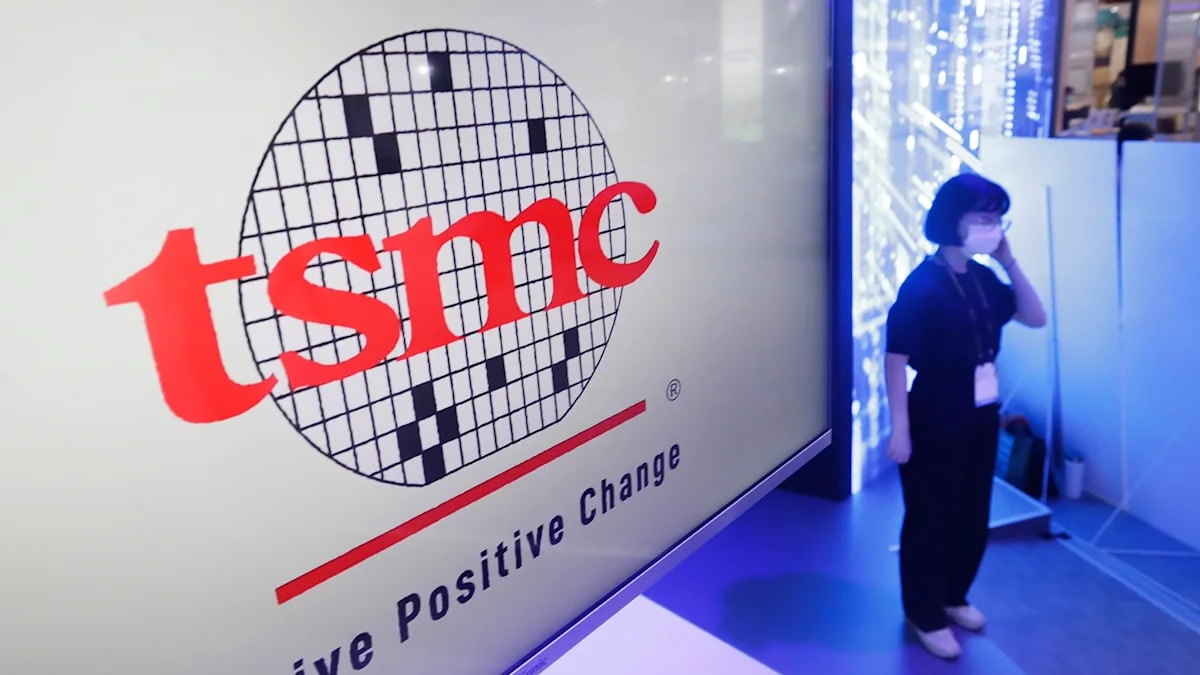
TSMC has increased its capital expenditure and revenue forecasts, driven by the surging global demand for AI chips. Despite these positive growth indicators, the company's stock experienced a 4% decline in premarket trading, reflecting complex market dynamics.
TSMC's Strategic Pivot: Balancing AI Ambition with Market Volatility
Taiwan Semiconductor Manufacturing Company (TSMC), the undisputed titan of the global semiconductor foundry market, has signaled an aggressive expansion of its operational capacity by raising both its capital expenditure (capex) and revenue forecasts. This move is a direct response to the unprecedented surge in demand for high-performance computing (HPC) and Artificial Intelligence (AI) accelerators. As the primary manufacturer for industry leaders like Nvidia, AMD, and Apple, TSMC sits at the epicenter of the generative AI revolution, making its financial guidance a bellwether for the entire technology sector.
The AI Catalyst and Revenue Growth
The Surge in AI Chip Demand
The decision to raise revenue forecasts is rooted in the explosive growth of Large Language Models (LLMs) and the subsequent need for massive GPU clusters. TSMC's advanced process nodes—specifically its 3nm and 5nm technologies—are essential for producing the complex transistors required for AI workloads. By increasing its revenue outlook, TSMC is acknowledging that the AI boom is not a transient bubble but a structural shift in computing architecture. This demand extends beyond GPUs to include specialized AI ASICs (Application-Specific Integrated Circuits) as more tech giants seek to design their own proprietary silicon to reduce reliance on third-party vendors.
Expanding Capex for Future Dominance
Raising capital expenditure is a high-stakes bet on future demand. In the semiconductor industry, capex primarily involves the construction of new fabrication plants (fabs) and the purchase of Extreme Ultraviolet (EUV) lithography machines from ASML. By committing more capital, TSMC is ensuring it can maintain its lead over competitors like Intel and Samsung. This investment is critical for the transition to 2nm technology, which will offer further improvements in power efficiency and performance, ensuring that TSMC remains the sole viable partner for the next generation of AI hardware.
The Market Paradox: Why the Stock Dipped
Despite the bullish fundamentals, the 4% drop in premarket trading highlights a classic market paradox: the "priced-in" effect. Investors had likely already anticipated strong guidance, and the market may have been looking for a "beat and raise" that exceeded even the most optimistic projections. Furthermore, increased capex, while positive for long-term growth, can be viewed by short-term investors as a drag on immediate free cash flow. The market is currently balancing the excitement of AI growth against the massive costs required to sustain that growth.
Broader Implications for the Global Supply Chain
TSMC's aggressive expansion has significant geopolitical and macroeconomic implications. Because a vast majority of the world's advanced chips are produced in Taiwan, the concentration of capex in the region continues to be a point of concern for global governments. However, TSMC's strategy of diversifying its manufacturing footprint—expanding into the US, Japan, and Germany—is likely integrated into these updated forecasts. This geographic diversification is essential to mitigate risks associated with regional instability and to satisfy the "chip sovereignty" goals of Western nations.
Future Outlook and Industry Trends
Looking ahead, the trajectory of TSMC's revenue will likely be tied to the evolution of AI from training to inference. While the current boom is driven by the training of massive models, the next wave of growth will come from the deployment of AI in edge devices (AI PCs and AI smartphones). This shift will require a new cycle of chip upgrades, further sustaining the demand for TSMC's leading-edge nodes. We can expect a continuing trend of "siliconization," where every major software company becomes a hardware designer, all eventually funneling their designs back to TSMC for production.
Conclusion
In summary, TSMC's decision to raise its financial and investment forecasts is a testament to the enduring strength of the AI sector. While the immediate stock market reaction was negative, the underlying fundamentals suggest a company that is doubling down on its competitive advantage. The tension between massive infrastructure spending and investor expectations of immediate returns is a standard characteristic of hyper-growth phases in the tech industry. Ultimately, TSMC remains the indispensable engine driving the global AI economy.