Universal XSS in uBlock Origin from website-driven element picker
Source Entity
Hacker News
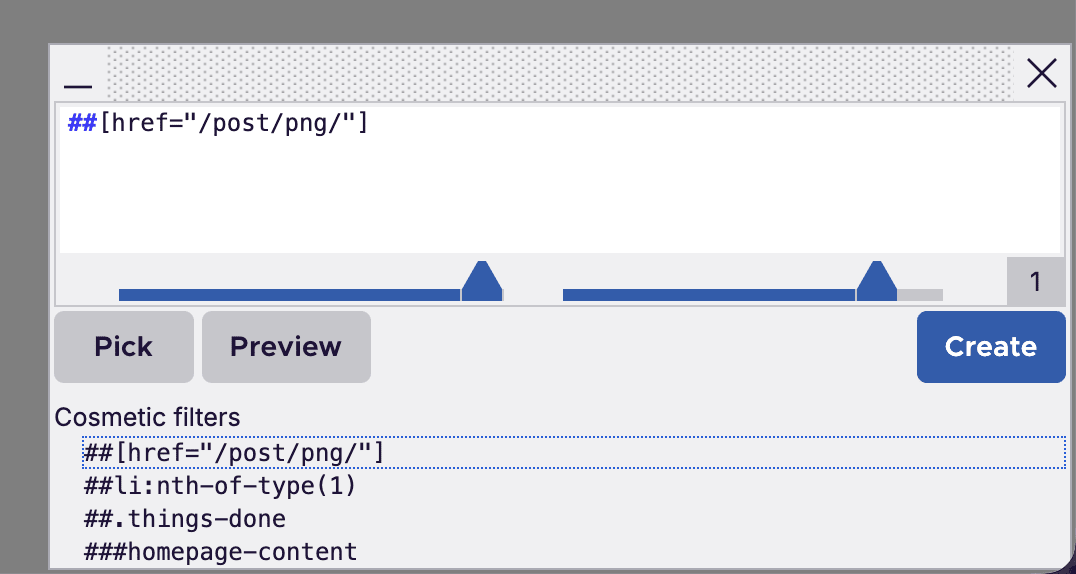
A security researcher discovered a universal XSS vulnerability in uBlock Origin that allowed malicious websites to inject arbitrary JavaScript. The flaw, which has since been patched, highlights the risks of browser extension filter management.
Security Vulnerability in uBlock Origin: An Analysis
The Discovery of a Critical Flaw
Earlier this month, a significant security vulnerability was identified within uBlock Origin, specifically affecting the Manifest Version 2 (MV2) iteration on Firefox. The flaw was categorized as a one-click universal Cross-Site Scripting (XSS) issue. By exploiting the extension's website-driven element picker, a malicious actor could trick the browser extension into incorporating arbitrary, attacker-controlled filters. Because uBlock Origin treats certain filters as 'trusted,' the ability to inject them allowed for the execution of unauthorized JavaScript across various web contexts.
The Role of AI in Vulnerability Research
An intriguing aspect of this discovery is the collaboration between human researchers and artificial intelligence. The researcher noted that GPT-5.6 Sol was instrumental in performing the heavy lifting required to identify the specific bug. By prompting the AI to investigate the potential for UXSS via filter injection, the human researcher was able to leverage machine learning to pinpoint the vulnerability. Once the AI proposed the path to exploitation, the researcher verified the findings, demonstrating a evolving paradigm in cybersecurity research where AI serves as a powerful force multiplier for vulnerability discovery.
Mechanics of the Exploitation
The core of the issue lay in the privilege escalation inherent in the extension's design. Typically, uBlock Origin uses filters to block unwanted content, but these filters possess the capability to inject JavaScript into pages. By bypassing the intended protections of the element picker, an attacker could force the extension to add a filter that targeted a completely different website. Once the filter was accepted as 'trusted' by the extension, the malicious JavaScript would execute within the context of the victim site, effectively bypassing same-origin policies.
Scope and Mitigation
While the primary concern was the MV2 Firefox version, the investigation also revealed that the uBO Lite version (MV3) was affected by a similar, albeit less severe, issue. The developer community acted quickly to address these findings. The vulnerability is now fully patched, and users are encouraged to ensure their extensions are updated to the latest versions to mitigate any risk. The GitHub advisory provides a technical deep dive into the specifics of the fix for those interested in the underlying code changes.
Broader Implications for Browser Extensions
This incident underscores the inherent risks associated with browser extensions that require high-level permissions to interact with DOM elements. Extensions like uBlock Origin are powerful because they act as intermediaries between the user and the web, but that power makes them a high-value target for attackers. This event serves as a reminder that even widely trusted, open-source security tools require rigorous auditing. As browser architectures shift toward Manifest V3, developers must continue to prioritize the security of filter-processing logic to prevent similar injection-based attacks in the future.