Propriety in public discourse: On Udhayanidhi Stalin’s double entendre remarks
Source Entity
India Latest News: Top National Headlines Today & Breaking News | The Hindu
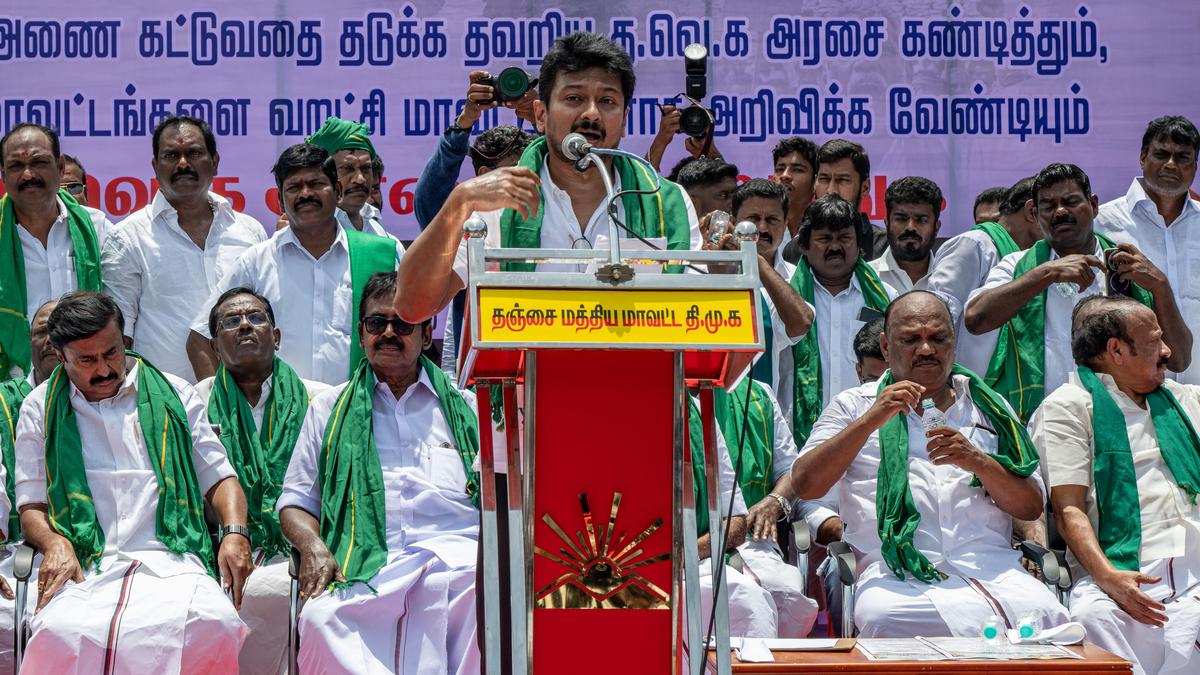
Leader of Opposition Udhayanidhi Stalin is facing criticism for using vulgar double entendre remarks during a public protest in Thanjavur. The comments, directed at Chief Minister Joseph Vijay regarding the Cauvery water dispute, have sparked a debate on the standards of political decorum.
The Erosion of Political Decorum in Public Discourse
Public discourse serves as the lifeblood of a healthy democracy, functioning under a set of implicit and explicit rules that govern how elected officials interact with the populace. When these standards are compromised, the integrity of the political process is often called into question. The recent incident involving Leader of Opposition (LoP) Udhayanidhi Stalin, who utilized double entendre remarks during a public meeting in Thanjavur, highlights a growing trend where the line between populist humor and outright vulgarity is increasingly blurred.
Contextualizing the Thanjavur Incident
The remarks were delivered during a protest gathering convened to address the contentious Cauvery water dispute. While the core issue—the lack of water distribution to Tamil Nadu—is a matter of urgent public interest, the discourse shifted away from policy critique toward personal provocation. When the crowd invoked the name of an actor in response to a comment regarding Chief Minister Joseph Vijay’s priorities, Mr. Stalin’s decision to respond with vulgar double entendres shifted the focus from the Cauvery crisis to the nature of his own rhetoric.
The Role of Humor in Political Mobilization
Humor is undeniably a potent tool for politicians aiming to capture the attention of large crowds and build rapport with the electorate. However, the use of sexualized or vulgar innuendo in a public forum poses significant risks to the dignity of the office. By choosing to engage in double entendre rather than substantive critique, the LoP has inadvertently invited scrutiny not on his performance as an opposition leader, but on the appropriateness of his language. This incident serves as a reminder that the medium of communication is often as important as the message itself.
Implications for Political Accountability
At the heart of this controversy is the tension between the opposition and the ruling government. By charging that Chief Minister Joseph Vijay remains unconcerned about the Cauvery issue, Mr. Stalin sought to highlight a perceived failure in governance. Yet, by resorting to vulgarity, the potency of this political attack is diminished. When leaders prioritize shock value over professional discourse, they risk alienating segments of the electorate that value decorum, ultimately distracting from the very policy failures they aim to expose.
Future Trends in Political Communication
The viral nature of this incident underscores the high-stakes environment of modern political communication. In an era where every word spoken at a rally can be captured, edited, and disseminated globally within seconds, the margin for error is razor-thin. Moving forward, political figures will likely face increasing pressure to balance the need for aggressive, attention-grabbing rhetoric with the necessity of maintaining a standard of conduct that befits their constitutional roles. This incident will likely serve as a case study for political strategists on the fine line between effective oratory and damaging performative politics.
Verification Required?