UK to explore even closer ties with EU after agreeing deal, says Burnham
Source Entity
BBC News
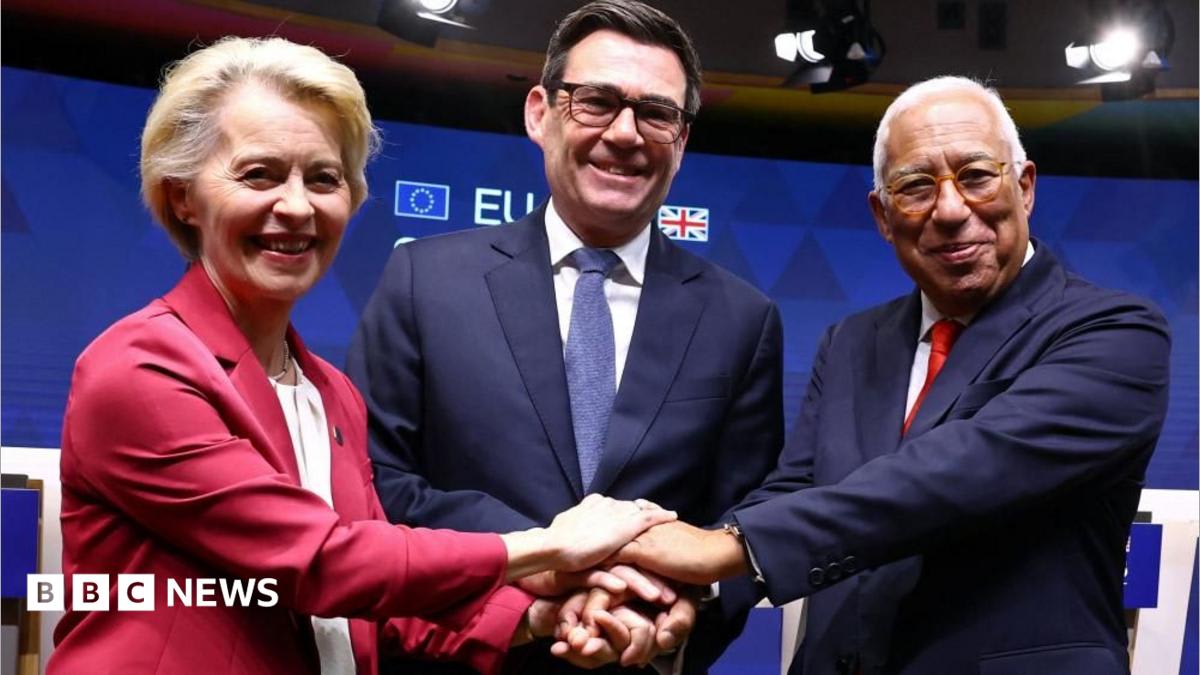
The UK government has secured a new trade and cooperation deal with the EU, focusing on food exports, emissions, and youth mobility. While the administration projects significant economic growth, the move has ignited intense political debate between pro-integration supporters and opposition critics.
A New Chapter in UK-EU Relations: The Post-Brexit Reset
The recent diplomatic breakthrough between the United Kingdom and the European Union marks a significant pivot in post-Brexit policy. Prime Minister Andy Burnham has championed this development, describing the agreement as a "good day" for both parties. The deal, which focuses on streamlining British food exports, aligning emissions trading standards, and establishing a youth experience scheme, is being presented as the latest stage of the government's broader "reset" of relations with the continent.
Economic Projections and Strategic Gains
Central to the government’s justification for this rapprochement is the economic forecast provided by the Treasury. Officials estimate that the removal of trade frictions and enhanced cooperation could bolster the UK economy by as much as £17 billion annually. By addressing specific bottlenecks in the food and agricultural sector and reintegrating into collaborative climate frameworks, the UK aims to mitigate some of the inflationary pressures and supply chain disruptions that have persisted since the formal departure from the European single market.
The Political Landscape: A Nation Divided
Despite the optimistic economic outlook, the political reception within the UK remains sharply polarized. Proponents see this as a pragmatic necessity to repair long-standing trade barriers. Conversely, the opposition has been vocal in its dissent. Conservative leader Kemi Badenoch has characterized the deal as fundamentally "unfair," while Reform leader Nigel Farage has labeled the agreement a "betrayal of the British people." This friction underscores the enduring sensitivity surrounding Brexit, even a decade after the original referendum.
Historical Context and the 'Mistake of the Century' Debate
Ten years removed from the initial vote to leave the European Union, the national discourse is shifting from the mechanics of departure to a critical reevaluation of its long-term consequences. Some observers are now framing the exit as the "mistake of the century," questioning whether the sovereignty gains originally touted by Leave campaigners have been eclipsed by the tangible economic costs of isolation. The current government’s efforts to move closer to the EU suggest a tacit acknowledgement that the current relationship is unsustainable in its current form.
The Path Forward: Challenges to Reintegration
While European Council President António Costa has confirmed that the EU remains "open to have the closest possible relationship" with the UK, the path to full reintegration remains fraught with structural and political hurdles. The current deal is a targeted, incremental step rather than a total reversal of Brexit. As the UK Parliament prepares to introduce legislation to implement these measures next week, the focus will remain on whether these modest improvements can serve as a foundation for a deeper, more permanent alignment without triggering further domestic political instability.