Beyond Patriot: Why Ukraine is pushing Europe to build its own missile shield
Source Entity
TOI DEFENCE DESK
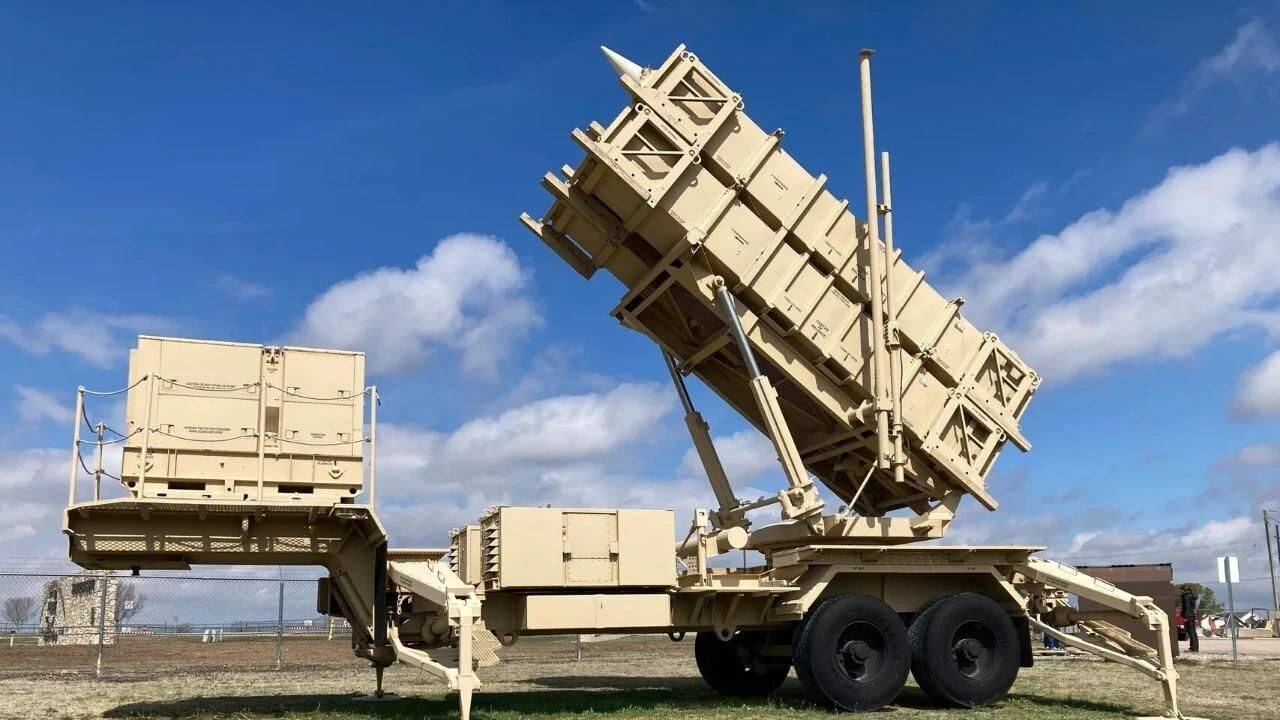
Kyiv is currently under intensified drone and missile assaults from Russia, placing significant pressure on Ukraine's air defence systems. President Zelenskyy is calling on allies to expedite the delivery of weapons, highlighting a critical need for Patriot systems. Europe’s dependence on US Patriot interceptors for missile defence has revealed vulnerabilities in production and stockpiles. Strengthening domestic capabilities is vital for securing Europe's defence in the future.
The Strategic Imperative: Ukraine's Push for a European Missile Shield
Ukraine is currently facing an onslaught of intensified drone and missile strikes targeting critical infrastructure and urban centers in Kyiv and beyond. In response to this escalating threat, President Volodymyr Zelenskyy has not only called for the immediate delivery of more air defense systems but has sparked a broader strategic conversation regarding Europe's defense architecture. The core of the issue lies in the current reliance on the American-made Patriot missile system, which, while highly effective, has become a bottleneck for European security.
The Vulnerability of Patriot Dependency
The Patriot system is widely regarded as the gold standard for long-range air and missile defense. However, the current conflict has exposed a critical vulnerability: the over-reliance on a single foreign supplier. The production of Patriot interceptors and launchers is a slow, resource-intensive process managed primarily by the United States. As Ukraine consumes interceptors at an unprecedented rate, Europe has found that its own stockpiles are insufficient and its ability to rapidly replenish these systems is tethered to US industrial capacity and political will. This dependency creates a strategic risk where European security is contingent upon the logistical and political timelines of a non-European power.
Toward European Strategic Autonomy
Ukraine's push for a domestic European missile shield aligns with the long-standing goal of 'strategic autonomy' championed by several EU leaders. By developing its own integrated air defense network, Europe can ensure a more resilient supply chain and a faster response time to emerging threats. Such a move would involve not just the procurement of hardware, but the harmonization of different national systems—such as the Franco-Italian SAMP/T or the German IRIS-T—into a unified, interoperable shield. This transition from a collection of national defenses to a continental shield would significantly harden the Eastern Flank of NATO and the EU against future aggression.
The Industrial Challenge of Defense Scaling
Building a sovereign missile shield is an immense industrial undertaking. It requires a shift from 'peace-time' procurement—characterized by slow cycles and bureaucratic tenders—to a 'war-time' economy focused on rapid scaling and mass production. The challenge lies in coordinating the defense industries of multiple European nations to avoid duplication of effort and to achieve economies of scale. For Europe to move 'Beyond Patriot,' it must invest heavily in research and development (R&D) and streamline the regulatory hurdles that currently hinder the cross-border movement of military technology.
Geopolitical Implications and the NATO Dynamic
This drive toward an independent European shield does not necessarily signal a break from NATO, but rather an evolution of the alliance. By reducing its reliance on US hardware, Europe becomes a more capable and equal partner within the Atlantic alliance, sharing the burden of collective defense more effectively. Furthermore, a European-led missile shield would send a powerful deterrent signal to Russia, demonstrating that the continent's defense is sustainable and not solely dependent on the political climate in Washington D.C.
Future Trends in Continental Defense
Looking forward, we can expect an increase in joint European defense ventures and the possible creation of a centralized EU air defense agency. The integration of AI-driven threat detection and the deployment of laser-based directed-energy weapons are likely to be the next frontiers in this pursuit. As Ukraine continues to serve as the testing ground for modern electronic warfare and missile interception, the data gathered will likely accelerate the development of the next generation of European interceptors.
Conclusion
Ukraine's urgent plea for more air defenses has evolved into a catalyst for a fundamental shift in European security. The realization that reliance on US Patriot systems is a strategic liability is driving Europe toward a more autonomous and integrated defense posture. While the industrial and political hurdles are significant, the necessity of securing the European sky against persistent threats makes the creation of a sovereign missile shield an inevitable priority for the continent's survival and stability.