Vulcan rocket fails during launch, dealing major blow to SpaceX competitors
Source Entity
Stephen Clark
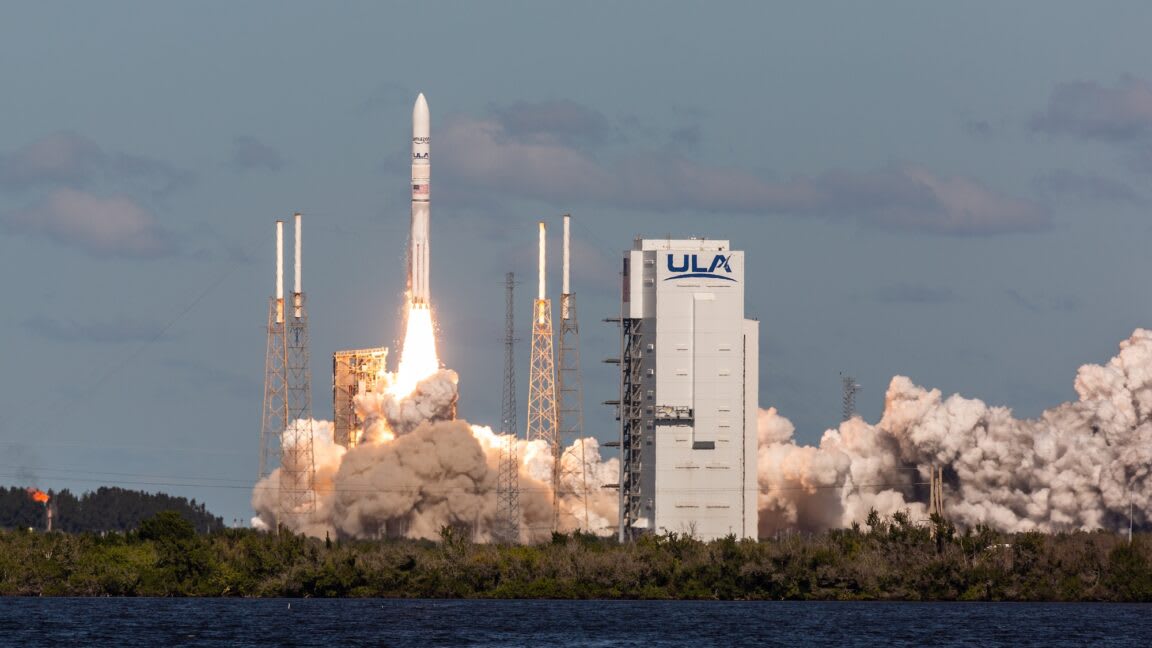
United Launch Alliance's Vulcan rocket experienced its first mission failure, resulting in the loss of 40 Amazon Project Kuiper satellites. This incident marks a significant setback for Amazon's efforts to compete with SpaceX's Starlink and complicates ULA's role in national security launches.
A Historic Setback for United Launch Alliance
In a significant disruption to the United States space industry, United Launch Alliance (ULA) experienced its first total mission failure in its 20-year history. The Vulcan rocket, a crucial vehicle for both commercial and national security interests, suffered a catastrophic anomaly approximately 10 minutes into its flight on Sunday. This failure resulted in the loss of 40 Amazon satellites, which were intended to be the first of 38 flights commissioned by the tech giant to build out its satellite broadband constellation.
The Competitive Landscape: Amazon vs. Starlink
This mission was intended to be a pivotal moment for Amazon as it attempts to catch up to SpaceX’s Starlink in the global race to provide orbital broadband internet. Amazon has struggled with deployment timelines, and this failure exacerbates the existing gap between the two companies. By losing this large batch of satellites, Amazon faces a delay in its operational capacity, effectively stalling a project that was designed to challenge Elon Musk’s dominance in the low-Earth orbit (LEO) market.
Implications for National Security
Beyond the commercial implications for Amazon, the grounding of the Vulcan rocket presents a strategic challenge for the United States government. ULA is a joint venture between aerospace giants Boeing and Lockheed Martin and is contracted to handle roughly half of the nation's military and national security space missions in the coming years. An indefinite grounding of the Vulcan fleet creates an immediate bottleneck for high-priority government payloads that rely on ULA’s specific launch capabilities.
A History of Technical Challenges
While this marks the first total mission failure for ULA, the Vulcan program has not been without its precursors to instability. The rocket had previously faced technical hurdles, including issues with its strap-on solid rocket boosters during two of its four prior flights. While the vehicle had managed to correct those previous anomalies, Sunday's event suggests a more systemic failure that will require a rigorous investigation by federal regulators and internal engineering teams.
Future Trends and Industry Outlook
The failure at Cape Canaveral is expected to ripple across the entire aerospace sector, likely leading to increased scrutiny of ULA's launch protocols and the reliability of the Vulcan platform. As the industry shifts toward a high-cadence launch environment, the ability to maintain reliability while scaling operations remains the primary challenge. For Amazon, the path forward will require navigating both the loss of hardware and the potential need to re-evaluate its launch service providers to ensure it can reach its required orbital constellation size.
Conclusion
In summary, the destruction of the 40 Amazon satellites represents a major blow to both the tech giant’s connectivity ambitions and ULA’s reputation as a reliable launch provider. With the Vulcan rocket grounded indefinitely, the aerospace industry now faces a period of uncertainty as teams work to identify the root cause of the anomaly. The outcome of the subsequent investigation will be critical in determining the future viability of the Vulcan program and the timeline for Amazon’s entry into the satellite internet market.
Multiple Citing Sources