Rocket from Boeing-Lockheed firm fails mid-flight, destroys payload of Amazon satellites
Source Entity
The Indian Express
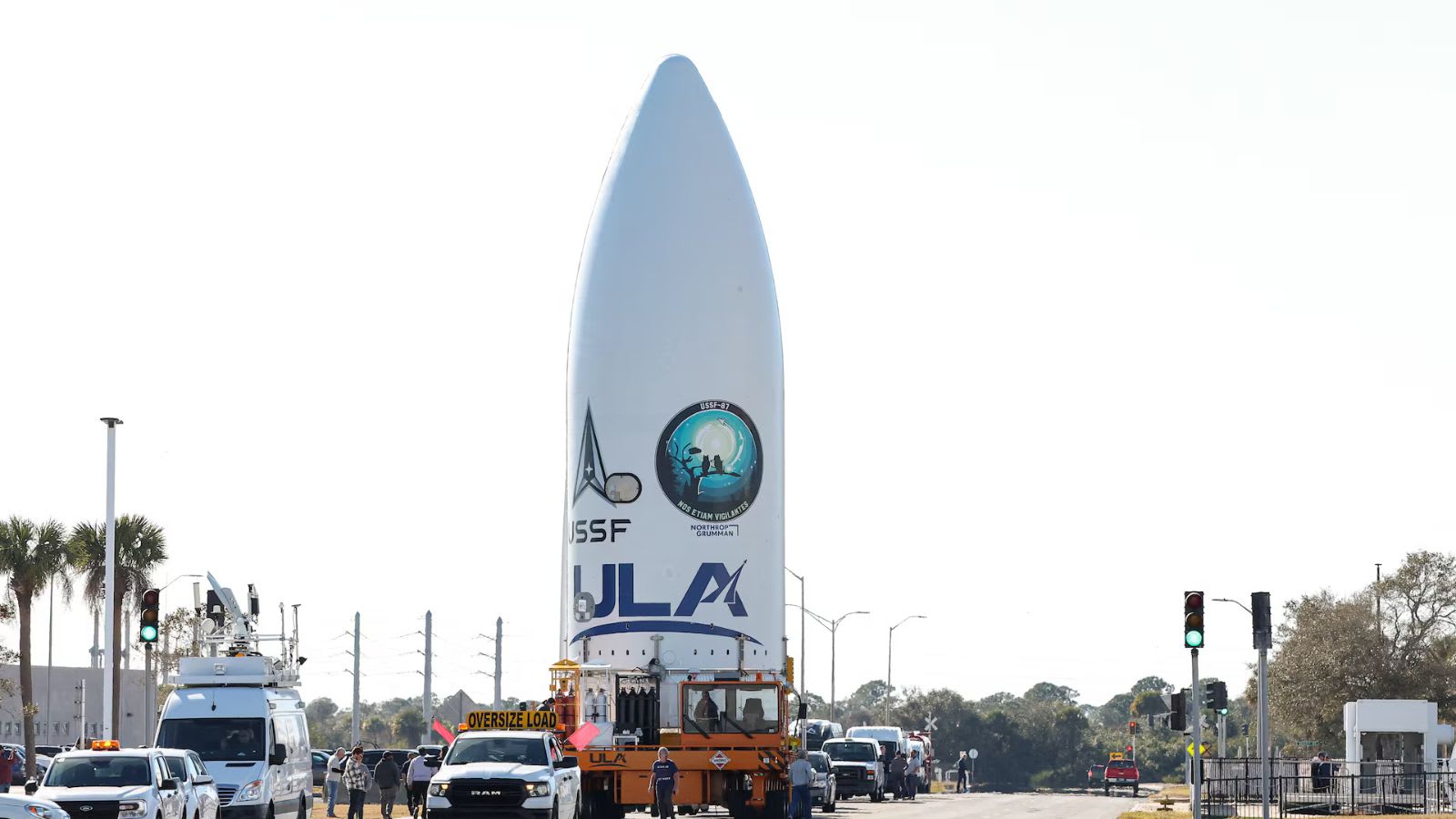
United Launch Alliance’s Vulcan rocket experienced its first-ever mission failure, resulting in the loss of 40 Amazon Leo broadband satellites. This setback creates significant uncertainty for Amazon’s satellite internet ambitions and the broader U.S. space launch schedule.
A Historic Failure in Space Flight
United Launch Alliance (ULA), the storied joint venture between aerospace giants Boeing and Lockheed Martin, has suffered its first total mission failure in two decades of operation. The loss of the Vulcan rocket, which occurred approximately 10 minutes after liftoff from the Cape Canaveral Space Force Station, marks a sobering moment for an industry that has long prided itself on reliability. This incident resulted in the destruction of 40 Amazon Leo broadband satellites, representing a significant technical and financial setback for Amazon's efforts to establish a global internet constellation.
The Impact on Amazon’s Leo Project
Amazon’s Leo network is positioned as a direct competitor to SpaceX’s Starlink, aiming to provide high-speed internet access globally. However, the program has faced persistent difficulties in achieving orbit, and this failure only complicates those timelines. Sunday’s mission was intended to be the first of 38 flights purchased by Amazon from ULA, highlighting the high stakes involved in building out this infrastructure. With only a small portion of its necessary constellation currently in orbit, Amazon faces a difficult path forward to challenge the dominance of established players in the satellite internet sector.
Implications for National Security
The Vulcan rocket is not merely a commercial vehicle; it is a critical pillar of U.S. space infrastructure. It is currently under contract to handle roughly half of the U.S. military’s national security space missions in the coming years. A total mission failure of this magnitude inevitably leads to an indefinite grounding of the fleet while investigators determine the root cause of the anomaly. This pause could create a bottleneck for sensitive government payloads, potentially forcing the Department of Defense to re-evaluate its launch manifest and reliance on the Vulcan platform.
Technical Challenges and Historical Context
While the Vulcan rocket has successfully navigated previous missions, it has not been without its challenges. The vehicle previously faced issues with its strap-on solid rocket boosters during two of its four prior flights, though it had managed to recover and complete those missions. The fact that this latest anomaly occurred 10 minutes into the flight, rather than during the initial ignition phase, suggests a more complex failure point. This history of close calls underscores the extreme difficulty and inherent risks associated with space flight, even for firms with 20 years of experience.
Future Outlook for ULA and the Space Industry
As the investigation into the launch failure commences, the space industry will be watching closely to see how ULA addresses the technical anomaly. The pressure is mounting for the company to restore confidence in the Vulcan platform, especially given its role in national security and the massive capital investment from partners like Amazon. Moving forward, the industry will likely see a period of increased scrutiny regarding launch procedures and hardware testing as ULA works to transition from this setback to a regular, reliable cadence of missions.
Multiple Citing Sources