At Dastkari Haat, a decades-old collection tells stories from Kutch through motifs
Source Entity
Reva Thakkar
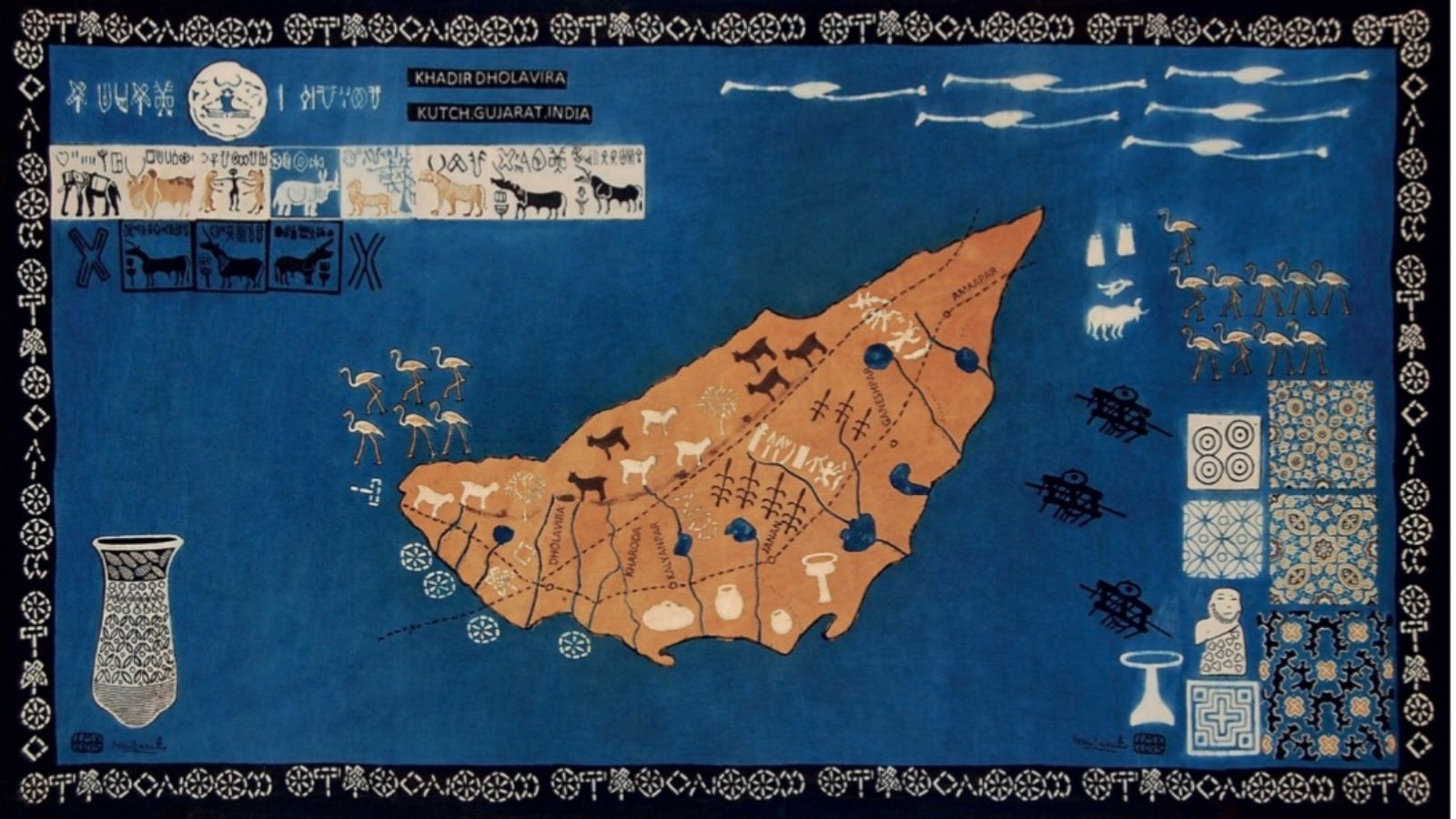
This analysis clarifies the technical distinctions between regional Indian textiles, highlighting why Rani Mukerji's sari was misidentified as Paithani. It also explores the cultural significance of ancient block-printing techniques currently showcased at the Dastkari Haat exhibition.
The Art of Textile Identification: Beyond the Surface
Recent public discourse surrounding Rani Mukerji’s choice of attire—a dark green zari kattam kanchi silk sari—has sparked a necessary conversation regarding the misidentification of India’s heritage textiles. While many observers were quick to label the garment a 'Paithani,' experts clarify that Paithani is not merely a color palette or a general aesthetic. As a protected heritage textile, Paithani received its official Geographical Indication (GI) tag in 2010, specifically recognizing its unique weaving traditions rooted in the Paithan taluka of Chhatrapati Sambhajinagar and the Yeola taluka of Nashik.
Defining the Paithani Legacy
Yash Sahu, Academic Lead at the IMS Design and Innovation Academy, emphasizes that the primary misconception lies in treating Paithani as a generic 'look' rather than a specific craft form. The confusion often stems from the superficial presence of green tones and zari work, which are common across various Indian silk traditions. However, the GI tag serves as a legal and cultural safeguard, ensuring that the term is reserved for textiles produced through specific regional techniques that define the soul of Maharashtrian craftsmanship.
Preserving Ancient Narratives Through Craft
While the discussion on Paithani highlights the importance of regional identity, parallel efforts in textile preservation are currently on display at the Dastkari Haat Studio in South Delhi. The exhibition, 'Maldhari Block Prints, You Have Not Seen Before,' showcases a 4,000-year-old block-printing technique revived by artisan Dr. Ismail Mohammad Khatri. This collection serves as a living archive, where every shawl and sari functions as a medium for storytelling, preserving the history of the pastoral Maldhari communities of Kutch.
The Cultural Symbolism of Motifs
The motifs found in the Maldhari collection are not purely decorative; they are historical markers. Dr. Khatri highlights stepwell motifs on specific garments, explaining that for nomadic families, these structures were literal lifelines that dictated the migration patterns of their camps in the Gujarat desert. By showcasing these designs, the exhibition bridges the gap between ancient survival strategies and contemporary fashion, proving that textiles are essential components of cultural anthropology.
The Intersection of Fashion and Heritage
The convergence of these two stories—the mislabeling of a Kanjivaram as a Paithani and the meticulous preservation of Maldhari block prints—underscores a growing public interest in textile authenticity. As consumers become more fashion-conscious, the demand for accurate cultural literacy regarding GI-tagged products and traditional crafts will likely increase. This shift is crucial for supporting artisan communities and protecting the integrity of India’s diverse weaving heritage against mass-market dilution.
Future Trends in Textile Appreciation
Looking ahead, we can expect a trend toward 'responsible consumption' in the fashion industry, where the provenance of a garment becomes as important as its design. As organizations continue to host exhibitions like those at Dastkari Haat, the public will gain better tools to distinguish between regional styles. This movement not only honors the labor of artisans like Dr. Khatri but also ensures that heritage textiles remain a vibrant, understood, and respected part of the modern Indian identity.