Is the undocumented migrant counted?
Source Entity
India Latest News: Top National Headlines Today & Breaking News | The Hindu
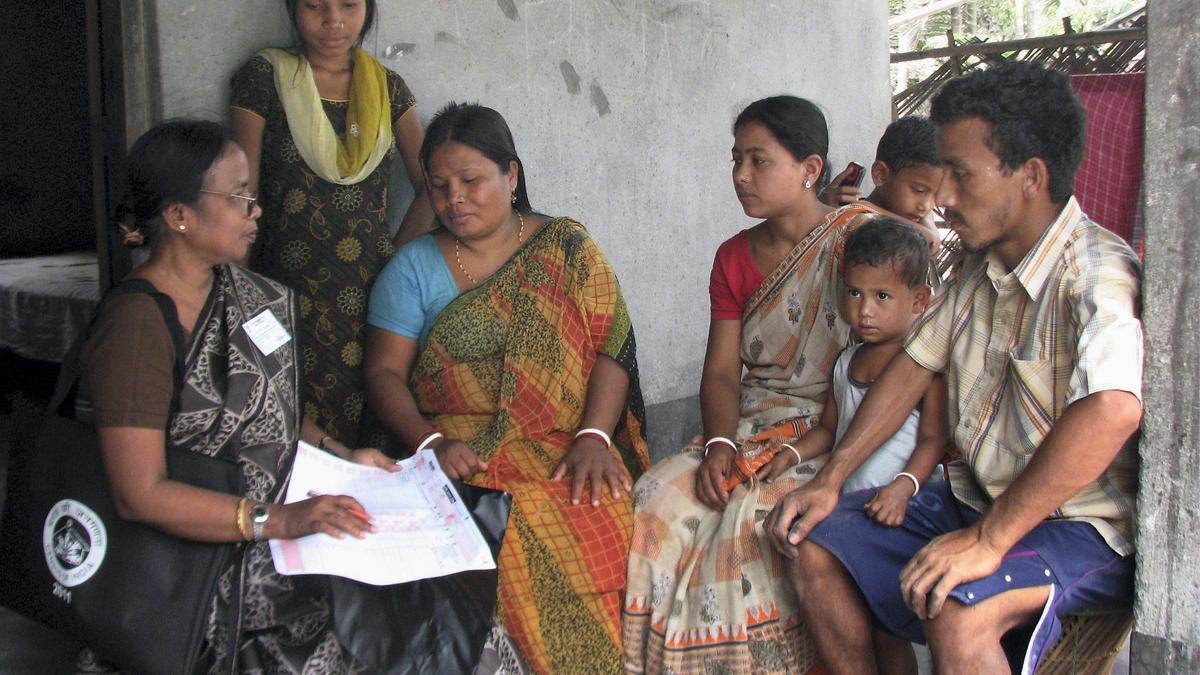
An analysis of Indian Census data from 1991 to 2011 challenges the widespread claim that 20 million undocumented Bangladeshi migrants have entered India, suggesting no such surge occurred during this period.
Data vs. Rhetoric: Analyzing the Myth of the Migrant Surge
For decades, the discourse surrounding migration from Bangladesh to India has been fraught with political tension and anecdotal evidence. A recurring claim in various political spheres suggests that as many as 20 million undocumented migrants from Bangladesh have settled within Indian borders. However, a rigorous analysis of official Census data between 1991 and 2011 presents a starkly different reality, suggesting that the feared 'surge' of undocumented arrivals is not supported by the available statistical evidence. This discrepancy highlights the critical gap between political narrative and empirical demographic data.
The Statistical Disconnect
At the heart of this analysis is the use of the Decennial Census, the most comprehensive tool for tracking population shifts in India. When examining the growth rates of populations in border states—most notably Assam and West Bengal—the data does not show a spike that would be consistent with the influx of 20 million people. If such a massive migration event had occurred between 1991 and 2011, the population growth percentages in these regions would have deviated significantly from national and state averages. Instead, the growth patterns remain relatively consistent with natural birth and death rates, casting doubt on the validity of the 20-million-person figure.
Historical and Geopolitical Context
To understand why these claims persist, one must look at the historical relationship between India and Bangladesh. Since the partition of 1947 and the subsequent liberation war of 1971, migration has been a constant, albeit fluctuating, reality. The historical trauma and geopolitical instability of the region have made 'migration' a potent political symbol. However, by narrowing the focus to the 1991-2011 window, the analysis separates historical legacy migrations from contemporary claims of a new, undocumented surge. The data suggests that while migration continues at a baseline level, the narrative of a catastrophic, uncontrolled wave is largely unsubstantiated by the numbers.
Methodological Challenges in Tracking the Undocumented
Critics of Census-based analysis often argue that 'undocumented' migrants, by definition, avoid being counted. While this is a valid theoretical point, demographic experts argue that it is nearly impossible for 20 million people to remain completely invisible to all state mechanisms while simultaneously integrating into the local economy and society. The 'invisible' population argument often fails when compared to the total population growth of the affected states; there simply isn't enough 'unexplained' growth in the total headcount to account for millions of hidden individuals. This suggests that the claims of a massive undocumented population are based more on perception than on measurable demographic shifts.
Broader Political and Social Implications
The insistence on the 20-million-migrant figure has significant implications for policy and social cohesion. This narrative has frequently served as the catalyst for discussions regarding the National Register of Citizens (NRC) and the Citizenship Amendment Act (CAA). When political rhetoric outweighs statistical data, it can lead to increased social polarization and the marginalization of legitimate citizens who may share linguistic or cultural similarities with migrants. The contrast between the Census data and the political claims underscores the danger of using unverified numbers to drive national security and citizenship policies.
Future Trends and the Need for Data-Driven Policy
Looking forward, the reliance on outdated or inflated figures is likely to continue unless there is a renewed commitment to transparent, data-driven governance. As India moves toward digital identity systems and more sophisticated tracking, the ability to distinguish between legitimate residents and undocumented migrants will improve. However, the 1991-2011 analysis serves as a vital reminder that empirical evidence should be the primary driver of policy. Future trends suggest a shift toward more targeted border management rather than broad-brush demographic anxieties, provided that the state prioritizes factual analysis over political convenience.
Conclusion
In summary, the claim that 20 million undocumented Bangladeshi migrants entered India between 1991 and 2011 is not supported by Census data. The lack of a corresponding surge in population growth in border regions indicates that the scale of undocumented migration has been vastly exaggerated. By anchoring the conversation in statistical reality, it becomes clear that the 'migrant crisis' is often more of a rhetorical tool than a demographic fact.
Verification Required?