America wants to make its own humanoid robots. That won’t be easy.
Source Entity
The Indian Express
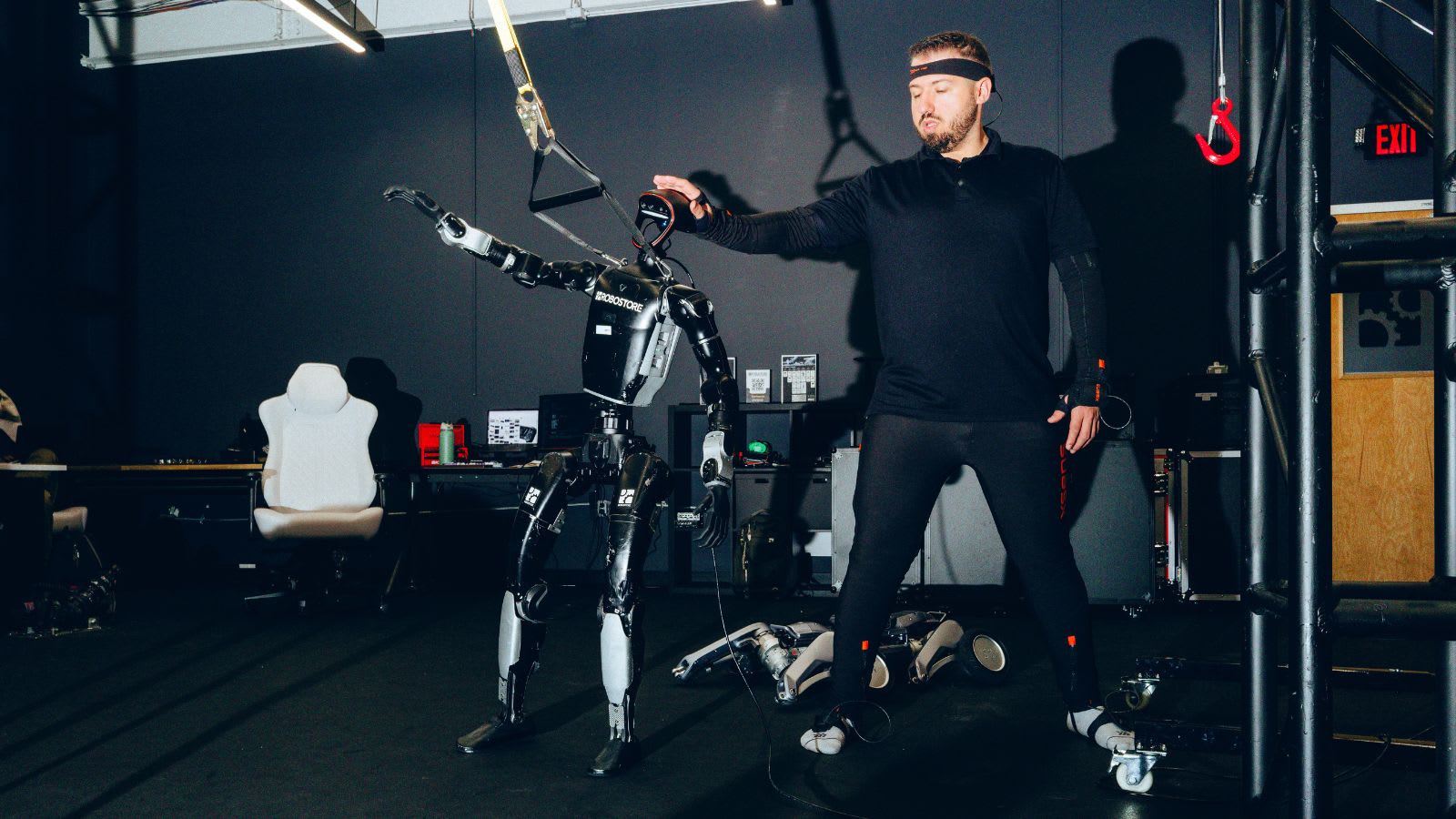
Unitree Robotics has launched a $900 million IPO in China, highlighting the country's dominance in humanoid production. Meanwhile, American entrepreneurs like Teddy Haggerty face significant scaling challenges as they attempt to build competitive humanoid robotics domestically.
The Global Race for Humanoid Dominance
The robotics industry is currently witnessing a stark divergence between Chinese manufacturing scale and American entrepreneurial ambition. As Unitree Robotics, a leader in the field, prepares for its $900 million IPO on the Shanghai STAR market, the global market is forced to reckon with the sheer speed at which Chinese companies have integrated humanoid technology into public spaces. With a valuation of approximately $9 billion, Unitree’s market entry serves as a litmus test for whether acrobatic, high-performance robots can evolve into commercially viable labor assets.
The Chinese Advantage: Scale and Integration
Unitree’s success is rooted in a unique ecosystem that fosters rapid iteration. By producing robots that can perform complex maneuvers like backflips, the company has captured the public imagination and investor interest alike. However, the true strength lies in their manufacturing volume. As industry experts note, these robots are already a visible part of the urban landscape in China, providing the company with an unparalleled feedback loop of real-world operational data that Western competitors currently lack.
The American Challenge: A Quixotic Pursuit
In contrast to China’s integrated manufacturing prowess, American efforts are characterized by individual entrepreneurial ventures. Teddy Haggerty, who served as a North American distributor for Unitree, is now pivoting to domestic production with his new company, Robo Inc. Operating out of a small Long Island warehouse, Haggerty’s attempt to challenge the established Chinese supply chain highlights the immense barriers to entry. The difficulty lies not just in engineering, but in matching the cost-efficiency and production velocity of firms that have spent years perfecting their assembly lines.
Commercial Viability vs. Technical Prowess
Despite the excitement surrounding Unitree’s IPO, a fundamental question remains: can these machines perform genuinely useful work? While the ability to perform acrobatics demonstrates advanced balance and actuator control, the path to profitability requires these robots to transition from novelty to utility. Investors are watching closely to see if the capital raised will be used to solve the 'last mile' of industrial and domestic application, or if the technology will remain confined to controlled environments.
Geopolitical and Economic Implications
This technological divide is further complicated by intensifying geopolitical tensions, which influence trade policies and the availability of components. The success of a Chinese firm listing on the mainland while American startups struggle to scale suggests that the robotics sector may follow a trajectory similar to other hardware industries, where geographic clusters dictate competitive advantage. For U.S.-based firms, the mission is to close the experience gap before the market for humanoid labor becomes saturated by established international players.
Future Trends in Robotics
Looking ahead, the industry will likely shift toward modular, task-specific humanoid designs. As companies like Robo Inc. attempt to localize production, they will need to focus on niche markets where American engineering can provide a premium over mass-produced alternatives. The coming years will determine whether the humanoid sector becomes a globalized market or one defined by regional technological silos, dictated by the outcomes of current IPOs and the success of domestic manufacturing initiatives.
Multiple Citing Sources