SBSP chief Rajbhar’s claim on U.P. division ignites fresh debate as opposition hit out at NDA
Source Entity
India Latest News: Top National Headlines Today & Breaking News | The Hindu
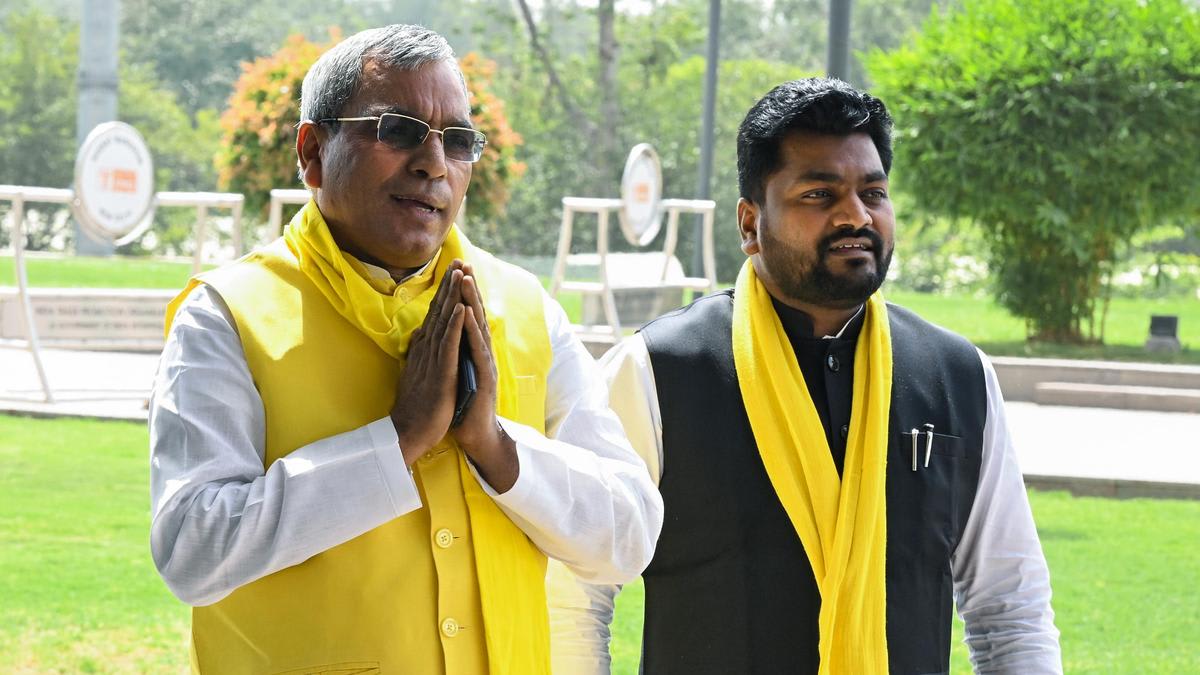
SBSP chief Om Prakash Rajbhar has reignited debates over dividing Uttar Pradesh into four smaller states following a caste census. The proposal has drawn criticism from the opposition, while the BJP has sought to downplay the significance of these claims.
The Re-emergence of the Uttar Pradesh Division Debate
Recent statements by Om Prakash Rajbhar, the president of the Suheldev Bhartiya Samaj Party (SBSP) and a cabinet minister in Uttar Pradesh, have brought the long-standing discourse regarding the administrative reorganization of India's most populous state back into the public eye. Rajbhar’s assertion that the state will soon be divided into four distinct parts—Paschim Pradesh, Awadh, Bundelkhand, and Purvanchal—has sparked intense political debate, particularly due to his claim that this process is contingent upon the completion of a caste census.
The Role of Caste Census and Political Strategy
Central to Rajbhar’s argument is the integration of the caste census with state re-organization. By suggesting that the Prime Minister signaled a willingness to divide the state following the census, Rajbhar has effectively linked social demographic data with administrative restructuring. His further claim that the Purvanchal region would specifically see a Chief Minister from the Rajbhar community highlights a strategy aimed at consolidating support among his base by promising regional political empowerment through statehood.
Historical Context and Regional Aspirations
The idea of carving smaller states out of Uttar Pradesh is not new; it has been a recurring theme in the state's political history, notably championed by leaders like Mayawati in previous decades. The proposed regions—Western UP, Central UP, Bundelkhand, and Purvanchal—represent distinct socio-cultural and geographical identities that have often felt marginalized by the centralized governance in Lucknow. Proponents argue that smaller states would lead to better administrative efficiency and more targeted development, while critics often view such demands as political posturing.
Opposition Critique and NDA Dynamics
The political fallout from these remarks has been swift. While the Bharatiya Janata Party (BJP) has attempted to downplay the significance of Rajbhar’s claims to maintain party cohesion, the opposition, particularly the Congress, has been vocal. They have accused the central leadership of ‘double-speak,’ questioning the authenticity of the alleged conversation between Rajbhar and the Prime Minister regarding the state's future. This friction underscores the delicate balancing act required within the National Democratic Alliance (NDA) when dealing with the regional aspirations of its smaller partners.
Future Implications for Governance
Should the discourse around the division of Uttar Pradesh gain further momentum, it could fundamentally alter the political landscape of North India. The implications of such a move would be vast, affecting everything from legislative representation to resource allocation and infrastructure development. However, the lack of officially demarcated boundaries for these proposed states suggests that any transition would face significant constitutional and logistical hurdles, ensuring that this debate remains a complex and contentious issue for the foreseeable future.
Verification Required?