'Somebody hit us': Audio captures moment jets collided at Miami airport
Source Entity
AYUSH PANDEY
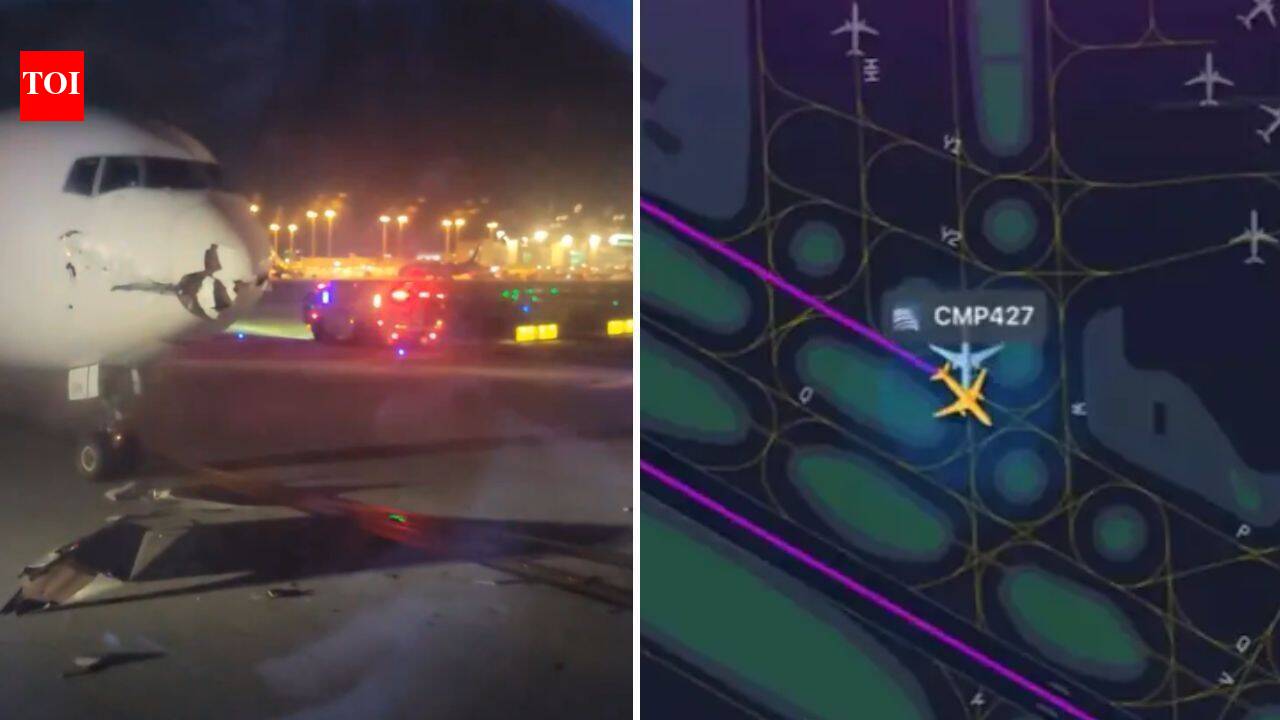
A UPS cargo plane and a Copa Airlines jet collided on a taxiway at Miami International Airport. The FAA is investigating the incident, which resulted in minor injuries and significant damage to the passenger aircraft.
Collision on the Tarmac: A Detailed Analysis of the Miami Airport Incident
The Incident Overview
On a Saturday night at approximately 9:15 pm, a routine taxiing procedure at Miami International Airport (MIA) took a dangerous turn. A UPS Boeing 767 cargo aircraft and a Copa Airlines Boeing 737 passenger jet were involved in a collision on the taxiway. The incident, while appearing catastrophic in initial reports, resulted in limited physical harm, with reports varying between no injuries and two individuals sustaining minor injuries. The immediate aftermath was captured in chilling audio recordings, where a Copa Airlines pilot can be heard stating, "Somebody hit us," providing a visceral account of the sudden impact.
Investigating the Sequence of Events
Preliminary information suggests that the collision occurred as one aircraft was arriving at the airport and the other was in the process of preparing for departure. The physical evidence of the encounter was stark; footage captured by passengers aboard the Copa Airlines flight displayed clear, structural damage to the nose of the Boeing 737. This visual confirmation underscores the force of the impact between the two massive airframes. The US Federal Aviation Administration (FAA) has formally launched an investigation to parse through the specific taxiway movements and air traffic control instructions that led to this proximity breach.
Operational Context and Safety Protocols
This collision occurs against the backdrop of broader, nationwide flight disruptions currently affecting the United States aviation sector. While the investigation will determine if systemic congestion contributed to the error, the event highlights the inherent risks of ground operations at high-traffic hubs like MIA. The cooperation of both UPS and Copa Airlines with the FAA is a standard, yet critical, step in ensuring that the root causes—whether they be human error, communication breakdowns, or technical taxiway issues—are identified to prevent future occurrences.
The Human Element and Communication
The audio recordings of the Copa Airlines pilot serve as a primary piece of evidence in reconstructing the timeline. Communication between pilots and ground control is the final line of defense against ground-based collisions. The fact that the pilot was aware of the impact immediately suggests that the collision was unexpected and occurred during a phase of flight where the aircraft were likely moving at relatively low speeds, which may explain the lack of more severe injuries.
Future Implications for Aviation Safety
As the FAA continues its probe, the aviation industry will likely scrutinize ground safety protocols. Miami International Airport remains one of the busiest gateways in the country, and the intersection of cargo and passenger traffic presents complex logistical challenges. The findings from this investigation will likely influence future taxiway management strategies and potentially lead to updated training requirements for ground crews and pilots operating in high-density environments.
Conclusion
While the collision at Miami International Airport was a frightening experience for passengers and crew, the outcome could have been significantly worse. The focus now shifts to the FAA’s rigorous investigation process. By analyzing the data from the flight recorders and the audio logs, regulators hope to restore confidence in airport ground operations and ensure that such incidents do not become a regular feature of a strained national aviation system.
Multiple Citing Sources