UPS turns the page as job cuts and Amazon ‘glide down’ are completed
Source Entity
Tomi Kilgore
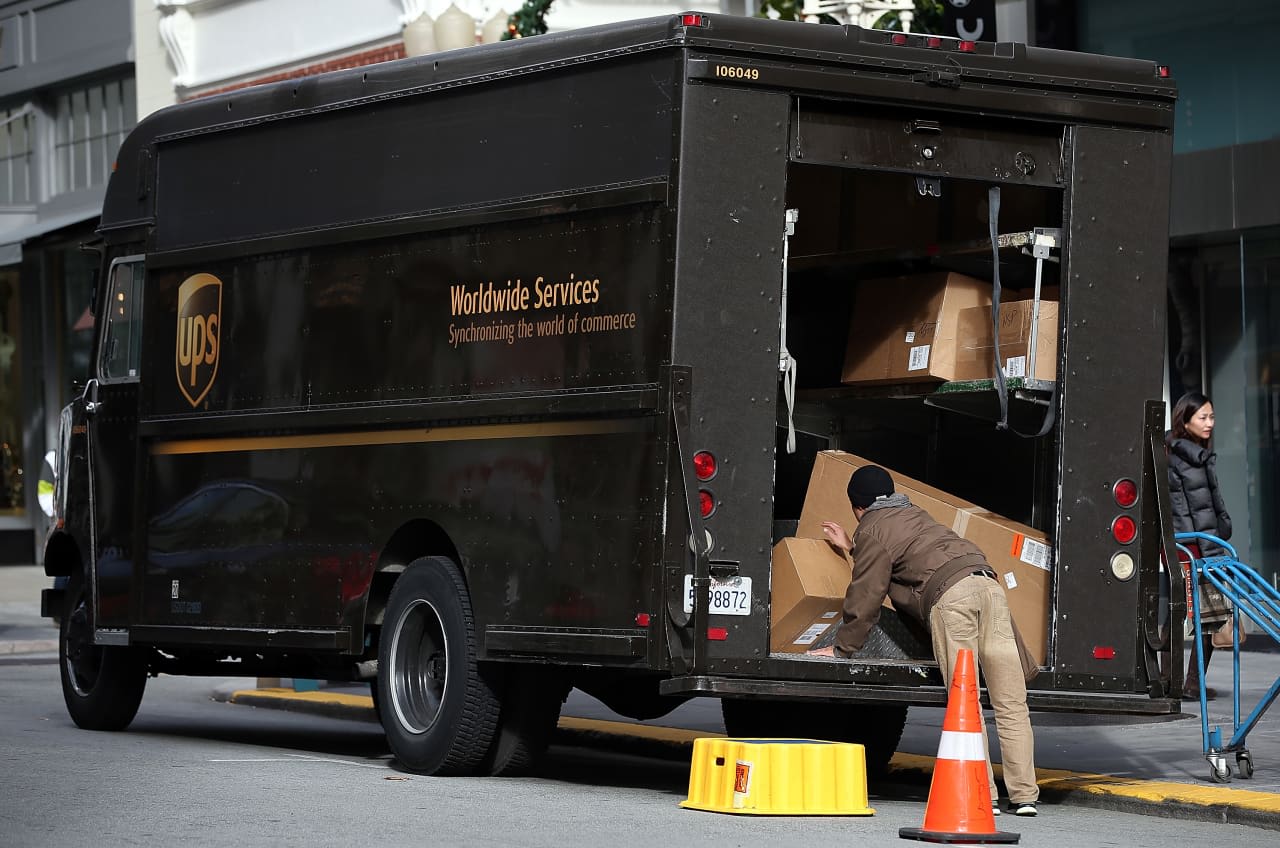
UPS exceeded Wall Street expectations in its second-quarter earnings report, posting $1.76 adjusted EPS on $22.8 billion in revenue. Following this performance, the company raised its full-year guidance as it moves past recent workforce reductions and shifts in its relationship with Amazon.
UPS Demonstrates Resilience in Q2 Earnings
United Parcel Service (UPS) has signaled a potential turnaround in its operational performance, reporting second-quarter earnings that notably outperformed Wall Street expectations. The delivery giant reported adjusted earnings of $1.76 per share, comfortably surpassing the $1.66 forecasted by analysts surveyed by LSEG. This financial milestone, coupled with a revenue figure of $22.8 billion against an expected $21.81 billion, suggests that the company is successfully navigating a complex macroeconomic landscape characterized by fluctuating consumer demand and rising operational costs.
Analyzing the Financial Discrepancy
While the adjusted figures paint a picture of growth, a deeper look at the raw data reveals a more nuanced reality. The company reported a net income of $604 million, or 71 cents per share, which represents a marked decline from the $1.28 billion, or $1.51 per share, recorded in the same period last year. This significant year-over-year contraction underscores the impact of one-time charges and structural adjustments. However, the market has focused on the adjusted profit of $1.5 billion, which serves as a clearer indicator of the company’s core operational efficiency during this transitional phase.
Strategic Shifts and Operational Efficiency
Much of this positive momentum is attributed to the completion of significant internal restructuring. UPS has effectively concluded a period of substantial job cuts and has successfully managed what leadership refers to as the 'glide down' of volume associated with Amazon. Historically, the relationship between these two logistics titans has been a major variable in UPS’s volume projections. By normalizing this reliance, UPS is moving toward a more diversified and sustainable business model that is less vulnerable to the strategic shifts of a single major client.
Market Response and Investor Confidence
Reflecting the market's approval of these results, UPS shares saw a rally in premarket trading. Investors have responded positively to the company's decision to raise its full-year guidance, which serves as a crucial signal of management's confidence in the second half of the year. In an industry where logistics demand is often viewed as a bellwether for the broader economy, this upward revision provides a degree of optimism regarding consumer and industrial shipping volumes.
Future Implications and Outlook
Looking forward, the ability of UPS to sustain this growth will depend on its capacity to manage labor costs and maintain service quality in a competitive landscape. The successful conclusion of its recent downsizing efforts indicates that the company is leaner and perhaps better positioned to handle the volatility of the global supply chain. As UPS enters the latter half of the year, the market will be watching closely to see if the increased guidance holds firm against potential headwinds in global trade and domestic retail spending.
Conclusion
In summary, UPS’s second-quarter performance represents a critical inflection point. By beating earnings expectations and providing a more bullish outlook for the remainder of the year, the company has successfully reassured stakeholders that its strategic pivots are yielding results. While the transition from a period of heavy restructuring has been costly, the underlying metrics suggest that the firm is stabilizing its trajectory for long-term growth.
Multiple Citing Sources
Verification Required?