UPSC Essentials | Daily subject-wise quiz : Economy MCQs on vanilla solar projects, Public Private Partnership Appraisal Committee and more (Week 177)
Source Entity
Nitendra Pal Singh
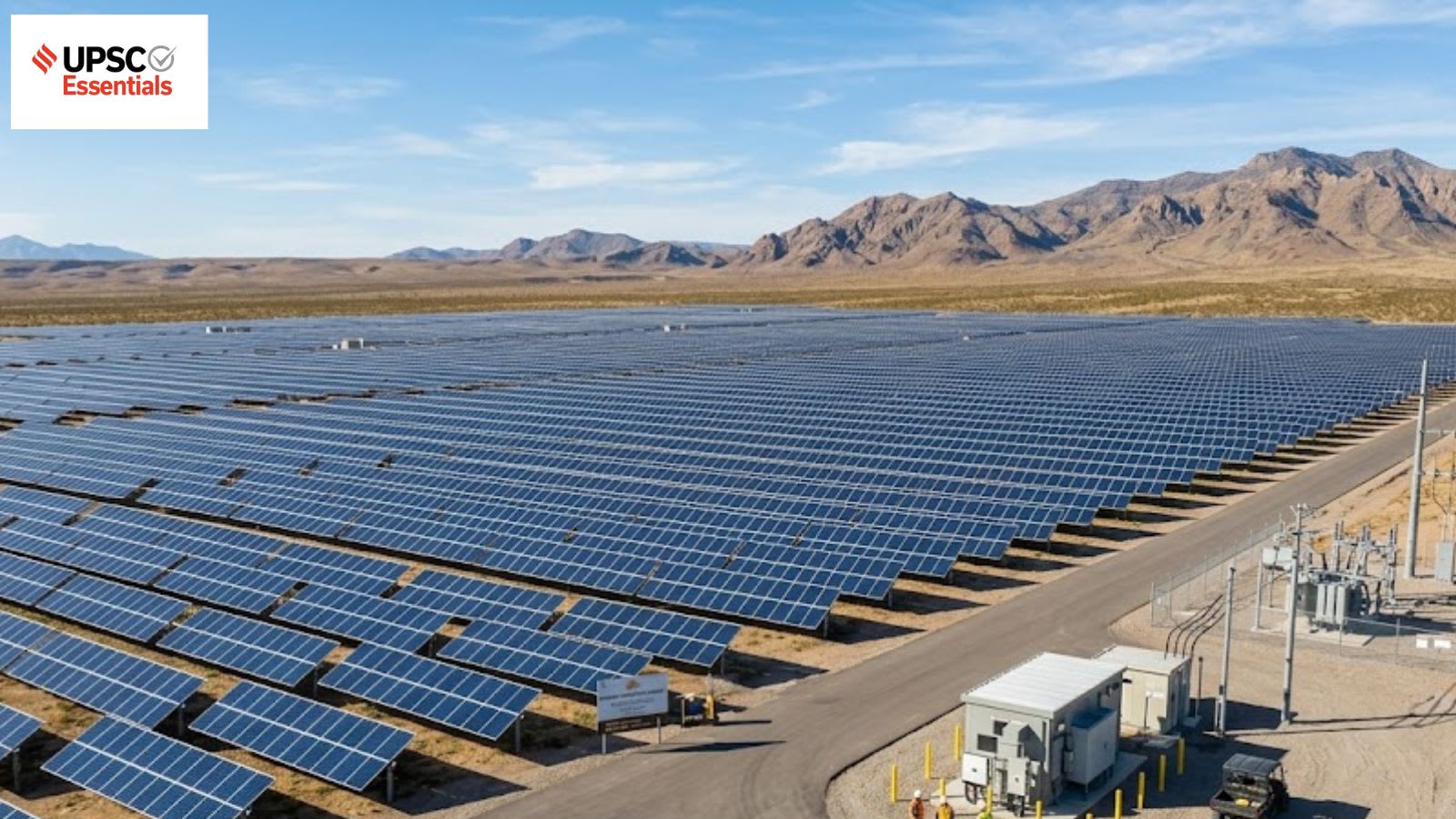
The UPSC Essentials initiative provides targeted economic quizzes to help aspirants master static syllabus topics like 'vanilla solar projects' and PPP appraisal. These resources serve as a critical tool for structured exam preparation and conceptual clarity.
Enhancing Civil Services Preparation Through Targeted Assessment
The UPSC Essentials initiative has emerged as a cornerstone for aspirants navigating the complex landscape of the Union Public Service Commission examinations. By focusing on subject-wise quizzes, particularly in the domain of Economy, the platform provides a systematic approach to mastering the static portions of the syllabus. This methodology is essential for candidates who must balance current affairs with the foundational economic theories that frequently appear in preliminary and main examinations.
Decoding Economic Concepts: The Case of 'Vanilla Solar Projects'
A primary example of the initiative's pedagogical value is its recent focus on 'vanilla solar projects.' In the context of India's aggressive renewable energy targets, understanding the distinction between standard photovoltaic solar power projects and more complex hybrid models is critical. By defining 'vanilla' projects as those generating electricity directly from sunlight without integrated battery storage or wind pairing, the quiz forces students to grapple with the technological nuances that dictate grid stability and infrastructure investment.
Governance and Fiscal Frameworks: PPP Appraisal
The inclusion of the Public Private Partnership Appraisal Committee (PPPAC) in these quizzes underscores the importance of understanding governance frameworks. The PPPAC is the institutional mechanism responsible for the appraisal of central sector PPP projects, ensuring that public-private collaborations remain fiscally responsible and aligned with national development goals. For an aspirant, recognizing the role of this committee is not merely an academic exercise but a prerequisite for understanding how large-scale infrastructure projects, such as solar parks, are greenlit and managed.
The Role of Static Syllabus in Competitive Exams
While current affairs dominate the headlines, the static syllabus serves as the bedrock of the UPSC examination. The initiative’s emphasis on these topics ensures that candidates do not lose sight of established economic principles while chasing daily news updates. By bridging the gap between theoretical knowledge and real-world application, UPSC Essentials creates a more holistic learning environment that prepares students for the multi-disciplinary nature of the civil services.
Strategic Implications for Future Policy Analysts
For future policymakers, the ability to discern between different energy project architectures and administrative appraisal processes is vital. As India transitions toward a greener economy, the intersection of renewable energy technology and public-private financial models will define the next decade of infrastructure growth. Engaging with these quizzes allows aspirants to develop the analytical rigor required to evaluate government policy effectively, providing them with a distinct advantage in the competitive selection process.
Concluding Insights on Exam Readiness
In conclusion, the UPSC Essentials daily quiz initiative serves as a vital bridge between theoretical economic knowledge and practical civil service requirements. By focusing on high-impact terminology and procedural governance, the platform ensures that aspirants are not only well-versed in the static syllabus but are also capable of applying that knowledge to contemporary administrative challenges. Continued engagement with these resources is recommended for any candidate aiming to achieve conceptual clarity and long-term success in the examination.