From the Urdu Press: ‘Mohan Bhagwat should walk the talk in India’
Source Entity
Shahid Pervez
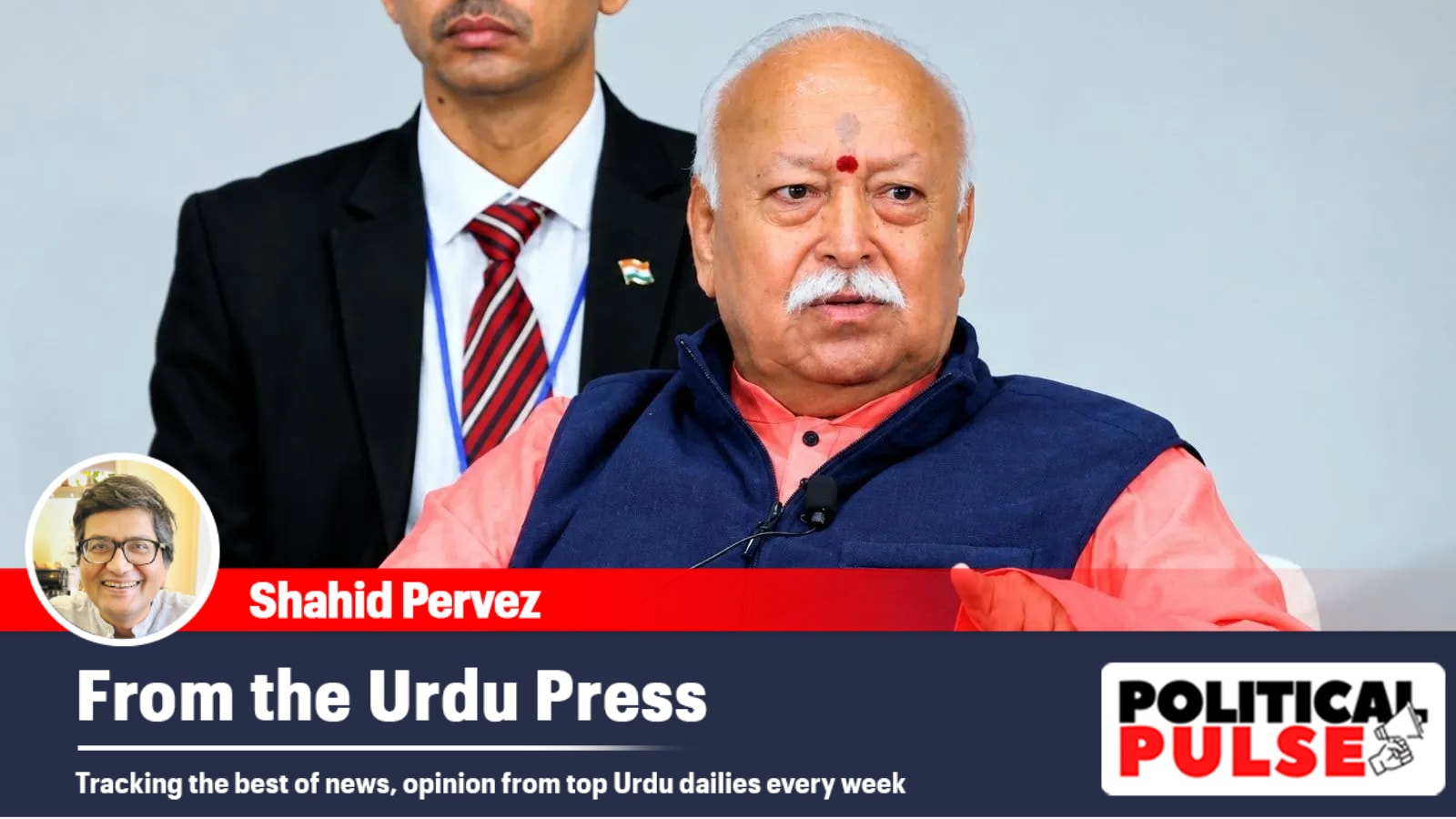
Urdu dailies are focusing on the political friction surrounding FIRs against Rahul Gandhi and the contrast between RSS chief Mohan Bhagwat's international rhetoric on diversity and domestic realities. The discourse highlights ongoing tensions over social justice, reservation policies, and the secular fabric of Indian politics.
The Polarized Discourse: Rahul Gandhi, Mohan Bhagwat, and the Urdu Press
Recent coverage in the Urdu press has underscored a period of intense political friction in India, centering on the contrasting narratives of Opposition leader Rahul Gandhi and RSS Sarsanghchalak Mohan Bhagwat. The spotlight on the registration of an FIR against the Leader of Opposition follows his direct challenge to Prime Minister Narendra Modi regarding a controversial “purification” ritual in Haldwani, Uttarakhand. This ritual, which occurred following a rally by Congress president Mallikarjun Kharge, has become a flashpoint, symbolizing the deeper ideological battle over religious expression and political accountability in public spaces.
The Contradiction of Rhetoric and Reality
The Urdu dailies have drawn a sharp contrast between Mohan Bhagwat’s international messaging and the domestic actions of his ideological affiliates. While Bhagwat utilized a platform in New York to advocate for diversity and national unity, the editorial consensus in these newspapers suggests a significant disconnect. The call for Bhagwat to “walk the talk” reflects a growing demand from critics for the RSS leadership to ensure that their stated commitment to inclusivity is mirrored in the actions of grassroots organizations and political leaders operating within India.
The Legal and Political Battlefield
The filing of an FIR against the Lok Sabha Leader of Opposition marks a significant escalation in the ongoing legislative and judicial tussle between the ruling establishment and the Congress leadership. By demanding a counter-FIR regarding the Haldwani ritual, Rahul Gandhi has signaled a confrontational strategy aimed at holding the executive branch accountable for incidents that critics label as communal provocations. This legal maneuvering indicates that the judiciary is increasingly becoming the arena where political grievances are aired, further complicating an already polarized national landscape.
Reservation and the Renewed Quota Debate
Beyond the immediate political clashes, the Urdu press—notably the Hyderabad-based Siasat—has pivoted toward the perennial issue of reservation. With the debate on quotas gaining momentum once again, Siasat highlights that reservation remains one of the most sensitive and historically significant pillars of Indian social policy. The resurgence of this discussion suggests that the current political climate is not only defined by religious and institutional conflict but also by a fundamental struggle over social equity and the protection of marginalized communities.
Future Implications for Indian Democracy
The intersection of these events points to a volatile political future. As the RSS attempts to project a more moderate, globally-conscious image, the persistence of local controversies—such as the Haldwani incident—threatens to undermine those efforts. Simultaneously, the aggressive stance taken by the Opposition suggests that the upcoming legislative sessions will be defined by an uncompromising demand for transparency. The ongoing scrutiny from the vernacular press serves as a critical barometer for these tensions, highlighting the widening gap between the national discourse on unity and the localized realities of social and political unrest.