US air quality map: Alert issued for Philadelphia, Pittsburgh after Canadian, Minnesota wildfires: Code Purple activated
Source Entity
Latest News: Today's Latest News Headlines from India & World | Hindustan Times | Hindustan Times
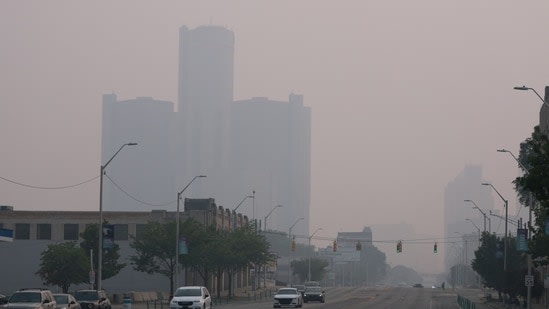
Smoke from active wildfires in Canada and Minnesota has triggered severe air quality alerts across the US, including Code Purple and Maroon status in Pennsylvania. Major cities are canceling outdoor events and implementing emergency protocols to protect public health as hazardous conditions persist.
The Expanding Impact of North American Wildfire Smoke
A Widespread Environmental Crisis
Recent environmental data confirms that a significant portion of the United States is experiencing hazardous atmospheric conditions due to the migration of smoke from active wildfires. With 858 fires currently burning in Canada—many categorized as out of control—and additional blazes in northern Minnesota, the resulting particulate matter has blanketed major metropolitan areas. This event has forced a shift in public safety protocols, moving beyond standard advisories to the implementation of emergency air quality alerts.
The Severity of Code Purple and Maroon Alerts
The Pennsylvania Department of Environmental Protection (DEP) has taken the drastic step of issuing a Code Purple air quality alert for the entire state, with some regions, such as Allegheny County, experiencing even more severe Code Maroon conditions. These color-coded systems, standardized by the US Air Quality Index, signal that the air has reached levels considered 'very unhealthy' or 'hazardous' for the general population. The persistence of these conditions, anticipated to last through Saturday, underscores the long-range transport capabilities of wildfire smoke.
Disruptions to Public Life and Infrastructure
The impact of this smoke is not merely atmospheric; it is actively disrupting the social and economic fabric of affected cities. From Chicago to the New York City metro area, municipal governments are scrambling to adapt. In Chicago, the rescheduling of a high-profile concert by The Black Keys highlights the necessity of curbing large-scale outdoor gatherings. Simultaneously, regional authorities have shuttered beaches and canceled children's summer camps to minimize prolonged exposure to fine particulate matter.
Emergency Response and Mitigation Strategies
Major cities, particularly in New York, are leveraging existing emergency frameworks to combat the health risks. By activating heat emergency protocols and distributing KN95 masks, officials are attempting to mitigate the respiratory dangers posed by the smoke. These measures serve as a critical defense for vulnerable populations who are at higher risk of experiencing adverse health effects when the air quality index reaches the extreme levels currently observed.
Meteorological Factors and Future Implications
The current crisis is driven by a convergence of environmental factors, specifically the large cluster of fires in northwestern Ontario and Minnesota. As these plumes travel across the Midwest and into the Northeast, they demonstrate how wildfire-prone regions in Canada can directly impact the air quality of distant American cities. This trend suggests that as wildfire seasons become more intense and prolonged, urban centers far from the source of the fire will increasingly need to integrate air quality management into their standard emergency preparedness plans.
Conclusion
The current air quality emergency serves as a stark reminder of the interconnected nature of regional climate events. As the US continues to navigate these hazardous conditions, the focus remains on public health safety and the management of outdoor activities. Moving forward, the effectiveness of these emergency protocols will be vital in protecting citizens from the escalating frequency of smoke-related air quality degradation.
Multiple Citing Sources
Verification Required?