Thousands of US flights still cancelled or delayed two days after grounding of planes nationwide
Source Entity
BBC News
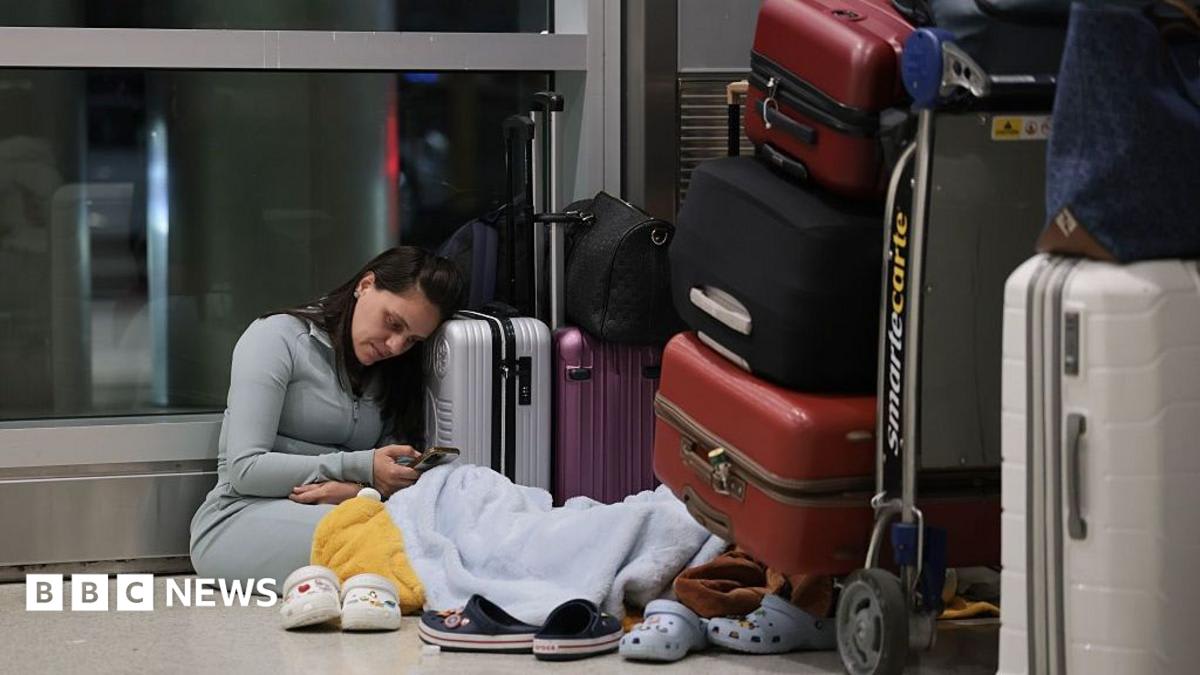
A massive technical failure in the US air-traffic control system caused nationwide flight groundings, leading to lingering delays and cancellations. Transportation Secretary Sean Duffy has identified a faulty router during a network upgrade as the culprit, prompting intense scrutiny of the contractor, L3Harris.
The Scope of the US Aviation Crisis
The recent disruption of the United States air-traffic control system represents one of the most significant logistical failures in modern American aviation history. Following a rare nationwide ground stop ordered by the Federal Aviation Administration (FAA) on Friday, the ripple effects have persisted well into the weekend. With over 5,000 delays and 2,000 cancellations reported on Sunday alone, the domestic transportation network is struggling to regain its equilibrium as thousands of passengers remain stranded.
Technical Failure and Infrastructure Vulnerabilities
Transportation Secretary Sean Duffy has provided clarity on the root cause, identifying that the system collapse occurred during a scheduled network upgrade intended to transition infrastructure from copper to fiber wiring. During this process, a specific router replacement malfunctioned, inadvertently flooding other critical routers within the system. This cascading technical failure highlights the inherent risks associated with aging infrastructure and the complexity of modernizing systems that underpin national security and public travel.
Contractor Scrutiny and Accountability
At the center of the investigation is L3Harris, the contractor tasked with managing aspects of the FAA’s network infrastructure. Secretary Duffy has publicly questioned whether the incident was the result of technical error or "incompetence" on the part of the contractor. L3Harris, a firm already under the spotlight for its work on other high-profile projects—including the renovation of a jet gifted to President Trump by Qatar—has stated it is cooperating fully with the FAA’s investigation. The company maintains that it takes the incident seriously and is working to resolve the operational fallout.
Logistical Challenges: The 'Out of Position' Problem
Restoring normal operations is not as simple as flipping a switch. Secretary Duffy noted that the primary challenge is the displacement of both aircraft and flight crews. Because the ground stop forced planes to remain stationary and crews to reach their maximum duty hours while waiting, the entire logistics chain is "out of position." Experts suggest that rebalancing these assets across the vast US airspace will likely keep the system in a state of recovery through at least Monday.
Political Implications and Future Modernization
In the wake of this chaos, President Donald Trump has called upon Congress to expedite funding for the modernization of the air-traffic control system. This event serves as a catalyst for a broader debate on whether current federal appropriations are sufficient to maintain the technical integrity of the nation's aviation backbone. As the industry looks toward the future, the pressure to replace legacy systems with robust, failure-resistant technology has never been higher.
Concluding Summary
The events of the past few days underscore the fragility of the interconnected digital systems governing American travel. While the immediate focus remains on clearing the backlog of flights and ensuring passenger safety, the long-term repercussions will likely involve a rigorous audit of government contracting practices and a significant legislative push to upgrade national aviation infrastructure to prevent a recurrence of this widespread operational paralysis.
Multiple Citing Sources