'There can only be mutual compliance’: Araghchi's reality check as US Treasury 'violates' the MoU
Source Entity
Latest News: Today's Latest News Headlines from India & World | Hindustan Times | Hindustan Times
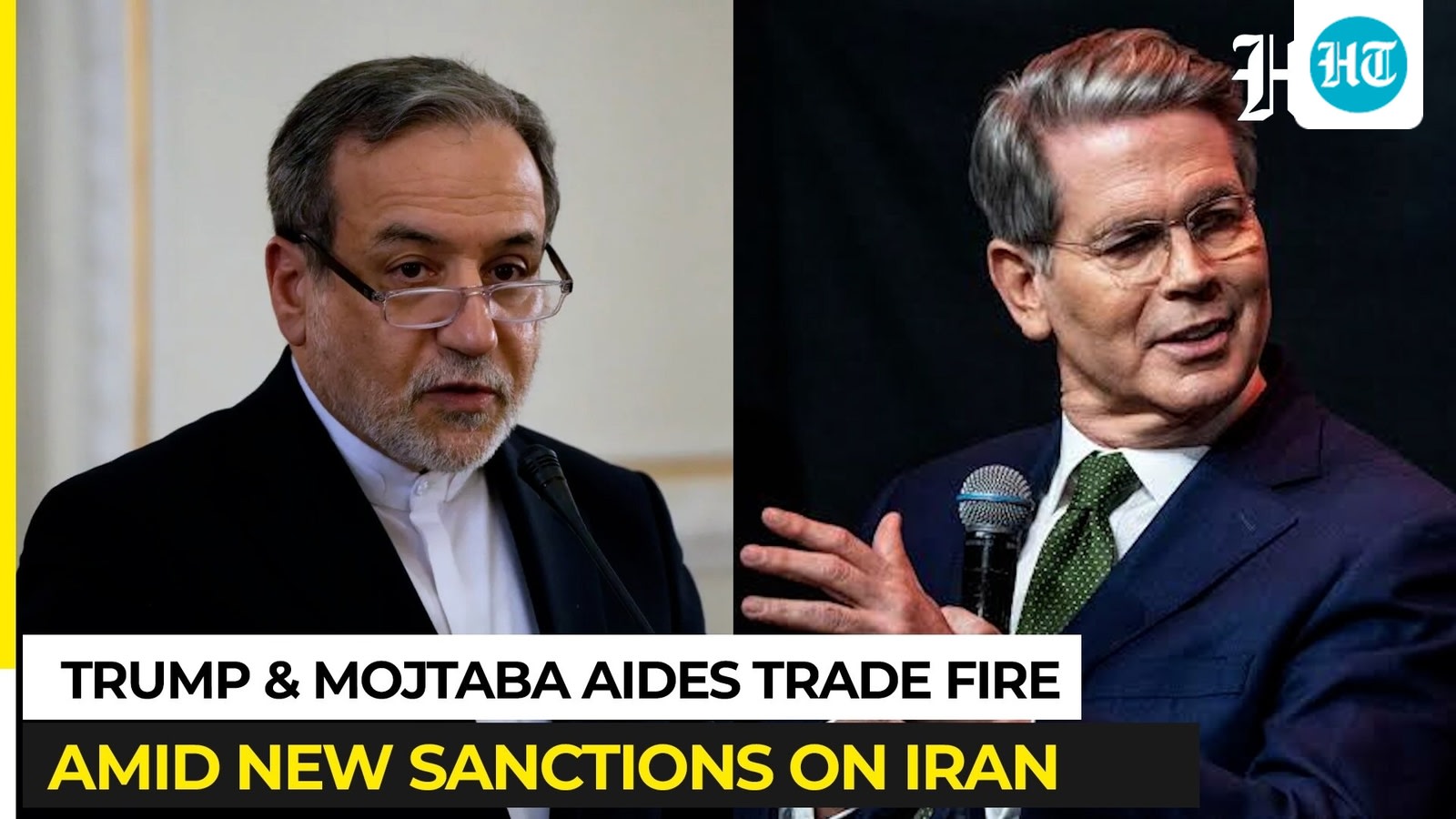
The U.S. Treasury has announced a new round of Iran-related sanctions and a general license targeting alleged financial facilitators and exchange houses after Iran resumed attacks on shipping in the Strait of Hormuz, prompting a sharp backlash from Tehran, where Foreign Minister Seyed Abbas Araghchi accuses Washington of violating Paragraph 9 of the Islamabad Memorandum of Understanding, calls out “missteps” by the “so‑called U.S. Treasury Secretary,” and insists there can only be mutual — not one‑sided — compliance under the fragile truce framework.
Escalation in the Gulf: The Collision of Sanctions and Maritime Security
The geopolitical landscape between the United States and the Islamic Republic of Iran has entered another volatile phase, characterized by a cycle of maritime aggression and economic warfare. The recent decision by the U.S. Treasury to implement a new round of sanctions and a general license targeting financial facilitators and exchange houses marks a significant tightening of the economic screws on Tehran. This move is not an isolated policy shift but a direct response to Iran's resumed attacks on commercial shipping in the Strait of Hormuz, one of the world's most critical oil transit chokepoints. The situation highlights the precarious balance between maintaining global trade security and utilizing economic leverage to curb state-sponsored instability.
The Strategic Leverage of the Strait of Hormuz
To understand the gravity of this event, one must analyze the strategic importance of the Strait of Hormuz. As a narrow waterway through which a significant portion of the world's petroleum passes, any disruption here has immediate global economic repercussions. By targeting shipping, Iran leverages its geographical position to signal its dissatisfaction or to exert pressure on Western powers. However, the U.S. response—targeting the financial infrastructure (exchange houses) that allows Iran to bypass existing sanctions—demonstrates a strategy of 'financial strangulation.' By cutting off the conduits through which Iran moves capital, the U.S. aims to make the cost of maritime aggression prohibitively expensive for the Iranian regime.
The Islamabad MoU and the Crisis of Compliance
Central to this diplomatic spat is the 'Islamabad Memorandum of Understanding' (MoU), specifically Paragraph 9, which Foreign Minister Seyed Abbas Araghchi claims the U.S. has violated. The MoU represents a fragile framework intended to maintain a truce and provide a roadmap for de-escalation. Araghchi's insistence on 'mutual compliance' suggests that Tehran views the agreement as a quid pro quo: Iranian restraint in exchange for U.S. sanctions relief or at least a cessation of new economic penalties. From Tehran's perspective, the U.S. Treasury's unilateral action is a breach of faith that undermines the legitimacy of the entire truce framework, effectively rendering the MoU a 'one-sided' instrument of U.S. policy.
Analyzing the Rhetoric of 'Mutual Compliance'
Foreign Minister Araghchi's public criticism of the U.S. Treasury Secretary reflects a broader Iranian diplomatic strategy of framing the U.S. as an unreliable partner. By labeling the Treasury's actions as 'missteps,' Tehran is attempting to pivot the narrative from their own shipping attacks to Washington's perceived failure to uphold diplomatic commitments. This rhetoric of 'mutual compliance' is a calculated move to place the burden of the truce's failure on the United States. It signals that Iran will not be coerced into unilateral concessions and will likely continue to use asymmetric tactics—such as maritime interference—if it feels the economic terms of their agreements are being ignored.
Broader Implications and Future Trends
Looking forward, this cycle of sanctions and retaliation suggests a deepening distrust that may make future diplomatic breakthroughs nearly impossible in the short term. The targeting of exchange houses is particularly potent, as it disrupts the 'shadow banking' systems Iran relies upon for survival under sanctions. We can expect a period of increased volatility in the Persian Gulf, where shipping insurance rates may spike and naval presence from both the U.S. and its allies will likely increase to deter further attacks. The stability of the global energy market now hinges on whether both parties can return to the spirit of the Islamabad MoU or if the framework will collapse entirely under the weight of mutual accusations.
Conclusion
The current standoff is more than a mere disagreement over sanctions; it is a fundamental clash over the terms of engagement between two adversarial powers. While the U.S. views its sanctions as a necessary tool for security and deterrence, Iran views them as a violation of sovereign agreements and a tool of economic war. Until a mechanism for verifiable 'mutual compliance' is established, the Strait of Hormuz will remain a flashpoint for conflict, and the Islamabad MoU will remain a dormant document rather than a functional peace treaty.
Verification Required?