US wants Iran to pledge to stop shooting at ships in Strait of Hormuz
Source Entity
BBC News
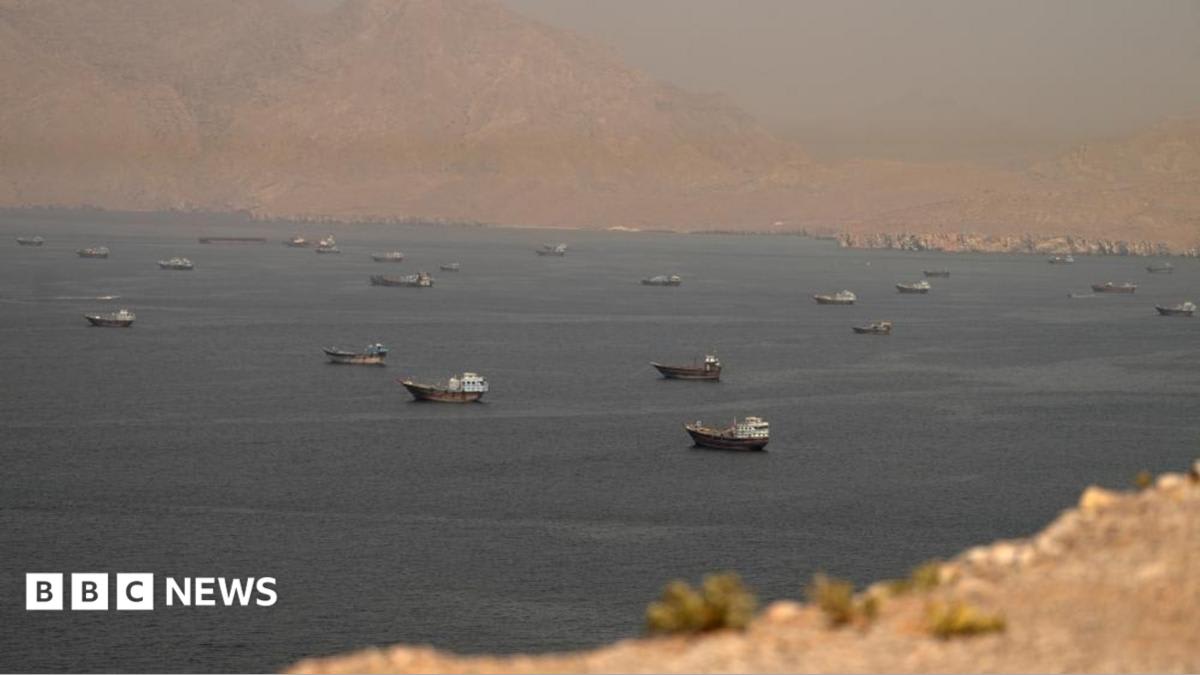
Vice-President JD Vance is among US officials expected to take part in negotiations resuming on Saturday in Oman.
Diplomatic Push for Maritime Security in the Strait of Hormuz
The United States has intensified its diplomatic efforts to secure a formal pledge from Iran to halt attacks on commercial and military vessels navigating the Strait of Hormuz. This critical development sees high-ranking U.S. officials, including Vice President JD Vance, traveling to Oman to resume negotiations. The objective is clear: to establish a predictable and secure maritime environment in one of the world's most volatile geopolitical chokepoints. The involvement of the Vice President signals that the current administration views the stability of this waterway not merely as a regional concern, but as a primary pillar of U.S. national security and global economic stability.
The Strategic Significance of the Strait of Hormuz
To understand the urgency of these negotiations, one must look at the geographical and economic importance of the Strait of Hormuz. As the only sea passage from the Persian Gulf to the open ocean, it serves as the primary artery for the global export of oil and liquefied natural gas (LNG). A significant portion of the world's petroleum passes through this narrow corridor daily. Any disruption—whether through the seizure of tankers, the use of naval mines, or direct kinetic attacks—has the immediate potential to trigger a spike in global energy prices. Historically, Iran has utilized its proximity to the Strait as a lever of asymmetric power, threatening to close the waterway in response to international sanctions or diplomatic pressure, making a formal pledge of non-aggression highly valuable to the West.
Oman's Role as a Diplomatic Bridge
The selection of Oman as the venue for these talks is a calculated strategic choice. Oman has long maintained a policy of neutrality and has historically served as the primary back-channel mediator between Washington and Tehran. Unlike other regional players, Oman possesses the unique trust of both the U.S. government and the Iranian leadership, allowing it to facilitate dialogue even when official diplomatic ties are severed or strained. By resuming negotiations in Muscat, the U.S. is leveraging Omani diplomacy to find a middle ground that allows Iran to save face while providing the U.S. with the security guarantees necessary to protect international shipping lanes.
Political Implications of High-Level U.S. Involvement
The inclusion of Vice President JD Vance in the delegation marks a significant escalation in the seniority of the U.S. diplomatic mission. Typically, such negotiations are handled by State Department officials or special envoys. The presence of the Vice President suggests a shift toward a more direct, high-stakes approach to diplomacy. It indicates that the U.S. is prepared to offer high-level assurances or negotiate comprehensive terms in exchange for Iran's commitment to maritime peace. This move may also be intended to signal to the Iranian leadership that the U.S. executive branch is personally invested in the outcome, thereby increasing the perceived cost of failure or bad-faith negotiating on Tehran's part.
Potential Economic and Geopolitical Outcomes
If successful, a pledge from Iran to stop shooting at ships would lead to an immediate reduction in maritime insurance premiums for tankers, lowering the overall cost of transporting energy. Beyond the economy, such an agreement could serve as a confidence-building measure (CBM) that paves the way for broader discussions on nuclear proliferation or regional security frameworks. However, the fragility of such a pledge remains a concern. Without a robust verification mechanism or reciprocal concessions, the agreement could be viewed as a temporary truce rather than a permanent solution. The global community will be watching closely to see if this pledge includes specific definitions of 'aggression' and how violations will be handled.
Conclusion
The upcoming negotiations in Oman represent a critical attempt to decouple maritime security from the broader, more complex frictions between the U.S. and Iran. By focusing specifically on the Strait of Hormuz, the U.S. aims to safeguard the global economy from sudden energy shocks. While the road to a lasting agreement is fraught with historical distrust, the direct involvement of Vice President JD Vance underscores the urgency of the mission. The outcome of these talks will likely determine whether the Persian Gulf enters a period of relative stability or remains a flashpoint for potential global conflict.