US Military Launches 11th Consecutive Night Of Strikes On Iran
Source Entity
NDTV News Search Records Found 1000
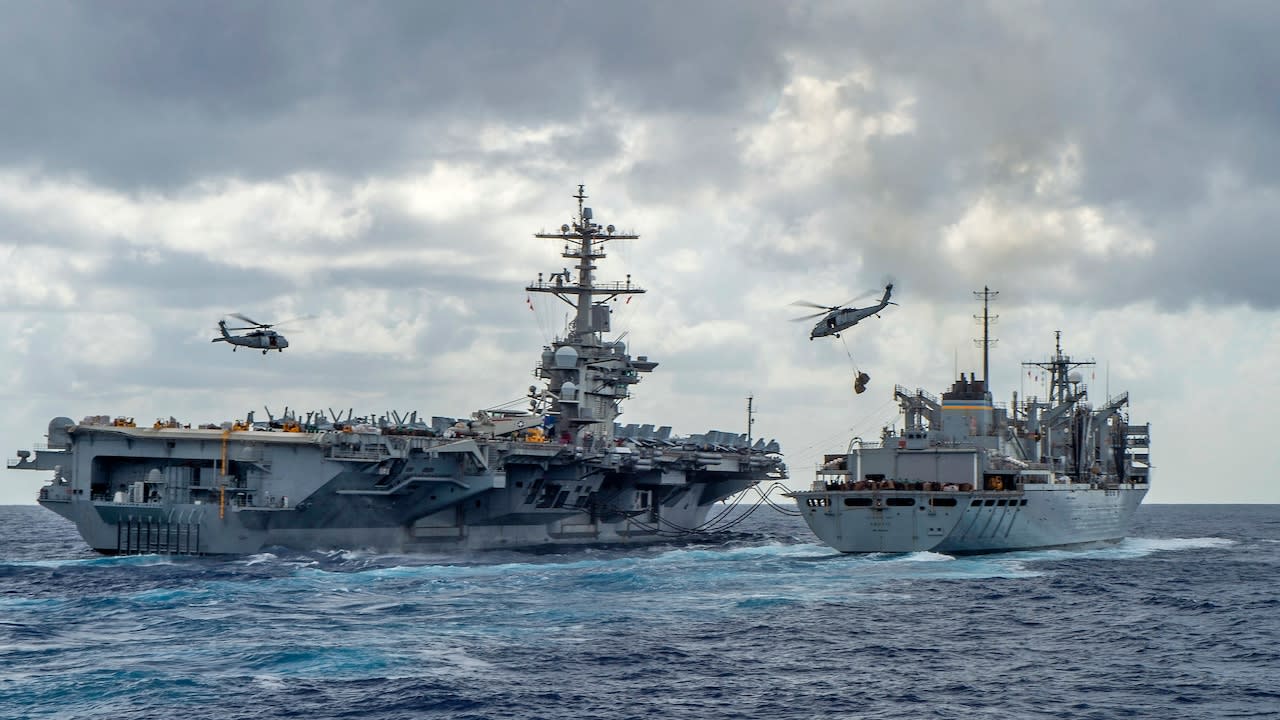
The US has launched an eleventh consecutive night of strikes against Iran, targeting military and infrastructure sites to secure the Strait of Hormuz. The conflict is rapidly expanding, with retaliatory attacks impacting Kuwait, Bahrain, and Jordan, while threatening regional stability.
Escalation in the Strait of Hormuz: An Analysis of the US-Iran Conflict
The ongoing military engagement between the United States and Iran has reached a critical juncture, marked by the eleventh consecutive night of airstrikes. Centered on the vital Strait of Hormuz, the conflict has transcended localized skirmishes to become a broader regional destabilization event. The US military, through Central Command (Centcom), has explicitly stated that these operations are aimed at degrading Iran’s capability to threaten international commercial shipping, a lifeline for global energy markets.
Strategic Targets and Geographical Reach
Recent reports confirm that the strikes have hit targets across southern and western Iran, including areas near the Bushehr nuclear power plant. The expansion of hostilities is evident as Iranian air defenses were activated in Tehran, with further explosions reported in cities such as Tabriz, Chabahar, and Konarak. This breadth of operations underscores a significant escalation in the scope of US military engagement, moving beyond mere deterrence into direct systematic degradation of Iranian military infrastructure.
The Widening Regional Conflict
What began as a bilateral dispute between Washington and Tehran has rapidly metastasized. The conflict now involves multiple regional actors; Kuwait has suffered damage to critical infrastructure, including a desalination plant and power stations, while Jordan and Bahrain have also faced direct attacks. Furthermore, the Houthi rebels in Yemen have initiated a naval blockade of Saudi Arabia, signaling that the entire Persian Gulf is now a theater of active, multi-front warfare.
The Nuclear Dimension and Diplomatic Breakdown
Central to this volatility is President Donald Trump’s explicit threat to target an underground nuclear site near Natanz. This rhetoric, combined with Iran’s warnings of severe reprisals, suggests that the diplomatic framework established during the April ceasefire has completely collapsed. The threat to nuclear facilities represents a 'red line' that significantly raises the risk of total war, as both nations appear locked in a cycle of retaliatory escalation.
Broader Implications and Future Trends
Looking ahead, the situation faces a high probability of further economic and geopolitical fallout. The disruption of shipping through the Strait of Hormuz, compounded by the targeting of regional energy infrastructure, threatens to spike global oil prices and disrupt supply chains. The involvement of various proxy groups and allied states suggests that a return to stability will require more than just a military pause; it will demand a fundamental reassessment of regional security architecture. Unless a new diplomatic off-ramp is identified, the trajectory points toward a sustained period of high-intensity regional conflict.
Multiple Citing Sources
Verification Required?