Watch: US strikes 5 Iranian oil tankers near Kharg after IRGC targeted navy warships
Source Entity
ABHISHEK MISHRA
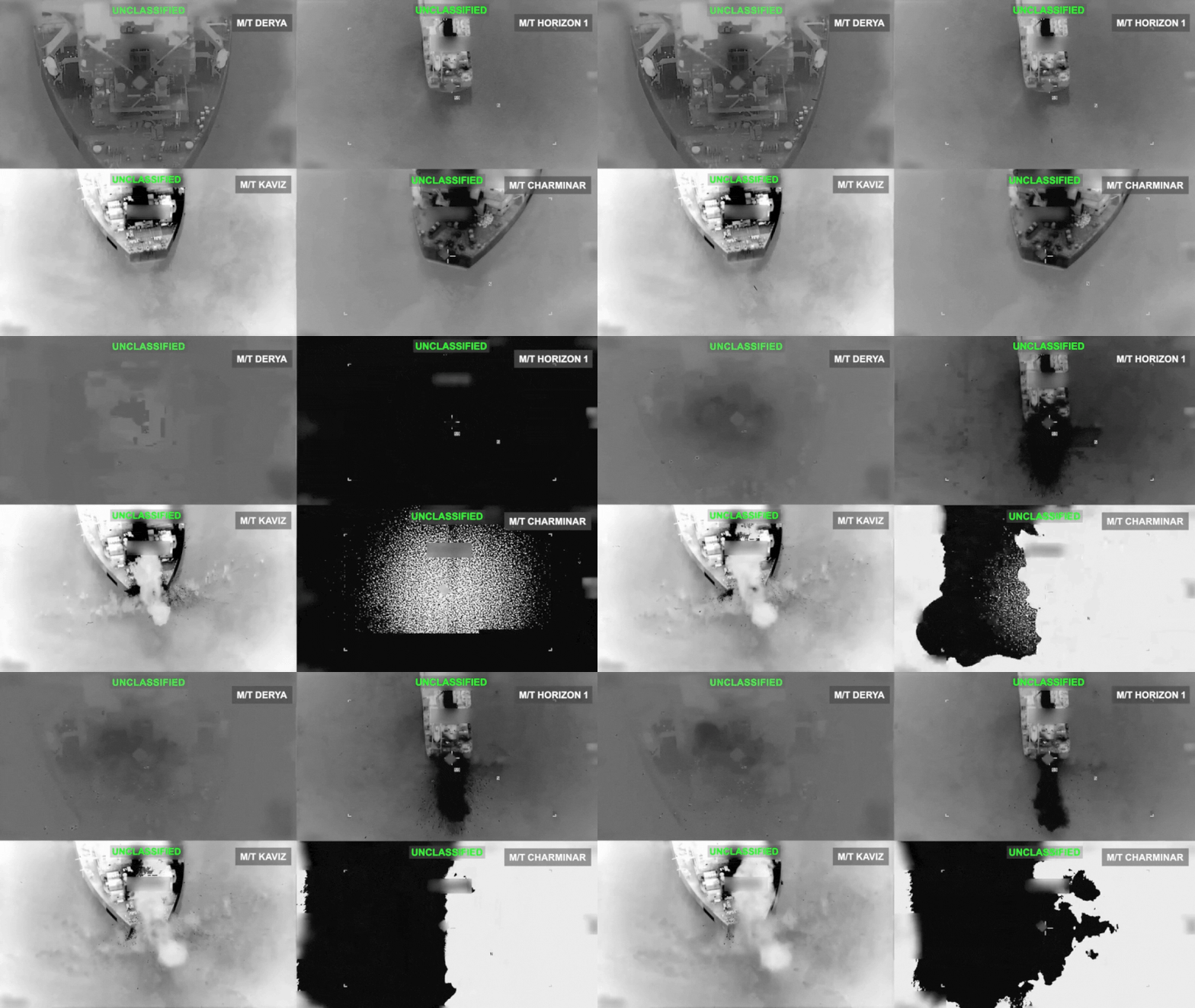
Tensions have escalated sharply as Iran reports a US missile strike on an oil tanker near Kharg Island. In response, Iran's Revolutionary Guards claim to have launched retaliatory missile strikes against a US military base in Jordan.
Escalation in the Persian Gulf: A Strategic Overview
The recent reports indicating a direct kinetic engagement between United States forces and Iranian assets near Kharg Island represent a significant escalation in regional hostilities. According to regional media, the conflict began when American forces reportedly struck five Iranian oil tankers. This action, cited as a response to the Islamic Revolutionary Guard Corps (IRGC) targeting American naval warships, marks a transition from shadow warfare to direct, observable military confrontation.
The Strategic Significance of Kharg Island
Kharg Island serves as the primary oil export terminal for Iran, making it a critical node in the nation's economic infrastructure. By targeting tankers in this specific proximity, the tactical focus appears to be an attempt to disrupt Iran's capacity to export crude oil. The vulnerability of these vessels in the Persian Gulf has long been a point of contention, and this direct strike signals that the threshold for acceptable military engagement has been fundamentally altered.
Retaliatory Dynamics and the Jordan Strike
In a move that underscores the volatile nature of these exchanges, the IRGC announced that it had launched missiles against a US military base in Jordan. This act of retaliation highlights Iran’s strategy of expanding the theater of conflict beyond the immediate vicinity of the Persian Gulf. By striking a base in Jordan, Iran is demonstrating its reach and signaling that American military presence throughout the Middle East is considered a legitimate target in the face of direct strikes on Iranian assets.
Historical Precedents and the 'Tanker War' Context
This series of events evokes memories of the historical 'Tanker War' during the 1980s, where commercial shipping became a primary battlefield. The current situation, however, is exacerbated by the involvement of modern missile technology and the presence of established military bases across the region. The shift from covert sabotage to overt missile strikes suggests a breakdown in the traditional deterrents that have historically kept these two nations from full-scale military conflict.
Broader Geopolitical Implications
The involvement of a U.S. base in Jordan as a retaliatory target suggests that the regional security architecture is under immense strain. If these strikes continue, it could force a re-evaluation of the American military posture in the Middle East. Furthermore, the disruption of oil transit near Kharg Island poses a risk to global energy stability, as the region remains a vital artery for international energy markets.
Future Outlook and Conclusion
As the situation develops, the primary concern for international observers is the potential for a cascading cycle of retaliation. The transition from naval skirmishes to land-based missile strikes against sovereign bases indicates that both parties are operating under a rapidly changing set of rules of engagement. Moving forward, the international community will be watching for signs of de-escalation, though current rhetoric from both Tehran and Washington suggests that both sides are prioritizing defensive posturing and retaliatory capacity over diplomatic resolution.
Multiple Citing Sources