US-Iran war LIVE: Iran, Trump exchange warnings as peace hangs by thread; US president says ‘missiles loaded’
Source Entity
Latest News: Today's Latest News Headlines from India & World | Hindustan Times | Hindustan Times
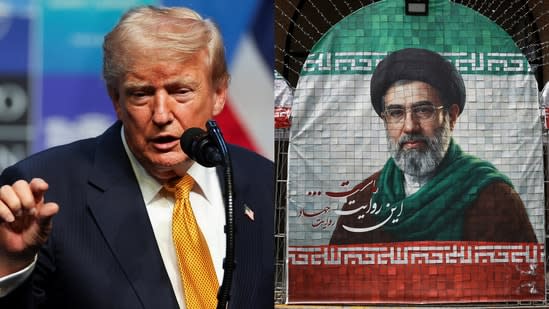
US-Iran war LIVE: US President Donald Trump said on Friday that he had ordered the military to be ready to launch strikes on Iran if the Iranian government carried out or attempted to assassinate him.
Escalation of Hostilities: The Brink of US-Iran Conflict
The geopolitical landscape has shifted into a state of extreme volatility following recent declarations from US President Donald Trump. The announcement that the US military is poised to launch strikes on Iran—specifically contingent upon any attempt by the Iranian government to assassinate the President—marks a significant escalation in the rhetorical and strategic warfare between the two nations. This development suggests that the window for diplomatic resolution is closing, replaced by a doctrine of immediate, overwhelming retaliation.
The Rhetoric of Deterrence and Direct Threats
At the core of this current crisis is the President's assertion that 'missiles are loaded,' a phrase designed to project absolute military readiness and resolve. By linking military action directly to his personal safety, the administration is employing a high-stakes deterrence strategy. This approach aims to signal to Tehran that any breach of the 'red line' regarding the US presidency would result in an instantaneous and devastating kinetic response. Such language removes the ambiguity typically found in diplomatic communications, leaving little room for misinterpretation but increasing the risk of accidental escalation.
Historical Context of the US-Iran Rivalry
To understand the gravity of this threat, one must look at the decades of friction between Washington and Tehran. From the 1979 hostage crisis to the collapse of the Joint Comprehensive Plan of Action (JCPOA), the relationship has been defined by mutual distrust and a cycle of sanctions and provocations. The current tension is the culmination of a 'maximum pressure' campaign intended to force Iran back to the negotiating table on more stringent terms. However, when diplomatic levers fail, the shift toward military posturing becomes the primary tool of statecraft, as seen in the current readiness orders.
Strategic Implications for the Middle East
This standoff does not exist in a vacuum; it has profound implications for regional stability. Allies of the United States, particularly Israel and Saudi Arabia, are likely viewing these developments with a mixture of support and anxiety. While these nations share a goal of containing Iranian influence and its nuclear ambitions, a full-scale war could destabilize the entire region, leading to proxy conflicts in Iraq, Syria, and Yemen. The threat of missile strikes suggests that the US is prepared to bypass regional intermediaries and strike the Iranian heartland directly if provoked.
Global Economic Risks and Energy Security
Beyond the immediate military threat, the global economy stands to suffer significantly should these warnings transition into action. Iran's proximity to the Strait of Hormuz—a critical chokepoint for global oil shipments—means that any conflict could lead to a spike in energy prices and a disruption of global supply chains. Market volatility is an inevitable byproduct of such 'live' war warnings, as investors brace for the possibility of a conflict that could trigger a global recession or an energy crisis.
The Psychology of the 'Thread of Peace'
The description of peace as 'hanging by a thread' accurately captures the precarious nature of current international relations. In high-tension environments, the risk of miscalculation is at its peak. A single intelligence failure or a misinterpreted military movement could trigger the 'loaded missiles' mentioned by the President. The transition from strategic posturing to active combat often happens faster than diplomatic channels can react, making this period of 'warnings' the most dangerous phase of the confrontation.
Conclusion
In summary, the current standoff between the United States and Iran has reached a critical juncture. The direct link between the President's personal safety and the deployment of US missile capabilities underscores a shift toward a highly personalized and aggressive foreign policy. While the intent is to deter Iranian aggression, the result is a fragile peace that depends entirely on the restraint of both parties. The world now watches as the military readiness of the US serves as both a shield and a potential catalyst for a broader regional war.
Verification Required?