Why are oil and gas prices so high? US is the world's top oil producer and consumer explained
Source Entity
Latest News: Today's Latest News Headlines from India & World | Hindustan Times | Hindustan Times
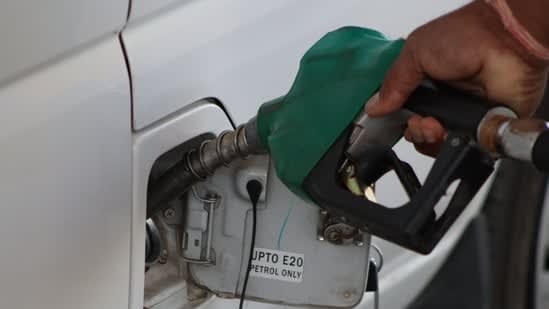
The US is the world's top oil producer and consumer. Here's why oil and gas prices remain high despite record production and limited Middle East imports.
The Paradox of Plenty: Why US Oil and Gas Prices Remain Elevated
The United States currently finds itself in a unique and contradictory economic position: it is simultaneously the world's largest producer and largest consumer of oil. Logic would suggest that record-breaking domestic production should lead to a surplus that drives prices down for the American consumer. However, the reality at the pump and in heating bills tells a different story. This phenomenon is not a failure of production, but rather a result of the complex interplay between global commodity markets, refining constraints, and geopolitical volatility.
Global Commodity Pricing Dynamics
To understand why domestic production doesn't automatically lower domestic prices, one must recognize that oil is a globally traded commodity. Crude oil is priced based on international benchmarks, such as Brent and West Texas Intermediate (WTI). Because the US exports a significant portion of its record production, domestic oil is sold at the highest possible market price. If global demand is high—driven by recovery in Asia or industrial needs in Europe—US producers will sell their oil to the highest bidder globally rather than discounting it for domestic use. Consequently, US consumers are subject to global price swings regardless of how many barrels are pumped from the Permian Basin.
The Influence of Geopolitical Tensions and OPEC+
While the US has reduced its reliance on Middle East imports, it cannot decouple itself from the region's instability. The Organization of the Petroleum Exporting Countries (OPEC) and its allies (OPEC+) maintain significant influence over global supply levels. When OPEC+ implements production cuts to support prices, the global supply tightens, pushing prices up everywhere, including the US. Furthermore, any perceived threat to shipping lanes in the Persian Gulf or political instability in oil-rich nations creates a "risk premium" that is baked into the price of every gallon of gas, regardless of where that specific gallon was produced.
Refining Bottlenecks and the Midstream Gap
Another critical factor is the distinction between crude oil production and refined petroleum products. Producing record amounts of crude oil is only the first step; that oil must be processed into gasoline, diesel, and jet fuel. The US has faced a stagnation in refining capacity for several years, meaning the "midstream" part of the supply chain cannot always keep up with the record output of the "upstream" sector. When refinery outages occur or capacity is reached, a bottleneck is created. This creates a situation where there is plenty of raw oil, but a shortage of the finished product, driving up the price for the end consumer.
Domestic Demand and Macroeconomic Pressures
As the world's top consumer, the US exerts immense upward pressure on prices through its own demand. The American economy's reliance on internal combustion engines and sprawling suburban infrastructure ensures a high baseline of consumption. When this high demand coincides with inflationary pressures across the broader economy, the cost of transporting and distributing fuel increases. Additionally, the transition toward green energy has led some investors to shy away from long-term capital investments in new refineries, further tightening the supply of refined products and keeping prices stubbornly high.
Strategic Outlook and Future Trends
Looking forward, the US is likely to remain in this state of "expensive abundance" until there is a significant shift in either refining capacity or consumer behavior. While the US has achieved energy independence in terms of volume, it has not achieved "price independence" because it remains an active participant in the global market. Future trends suggest that as the US continues to optimize its shale production, the focus must shift toward diversifying energy sources and upgrading refining infrastructure to mitigate the volatility caused by global events.
Summary: The persistence of high oil and gas prices in the US, despite record production, is driven by the global nature of oil pricing, the strategic maneuvers of OPEC+, a lack of sufficient refining capacity, and the sheer scale of American energy consumption.
Verification Required?