India may face heat as US revives Russia sanctions push
Source Entity
Latest News: Today's Latest News Headlines from India & World | Hindustan Times | Hindustan Times
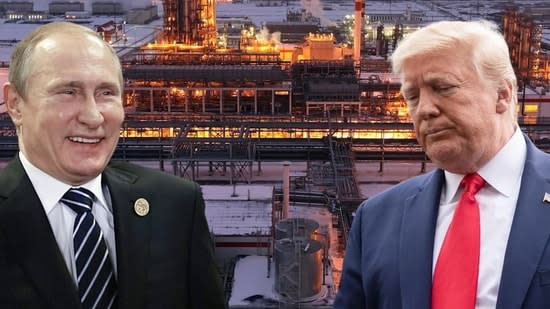
The legislation proposes sanctions on countries purchasing Russian oil, natural gas, uranium and petroleum products, of which India is also one.
The Geopolitical Tug-of-War: US Sanctions and Indian Energy
The geopolitical landscape is currently witnessing a high-stakes tug-of-war as the United States seeks to tighten the economic noose around Russia. The revival of sanctions targeting nations that continue to purchase Russian oil, natural gas, uranium, and petroleum products represents a significant escalation in Washington's strategy to deplete the Kremlin's war chest. India, a major importer of these resources, finds itself at the center of this diplomatic storm, facing a precarious choice between its national energy security and its strategic partnership with the West.
The Dilemma of Energy Sovereignty
India's reliance on Russian energy is not merely a matter of preference but a cornerstone of its economic stability. Since the onset of the conflict in Ukraine, India has significantly increased its imports of discounted Russian crude to insulate its economy from global price volatility and ensure a steady supply of fuel for its growing population. However, this pragmatic approach directly contradicts the US-led effort to isolate the Russian economy. The proposed legislation seeks to close loopholes that have allowed nations like India to maintain these trade links, potentially forcing New Delhi to either abandon these cost-effective sources or risk severe financial penalties.
Secondary Sanctions and Financial Volatility
The threat of secondary sanctions is particularly potent because it targets not just the state, but the financial institutions facilitating the trade. If the US implements these measures, Indian banks and payment systems involved in the purchase of Russian petroleum or uranium could be cut off from the US dollar-denominated financial system. This would not only disrupt energy imports but could trigger broader economic instability, affecting India's foreign exchange reserves and its ability to conduct international trade. The shift toward alternative payment mechanisms, such as the Rupee-Ruble trade, has been an attempt to mitigate this, but such systems lack the liquidity and stability of the global dollar market.
The Uranium Factor and Strategic Assets
Beyond oil, the inclusion of uranium in the sanctions push adds a layer of critical complexity. India's nuclear energy program is vital for its long-term carbon-neutral goals and energy independence. Russia has historically been a key supplier of nuclear fuel and technology. By targeting uranium imports, the US is striking at a strategic vulnerability. This forces India to navigate the "Strategic Autonomy" doctrine—the principle of making independent foreign policy decisions based on national interest—while simultaneously managing its membership in the Quad, where it collaborates with the US to ensure a "free and open Indo-Pacific."
Navigating the US-India-Russia Triangle
The relationship between Washington and New Delhi is characterized by a shared interest in countering China's influence in Asia. The US is likely aware that pushing India too hard into a corner could alienate a key democratic partner in the East. Therefore, the current sanctions push may be as much a tool for diplomatic leverage as it is a mechanism for economic warfare. The tension arises from the differing definitions of "essential" trade; while the US views any Russian revenue as funding aggression, India views its energy imports as a non-negotiable requirement for domestic stability.
Predicting the Path Forward
Looking ahead, it is probable that India will continue to seek "waivers" or "carve-outs" through high-level diplomatic channels. We can expect a trend toward further diversification of energy sources, with India potentially increasing imports from the Middle East or the US itself to reduce its vulnerability to Russian-related sanctions. However, the transition will be slow and costly. The outcome of this legislative push will determine whether the US-India partnership can withstand the friction of opposing views on Russia, or if energy politics will create a lasting rift in their strategic alignment.
Conclusion: A High-Stakes Equilibrium
In summary, the revival of US sanctions on Russian energy and mineral imports places India in a challenging position. By targeting the very resources that fuel India's growth, the US is testing the limits of India's strategic independence. The coming months will be critical in determining if New Delhi can successfully balance its economic imperatives with its geopolitical aspirations, ensuring that its pursuit of energy security does not come at the cost of its most vital global alliances.
Verification Required?