A pact, then a spanner: What the US-Saudi Arabia civil nuclear deal actually contains, and why it may not hold
Source Entity
Latest News: Todays Latest News Headlines from India & World | Hindustan Times | Hindustan Times
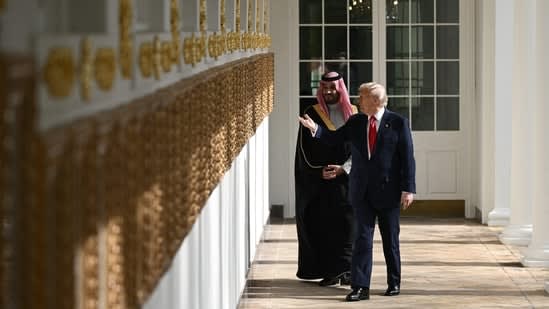
The US and Saudi Arabia have signed a civil nuclear cooperation agreement that allows uranium enrichment, but President Trump has conditioned its implementation on Saudi Arabia joining the Abraham Accords. This move creates significant diplomatic uncertainty as Riyadh maintains its stance on the conflict in Palestine.
The Geopolitical Gamble: US-Saudi Nuclear Cooperation
The recent signing of a civil nuclear cooperation agreement between the United States and Saudi Arabia marks a pivotal moment in Middle Eastern diplomacy. While the pact is framed as a framework for peaceful nuclear energy development, its implications extend far beyond energy policy, touching upon regional security architectures and the delicate balance of power in the Levant.
The Uranium Enrichment Dilemma
At the core of this agreement is the contentious issue of uranium enrichment. Historically, the United States has been hesitant to grant enrichment capabilities to regional partners to prevent nuclear proliferation. By allowing Saudi Arabia to enrich uranium, the deal represents a significant departure from standard US non-proliferation benchmarks. However, the lack of clarity regarding the scope of this enrichment—specifically whether it pertains only to fuel-grade material or could be expanded—remains a major point of concern for international observers.
The Abraham Accords Pivot
Less than 24 hours after the signing, President Donald Trump introduced a new, critical condition: the deal’s implementation is contingent upon Saudi Arabia joining the Abraham Accords. This pivot effectively ties civil nuclear technology to the broader process of normalizing relations with Israel. By explicitly stating that the deal is 'off' if Riyadh does not normalize ties, the administration has transformed a technical energy agreement into a high-stakes diplomatic ultimatum.
Regional Tensions and Domestic Stance
Saudi Arabia’s position remains complex and cautious. The kingdom has withheld public comment on the new condition, largely due to the ongoing military operations in Palestine. For Riyadh, normalizing ties with Israel is not merely a bilateral decision but one deeply influenced by the domestic and regional sentiment regarding the Palestinian cause. The US requirement creates a fundamental friction point between Saudi strategic ambitions for energy independence and their regional diplomatic standing.
Contradictory Messaging and Future Uncertainty
President Trump’s subsequent assertion on Truth Social—that there would be 'no enrichment of material'—has introduced a layer of confusion that undermines the original agreement's text. This contradictory messaging suggests a disconnect between the formal signed pact and the current executive policy. If the administration intends to ban all forms of enrichment, it essentially negates the core incentive for Saudi Arabia to sign the deal in the first place.
Conclusion: A Fragile Path Forward
Ultimately, the future of the US-Saudi nuclear deal rests on whether the administration can reconcile its non-proliferation goals with its desire to expand the Abraham Accords. As it stands, the combination of ambiguous enrichment clauses and the hardline requirement for Israeli normalization makes the agreement a fragile instrument of foreign policy. Whether this serves as a catalyst for regional peace or a source of renewed diplomatic friction will depend on how Riyadh navigates these competing pressures.
Verification Required?