Fed rate hike fails to calm troubled markets as Dow falls 600 points. Expect more sharp swings in stocks and bonds.
Source Entity
Joy Wiltermuth
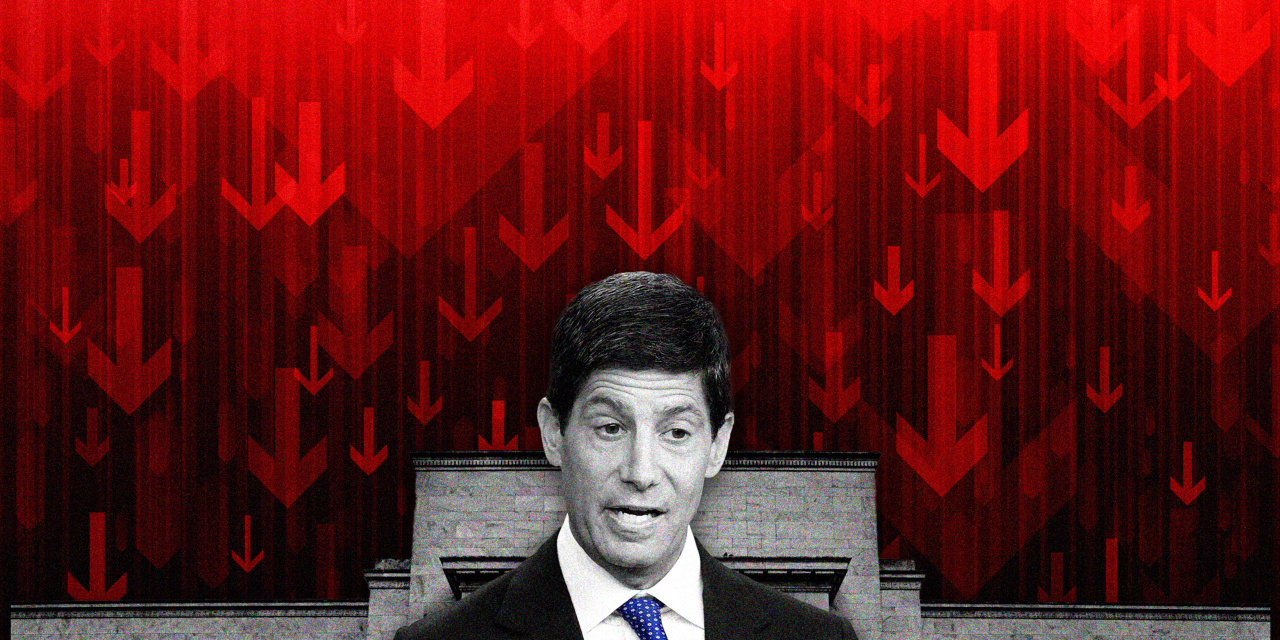
U.S. Treasury yields have breached the 5% threshold, reflecting heightened investor concern over inflation and Federal Reserve policy. This surge in borrowing costs poses significant fiscal challenges for the U.S. government as it manages its debt obligations.
The Significance of the 5% Treasury Yield Threshold
The recent climb of the 10-year Treasury yield to the 5% mark represents a critical pivot point in global financial markets. For years, investors operated in a low-interest-rate environment, but the current shift toward a 5% baseline signals a fundamental change in the cost of capital. This rise is not merely a technical movement; it reflects deep-seated anxieties regarding the sustainability of current fiscal trajectories and the Federal Reserve's ongoing battle to anchor inflation.
The Impact on Fiscal Math and Debt Obligations
As yields remain elevated, the fiscal math for the United States becomes increasingly complex. Higher yields translate directly into higher interest payments on the national debt. When the benchmark 10-year note sits at 5%, the cost of servicing both new and refinanced government debt rises substantially. This creates a challenging environment where the federal government must balance its massive infrastructure investments—such as those linked to the AI boom—against the reality of a much larger annual debt bill.
The Role of Federal Reserve Policy
The financial markets are currently locked in anticipation of the Federal Open Market Committee (FOMC) meetings. With the CME FedWatch tool indicating a high probability of a quarter-point rate hike, investors are bracing for continued hawkishness. The Fed is navigating a narrow path: attempting to curb inflation, which hit 3.4% in August, while managing the economic fallout of higher borrowing costs that could potentially dampen growth.
Geopolitical and Market Catalysts
Beyond domestic policy, global events have exacerbated this upward pressure on yields. The 10-year Treasury yield has climbed roughly a full percentage point since the onset of the war in Iran, demonstrating how geopolitical instability feeds into bond market volatility. Surging energy prices, a direct consequence of regional conflicts, have fueled persistent inflation concerns, forcing bond investors to demand higher premiums to hold long-dated government debt.
Structural Shifts and Future Trends
The combination of a flood of corporate debt issuance and the need for massive capital expenditure in emerging sectors like artificial intelligence has created a high-demand environment for liquidity. As the government continues to issue debt to fund these initiatives, the supply of Treasurys increases. If investor appetite for these notes does not keep pace with the supply, yields will remain under upward pressure, potentially keeping the "higher for longer" interest rate narrative alive for the foreseeable future.
Conclusion: A New Era for Fixed Income
In summary, the breach of the 5% yield threshold marks a transition into a more demanding fiscal era. Investors, policymakers, and corporations are all adjusting to the reality that the cheap money era has concluded. As the FOMC continues to calibrate monetary policy against the backdrop of inflation, energy price volatility, and massive public spending, the 10-year Treasury yield will remain the most critical barometer for the health of the U.S. economy.
Multiple Citing Sources
Verification Required?