Smoke, heat and 100+ burning wildfires force thousands to flee US wilderness; evacuations underway
Source Entity
Latest News: Today's Latest News Headlines from India & World | Hindustan Times | Hindustan Times
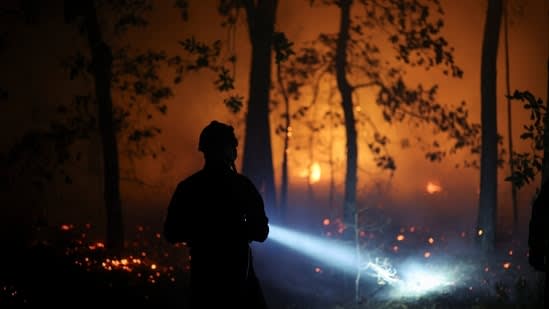
Over 100 wildfires have erupted across a 1.1-million-acre US wilderness area, leading to the emergency evacuation of an estimated 6,000 to 10,000 people amidst extreme heat and hazardous smoke.
Crisis in the Wild: Mass Evacuations Amidst 100+ Wildfires
An environmental catastrophe is unfolding in a vast stretch of the United States wilderness, where a combination of extreme heat and volatile weather conditions has ignited more than 100 separate wildfires. The scale of the disaster is immense, encompassing a wilderness area of approximately 1.1 million acres (445,000 hectares). The urgency of the situation is underscored by the presence of thousands of civilians—estimated by park rangers to be between 6,000 and 10,000 people—who were caught within the perimeter of these burning zones, necessitating a massive and complex evacuation operation.
The Logistical Nightmare of Mass Evacuation
Evacuating up to 10,000 individuals from a million-acre wilderness presents a staggering logistical challenge. Unlike urban evacuations, wilderness areas often lack paved roads, reliable cellular service, and clear landmarks, making the coordination of rescue efforts exceptionally difficult. Rangers and emergency responders must navigate rugged terrain while battling thick smoke that reduces visibility to near zero, hindering both ground movements and aerial reconnaissance. The sheer number of ignition points—over 100 fires—means that evacuation routes can be cut off rapidly, forcing rescue teams to employ dynamic and high-risk strategies to ensure no one is left behind in the path of the flames.
Environmental Drivers and the 'Tinderbox' Effect
The report highlights "smoke and heat" as primary factors, pointing to a broader pattern of climatic instability. When extreme heat persists, it strips moisture from vegetation, turning forests and grasslands into a "tinderbox" where a single spark—whether from lightning or human activity—can trigger an uncontrollable blaze. The fact that over 100 fires have started suggests a landscape so dehydrated that multiple ignitions are occurring simultaneously across the region. This synergy of high temperatures and low humidity creates a feedback loop where the fires themselves contribute to local heating and wind patterns, further accelerating the spread of the flames.
Ecological Impact on Vast Wilderness
Beyond the immediate human threat, the impact on a 1.1-million-acre ecosystem is profound. A wilderness of this size typically serves as a critical sanctuary for biodiversity, providing habitat for endangered species and protecting vital watersheds. The intensity of these fires, compounded by their number, threatens to cause permanent soil degradation and the loss of old-growth flora that may take centuries to recover. The smoke plumes generated by 100+ fires also have far-reaching atmospheric effects, degrading air quality for hundreds of miles and contributing to regional greenhouse gas emissions, thereby linking a local disaster to global environmental trends.
Future Trends in Wildfire Management
This event underscores a growing trend in the US toward more frequent and severe "mega-fires." As heatwaves become more intense, the traditional methods of fire suppression are becoming less effective. Moving forward, this event will likely prompt a shift toward more aggressive "fire-adaptive" management, including the use of prescribed burns to reduce fuel loads and the implementation of more sophisticated early-warning systems for wilderness visitors. The difficulty in tracking the 6,000 to 10,000 people inside the wilderness also suggests a need for better registration and tracking systems for those entering remote areas during high-risk seasons.
Conclusion
The current crisis is a stark reminder of the volatility of nature under extreme thermal stress. The coordinated effort to evacuate thousands of people from a million-acre inferno is a testament to the bravery of park rangers and emergency services, but it also highlights the increasing vulnerability of our wilderness areas. As the smoke clears, the focus will inevitably shift from rescue to recovery, assessing the deep scars left on the land and refining the strategies used to protect both human life and the environment in an era of escalating climate instability.
Verification Required?