Verstappen dominates for first Singapore Grand Prix win
Source Entity
BBC News
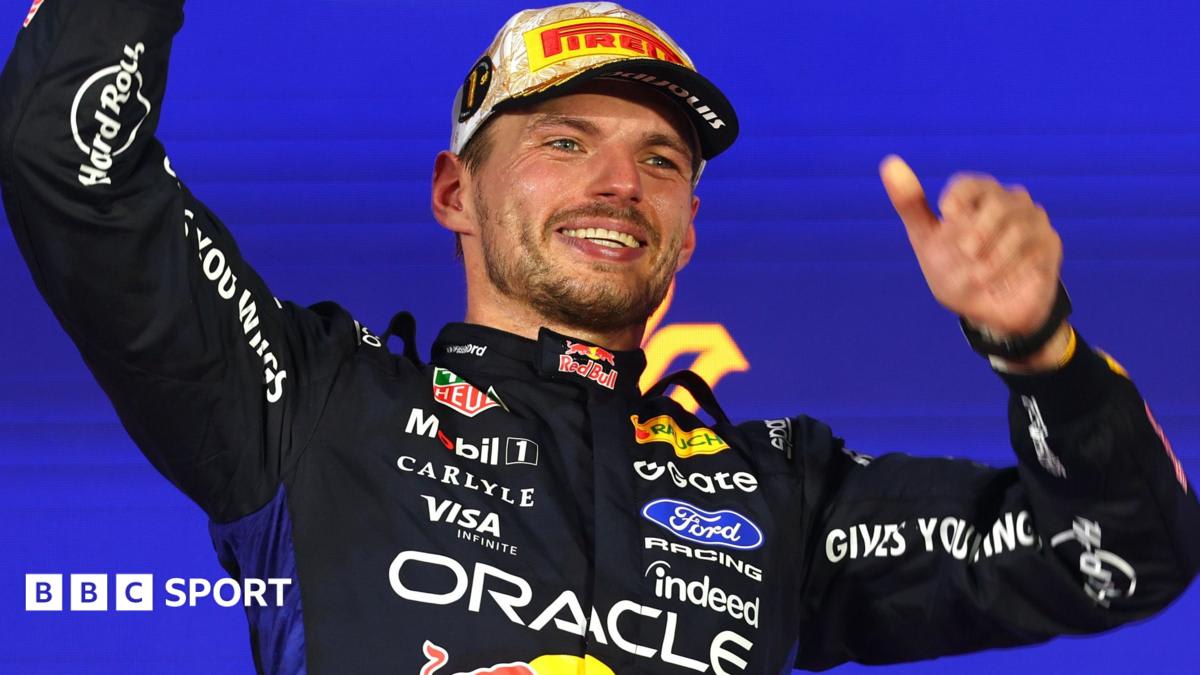
Max Verstappen secured his maiden Singapore Grand Prix victory in a strategic race featuring tactical pit stops and safety car interventions. The race was defined by Ferrari's refusal to swap positions between Leclerc and Hamilton and a pivotal virtual safety car period.
Verstappen Conquers the Marina Bay Street Circuit
In a landmark performance at the Singapore Grand Prix, Red Bull's Max Verstappen claimed his first-ever victory on the demanding Marina Bay circuit. This win marks a significant milestone in his career, further cementing his dominance in the current Formula 1 landscape. The race was a masterclass in strategic maneuvering, with Verstappen managing his soft-tyre start to perfection against a field struggling with varying tyre degradation profiles and tactical complexities.
Strategic Divergence and Tyre Management
The tactical narrative of the race began with a clear split in tyre strategies. While Lewis Hamilton opted for the more durable medium tyres to start, both Verstappen and Charles Leclerc chose the performance-oriented soft compound. This decision set the stage for a compelling battle of endurance versus raw speed. Hamilton’s early pit stop on lap 18 signaled a shift in strategy, yet the subsequent mid-race dynamics showed just how difficult the Marina Bay circuit remains for overtaking, even with a tyre advantage.
The Ferrari Dilemma and Team Orders
A critical juncture occurred when Charles Leclerc emerged from his lap 24 pit stop just ahead of Hamilton. Despite the Briton displaying superior pace on his fresh soft tyres, Ferrari made the controversial decision not to facilitate a position swap between their driver and Hamilton. This internal friction, openly questioned by Hamilton over the team radio, highlights the high-pressure environment of contemporary F1, where strategic indecision can often nullify a car's inherent pace advantage.
The Impact of the Virtual Safety Car
The race dynamics shifted dramatically on lap 39 when a virtual safety car (VSC) was deployed. This provided a strategic lifeline for those who had yet to optimize their pit window. Leclerc and Kimi Antonelli—who had been a persistent threat throughout the race after starting from fourth—capitalized on the opportunity for a 'cheap' pit stop. By pitting under the VSC, they saved approximately 10 seconds compared to racing conditions, fundamentally altering the competitive order in the final stint.
Future Implications and Competitive Trends
This race underscores the evolving nature of Formula 1 strategy, where the combination of street-circuit unpredictability and virtual safety car timing can negate traditional advantages. Verstappen’s ability to remain composed amidst these fluctuating variables demonstrates why he is currently the benchmark for the sport. For teams like Ferrari and Mercedes, the lessons from Singapore regarding pit-lane timing and team-order protocols will be vital as they look to close the performance gap in the remaining rounds of the championship.
Conclusion
Max Verstappen’s victory in Singapore is a testament to both his driving prowess and Red Bull's operational efficiency. By successfully navigating the volatile strategy calls involving soft and medium compounds, and remaining unaffected by the chaos of the virtual safety car, Verstappen has once again asserted his authority. As the season progresses, the tactical nuances displayed at Marina Bay will likely serve as a blueprint for how top teams manage the delicate balance between speed and strategy.