Vinod Khosla believes ex-Deepmind engineer’s Wajo will win agent market on trust
Source Entity
Ivan Mehta
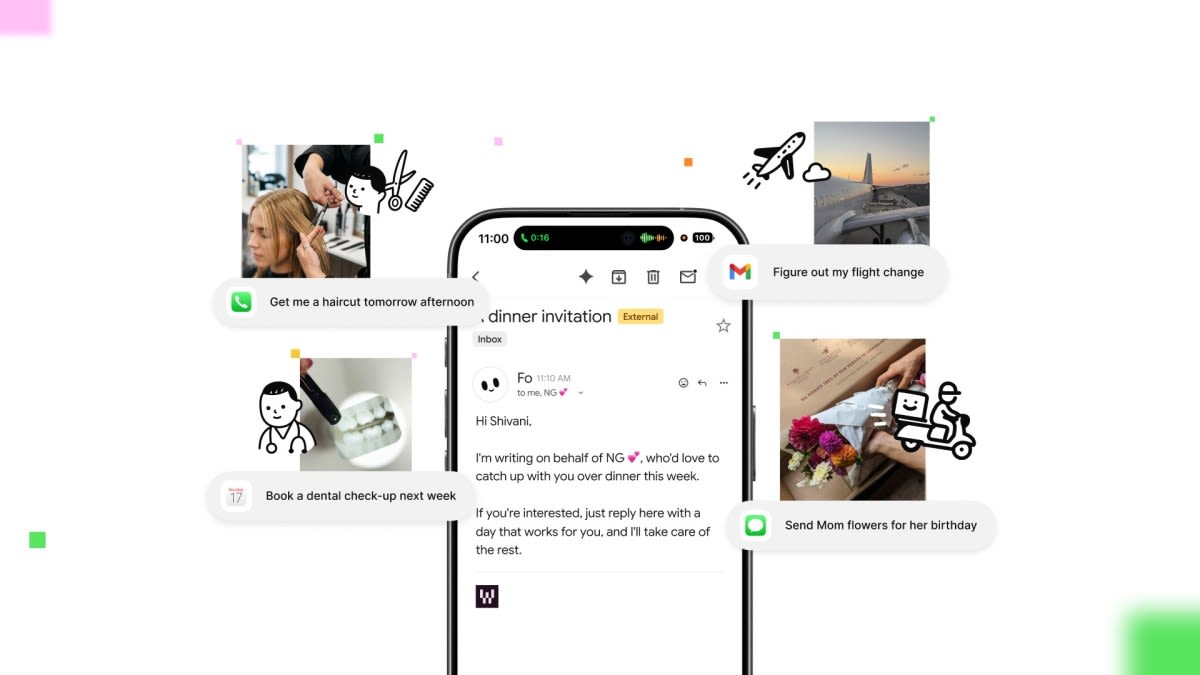
Vinod Khosla is backing the AI startup Wajo, founded by former DeepMind engineer Shivani Poddar, citing its superior focus on trust and safety. Wajo differentiates itself in a crowded market by enabling its 'Fo' agent to hire humans for task completion.
The Rise of Trust-Centric AI Agents
The landscape of artificial intelligence is currently witnessing a massive shift toward personal agents, with major players like Meta, OpenAI, and various startups vying for dominance. Amidst this influx, venture capitalist Vinod Khosla has thrown his support behind Wajo, a new startup founded by former Google and DeepMind engineer Shivani Poddar. Khosla’s endorsement highlights a pivotal moment in the industry where the competitive advantage is moving away from raw power and toward the security of user data.
The Competitive Landscape
The personal-agent market has grown exponentially in recent weeks, with significant entries including Meta’s Muse, OpenAI’s Dot, and Instinct. These systems are designed to manage complex user tasks, yet they operate under vastly different architectural philosophies. While incumbents often leverage vast user data pools to train their models, Wajo is positioning itself as a privacy-first alternative, challenging the business models of tech giants that rely on data monetization.
Architecting for Trust
According to Khosla, the fundamental differentiator for Wajo is its foundational architecture. While many current agents are built for rapid deployment and feature expansion, Wajo claims to prioritize safety and trust from the ground up. This focus is particularly critical when agents are granted the authority to act on behalf of a user. If an agent is tasked with sensitive operations, the user must have absolute confidence that their data remains private and that the agent’s decision-making process is transparent.
The Human-in-the-Loop Advantage
One of the most intriguing features of Wajo’s 'Fo' agent is its ability to hire humans to complete specific tasks. This capability represents a significant evolution in agentic workflows, bridging the gap between automated logic and human execution. By integrating human labor into the loop, Wajo can address the limitations of current LLMs that often struggle with complex, real-world physical or administrative tasks that require nuanced human judgment.
Challenging the Data-Harvesting Paradigm
Khosla’s critique of large platforms—specifically referencing Meta—points to a broader industry concern: the conflict of interest between being a service provider and a data harvester. By stating that users become the 'product' when they share data with major platforms, Khosla underscores why a standalone, trust-focused agent is a compelling proposition for privacy-conscious users. This narrative suggests that the future of the agent market may be divided between ad-supported models and premium, privacy-centric tools.
Future Trends and Outlook
As the agent market continues to mature, we can expect a bifurcation in how users choose their digital assistants. While convenience may drive initial adoption of mainstream tools, the long-term viability of these agents will depend on their ability to maintain user trust. Wajo’s emergence suggests that there is a significant market opportunity for specialized, secure AI that acts as a true proxy for the user, rather than a gateway for data extraction. Future success will likely depend on how well these agents balance autonomous function with rigorous safety protocols.