AI isn’t close to curing cancer. This startup says it knows what it will take.
Source Entity
Tim Fernholz
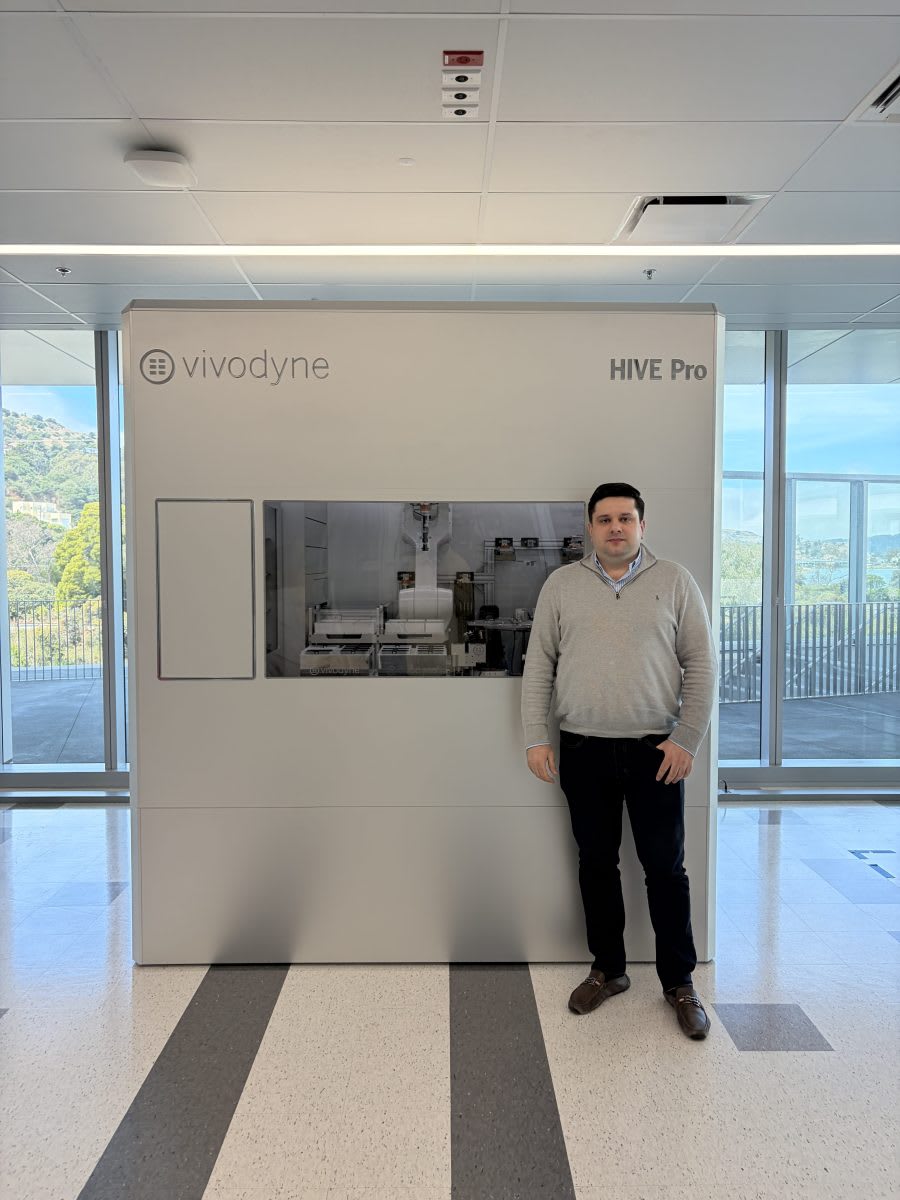
Biotech startup Vivodyne is addressing the AI drug-discovery industry's critical data gap by using modular robotic labs to generate high-quality human tissue data. By moving beyond animal models, the company aims to provide the causal biological insights necessary to make AI-driven cancer research truly effective.
The Data Bottleneck in AI Drug Discovery
Artificial Intelligence has long been touted as the ultimate catalyst for pharmaceutical breakthroughs, yet the reality of AI-driven oncology remains largely theoretical. As the industry faces mounting skepticism, biotech startup Vivodyne has identified a fundamental flaw in the current paradigm: the quality of data being fed into these complex models. While many firms focus on algorithmic sophistication, Vivodyne argues that the bottleneck is not the software, but the biological fidelity of the data itself.
Moving Beyond Animal Models
For decades, the standard for drug testing has relied heavily on animal models or fragmented studies of isolated proteins and single cells. These methods often fail to predict human physiological responses, leading to high failure rates in clinical trials. Vivodyne’s CEO, Andrei Georgescu, points out that current AI models are effectively limited to 'curing cancer in mice' because they lack the human-centric causal data required to translate results into clinical success. The reliance on non-human biological proxies creates a 'garbage in, garbage out' scenario that hampers genuine medical progress.
The HIVE Solution: Modular Robotics
To bridge this gap, Vivodyne has developed HIVE, a system of modular robotic labs designed to simulate human biology with high precision. By growing 20 different types of human tissue, the system can autonomously dose and monitor these tissues, capturing real-time biological reactions. This approach generates high-fidelity, causal data that serves as a superior training foundation for AI, moving the industry away from speculative modeling and toward verifiable human-based insights.
The Credibility Gap in AI Medicine
The skepticism surrounding AI in healthcare is not unfounded. Even industry leaders like Anthropic’s Dario Amodei have publicly noted that the narrative surrounding AI-driven cancer cures has become more of a cliché than a tangible reality. By shifting the focus from 'AI hype' to the actual generation of high-quality human biological data, Vivodyne is attempting to ground the promise of AI in the rigorous, empirical demands of pharmaceutical development.
Future Implications and Outlook
If Vivodyne’s approach proves scalable, it could fundamentally alter the economics and speed of drug discovery. By reducing the reliance on animal testing and improving the success rate of human clinical trials through better predictive modeling, the industry may finally move past the current plateau. The transition toward high-quality, human-derived data represents the next necessary evolution for AI in medicine, shifting the focus from theoretical processing power to the tangible complexities of human biology.