Artisan told companies to "stop hiring humans" for sales. Now it's hiring one for just that job.
Source Entity
Yahoo Finance
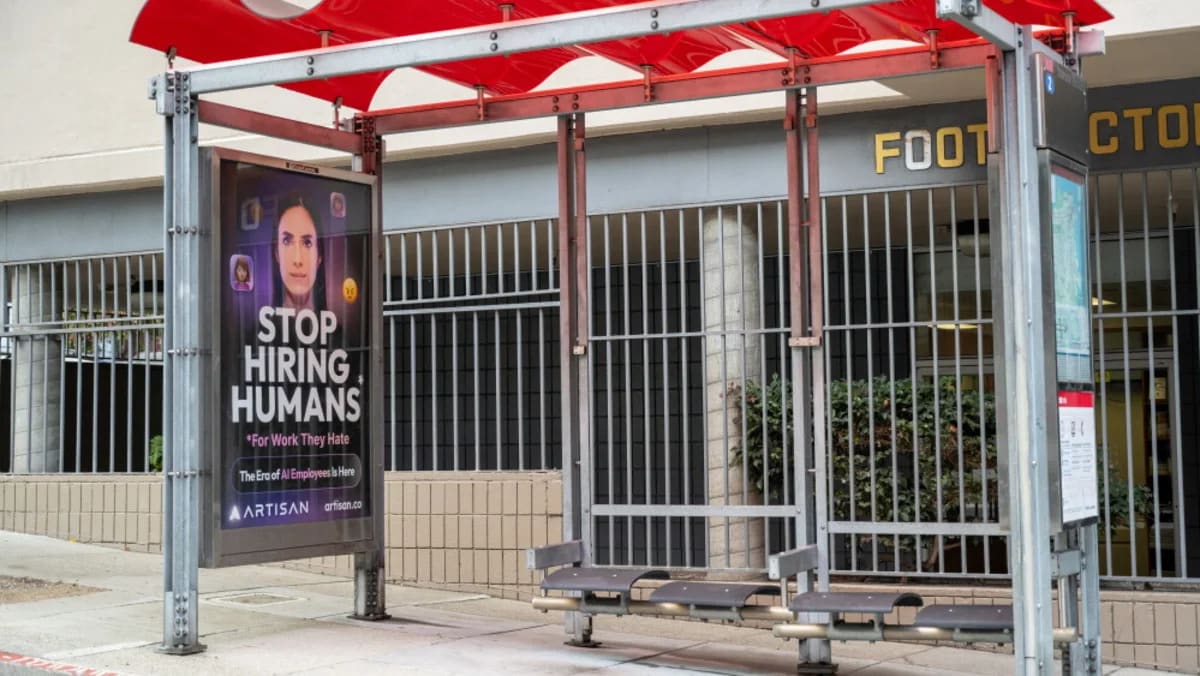
Artisan AI, known for its controversial 'Stop Hiring Humans' ad campaign, is now hiring a human for a sales role. This shift reflects the evolving reality of AI integration in the workforce.
The Paradox of AI-Driven Sales
Artisan, a San Francisco-based developer of AI business development representatives like 'Ava,' recently sparked public discourse with its provocative billboard campaign. By urging companies to 'Stop Hiring Humans' for work they ostensibly hate, the firm positioned itself at the cutting edge of the automation movement. However, the company’s recent decision to hire a human for a sales role—the very function its AI is designed to replace—highlights a significant shift in the narrative surrounding generative AI in the workplace.
Deconstructing the 'Stop Hiring Humans' Narrative
The initial campaign was a masterclass in aggressive marketing, tapping into the tech industry's obsession with efficiency and cost reduction. By marketing their AI as a replacement for 'messy' human labor, Artisan effectively capitalized on the prevailing anxiety and excitement regarding automation. The campaign’s bold messaging served as a catalyst for a broader market reckoning, forcing businesses to evaluate the practical limitations of AI agents in complex, human-centric tasks like high-level sales development.
The Reality of Human-AI Collaboration
Despite the aggressive branding, CEO Jaspar Carmichael-Jack has noted that the 'Stop Hiring Humans' slogan always came with a disclaimer. This suggests that the company’s vision was never about the total eradication of human sales professionals, but rather the optimization of the sales pipeline. The hiring of a human to lead sales efforts suggests that even companies at the forefront of automation recognize that AI agents currently lack the nuanced interpersonal skills, empathy, and strategic judgment required for certain high-stakes business interactions.
Market Reckoning and Future Trends
This move by Artisan is indicative of a larger trend in the tech sector: the transition from 'AI-only' hype to a more pragmatic 'AI-augmented' reality. As businesses continue to integrate AI agents, they are discovering that these tools are most effective when they handle repetitive, data-heavy tasks, while humans remain essential for relationship management and complex decision-making. We are likely to see more companies pivot toward this hybrid model in the coming years.
Long-Term Implications for Labor
The irony of an AI firm hiring a human for sales underscores a critical lesson for the labor market. While AI is poised to disrupt numerous industries, the 'replacement' narrative is proving to be far more nuanced than early projections suggested. As Artisan’s own trajectory shows, the evolution of AI may lead to the creation of new roles that require human oversight, even as it automates the more mundane aspects of those same professions.
Conclusion
Artisan’s shift from anti-human marketing to active human recruitment serves as a case study for the current state of artificial intelligence. It highlights the gap between the theoretical promise of total automation and the practical necessity of human intervention. As the industry matures, the focus will likely shift from replacing human capital to augmenting it, ensuring that technology serves as a tool for efficiency rather than a wholesale substitute for human expertise.