Volkswagen planning to cut up to 100,000 jobs globally
Source Entity
BBC News
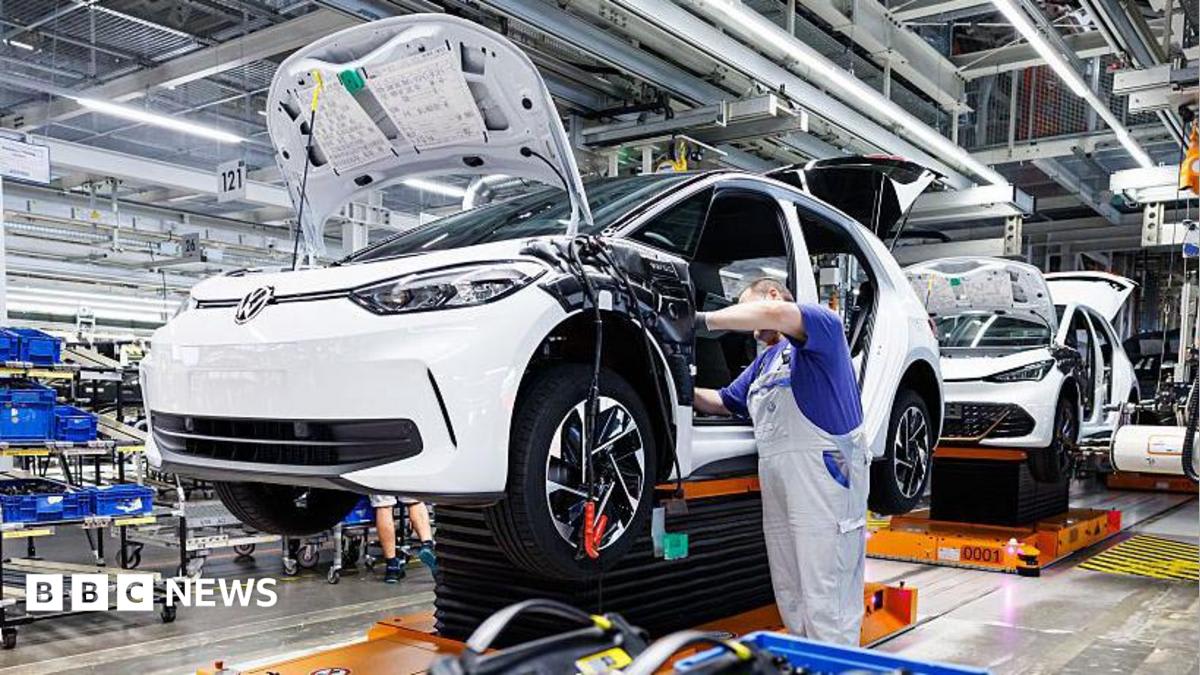
The group, which includes Porsche and Audi, has faced a steep fall in profits and tough competition from China.
The Great Pivot: Analyzing Volkswagen's Massive Workforce Reduction
Volkswagen Group, one of the world's largest automotive conglomerates, is facing a pivotal moment in its corporate history. The announcement of plans to cut up to 100,000 jobs globally marks a drastic shift in strategy as the company grapples with a volatile economic landscape. This move, which encompasses its luxury brands including Porsche and Audi, is not merely a cost-cutting exercise but a survival mechanism designed to streamline operations in an era of unprecedented industry disruption. The scale of these cuts suggests that the company is attempting to shed legacy operational weights to make room for a leaner, more agile digital-first approach to mobility.
The China Challenge and the EV Transition
At the heart of this crisis is the dramatic shift in the Chinese market, which has historically been Volkswagen's most profitable region. For decades, VW dominated the Chinese landscape through joint ventures and a strong preference for internal combustion engines (ICE). However, the rapid ascent of domestic Chinese EV giants—such as BYD and various tech-driven newcomers—has eroded VW's market share. Chinese consumers are pivoting toward software-defined vehicles with integrated ecosystems, areas where VW has struggled to keep pace. The loss of competitive edge in China creates a massive revenue vacuum that necessitates deep cuts across the global organization to maintain fiscal stability.
Financial Erosion and Structural Inefficiencies
The steep fall in profits mentioned in the reports is a symptom of a broader systemic struggle: the "double burden" of funding legacy ICE production while simultaneously investing billions into electric vehicle (EV) infrastructure and software development. This transition is capital-intensive and has yet to yield the margins seen in the traditional combustion era. By targeting up to 100,000 positions, Volkswagen is likely looking to eliminate redundancies in administrative roles and legacy manufacturing processes that are no longer viable. The inclusion of high-margin brands like Porsche and Audi in this restructuring indicates that no segment of the group is immune to the current economic headwinds.
Labor Relations and the Socio-Economic Impact
Historically, Volkswagen has maintained a very close relationship with powerful labor unions, particularly in Germany. The proposal to cut such a significant number of jobs is likely to trigger intense friction with works councils and unions like IG Metall. In the German industrial model, labor has a significant say in corporate governance, meaning these cuts will likely be met with strikes or demands for expensive social plans and severance packages. This tension highlights the conflict between the traditional European social market economy and the ruthless efficiency required to compete with the lean, fast-moving tech-centric automotive models emerging from Asia.
Future Trends: Toward a Software-Centric Model
Looking forward, this restructuring signals a broader trend in the automotive industry: the shift from being a "hardware company" to a "mobility service provider." The job cuts are likely a precursor to a massive reallocation of human capital, where traditional mechanical engineering roles are phased out in favor of software engineers and AI specialists. To survive, VW must successfully pivot its culture from one of industrial scale to one of technological innovation. If the company can successfully navigate this transition, the current pain of workforce reduction may eventually lead to a more sustainable and competitive global footprint.
Conclusion: A High-Stakes Gamble
In summary, Volkswagen's plan to reduce its global workforce by up to 100,000 is a high-stakes gamble to save the company's long-term viability. Driven by a profit slump and the aggressive expansion of Chinese competitors, the group is forced to dismantle parts of its traditional structure to fund its future. While the immediate human and social cost is significant, the alternative—continued stagnation in the face of the EV revolution—could be far more catastrophic for the group's survival in the global market.