Warren Buffett keeps pointing at the same ETF for a reason
Source Entity
Yahoo Finance
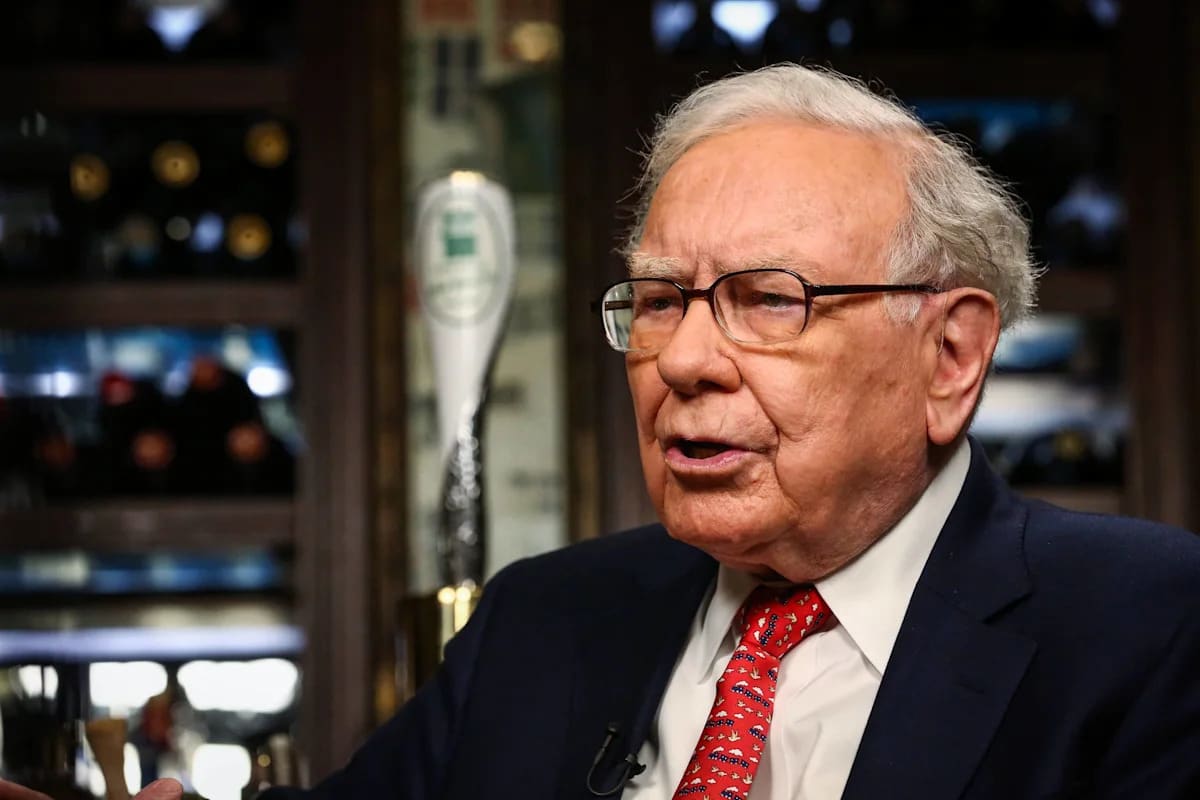
Warren Buffett consistently advocates for low-cost index fund investing over active stock picking for the average investor. His strategy highlights that simplicity and patience are more effective than attempting to gain an information edge in the market.
The Buffett Philosophy: Simplicity Over Complexity
For decades, the financial world has operated under the persistent myth that achieving generational wealth requires an elusive 'edge'—be it superior information, proprietary algorithmic models, or access to exclusive insider networks. Warren Buffett, the Chairman and CEO of Berkshire Hathaway, has spent over 60 years systematically dismantling this narrative. By focusing on fundamental value and long-term holding periods, Buffett has demonstrated that the most successful path to wealth is often the most accessible one.
The Power of the Low-Cost ETF
Despite his reputation as a master stock-picker, Buffett’s primary advice for the average investor remains remarkably consistent and intentionally unglamorous. He eschews the high-stakes world of individual stock selection and sector speculation in favor of the broad market index fund. Specifically, he has championed low-cost Exchange Traded Funds (ETFs) that track the S&P 500. By charging only three cents on every hundred dollars invested, these instruments offer a level of cost-efficiency that active managers rarely match, ensuring that the bulk of market returns accrue to the investor rather than the fund manager.
Challenging the Information Edge Myth
Many retail investors fall into the trap of believing that they must outsmart the market to succeed. However, Buffett’s advocacy for index funds is rooted in the mathematical reality that, over long time horizons, the vast majority of active managers fail to consistently outperform the market benchmark after accounting for fees and taxes. By removing the ego and the need for constant trading, the index fund strategy protects the investor from the most common pitfalls of retail investing: emotional decision-making and excessive transaction costs.
Historical Context and Long-Term Performance
Buffett’s stance is not a recent pivot but a cornerstone of his investment philosophy, documented in shareholder letters and annual meetings dating back decades. His 2016 shareholder letter, in particular, served as a definitive guide for those looking to emulate his success without needing his specific expertise. By pointing to the S&P 500 index as the ultimate vehicle for growth, he underscores a belief in the resilience and long-term upward trajectory of the American economy.
Future Trends and Investor Behavior
As the financial landscape becomes increasingly crowded with complex derivative products and speculative assets, Buffett’s message serves as a necessary anchor. The trend toward passive, low-cost investing is likely to continue as data reinforces that simplicity is the most reliable strategy for wealth accumulation. For the average individual, the 'Buffett approach' represents the democratization of finance—proving that the tools used by the world's greatest investor are available to anyone with the discipline to stay the course.
Conclusion
Ultimately, Warren Buffett’s recurring recommendation is a testament to the power of compound interest and the futility of chasing short-term gains. By choosing a low-cost ETF, investors are not just buying a product; they are adopting a mindset of patience, cost-consciousness, and faith in the broader market. It remains the most effective, albeit humble, strategy for long-term financial security.