Warsh’s changes to forward guidance were tried by one central bank — and here’s what happened
Source Entity
Jules Rimmer
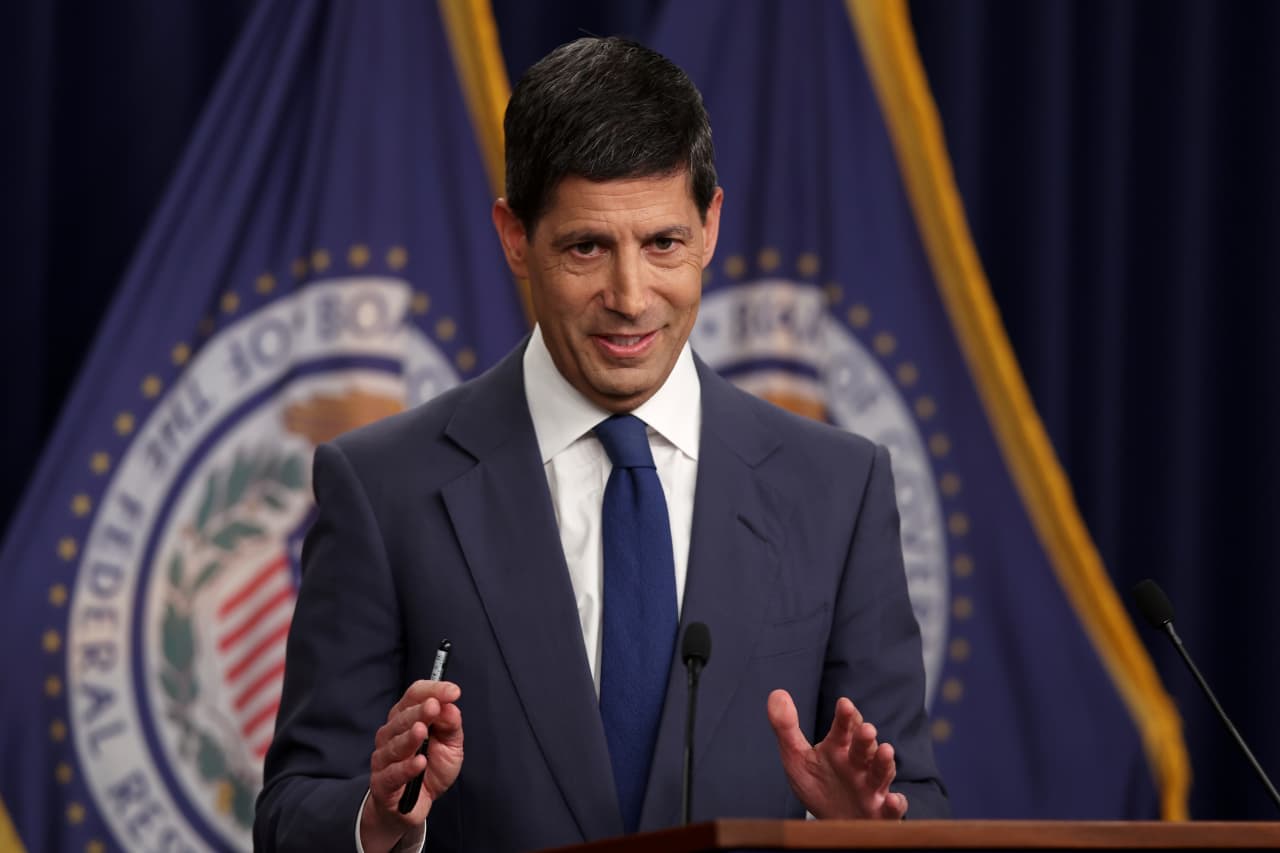
Kevin Warsh's potential approach to Fed forward guidance, which involves reducing explicit policy signaling, mirrors a strategy once tested by the Bank of Canada. Historical evidence suggests this model may lead to increased market volatility and uncertainty for investors.
The Volatility Risks of 'No-Guidance' Monetary Policy
Recent discussions surrounding Kevin Warsh’s potential approach to Federal Reserve forward guidance have reignited a critical debate in macroeconomic circles. The core of this discussion centers on whether a central bank should provide explicit, time-bound signals regarding future interest rate paths or shift toward a more opaque, reactive stance. Proponents of a 'no-guidance' model argue that it grants policymakers greater flexibility to react to incoming data without being constrained by past promises. However, the historical record suggests that such a departure from transparency can have profound impacts on market stability.
Lessons from the Canadian Experiment
To understand the potential consequences of a shift toward less predictable guidance, analysts are looking back at the Bank of Canada’s post-2008 playbook. During that period, the Canadian central bank experimented with a reduction in explicit forward guidance, aiming to maintain agility during a volatile global recovery. This experiment serves as a cautionary tale: by removing the 'anchor' of clear communication, the central bank inadvertently increased the sensitivity of bond yields and currency markets to every individual data release, as investors could no longer rely on a pre-communicated reaction function.
The Mechanics of Market Volatility
Forward guidance acts as a shock absorber for the financial system. When the Federal Reserve provides clear signals, it helps market participants price in expectations, effectively dampening the impact of sudden economic surprises. If the Fed were to adopt Warsh’s proposed changes, the market would likely face a period of heightened 'noise.' Without a clear roadmap, every minor economic indicator—from monthly employment reports to inflation prints—would trigger outsized reactions as traders scramble to guess the Fed's next move, leading to increased intraday volatility and potentially higher risk premiums.
Broader Implications for Global Finance
Because the U.S. dollar serves as the world’s primary reserve currency, any significant change in the Federal Reserve’s communication strategy has global repercussions. Emerging markets, which are particularly sensitive to shifts in U.S. interest rate expectations, could face increased capital flow instability. The Canadian example proves that when a central bank stops guiding, the burden of forecasting shifts entirely onto private market participants, who often lack the internal data sets available to policymakers, leading to mispricing and inefficient capital allocation.
Future Trends and Strategic Outlook
Looking ahead, the debate over forward guidance represents a fundamental conflict between 'data-dependent' flexibility and 'predictable' stability. If the Fed follows the Warsh model, we should expect a transition period characterized by a steeper learning curve for institutional investors. While this might free the Fed from the perceived 'handcuffs' of past guidance, it will likely necessitate a higher degree of caution from market participants. Investors should prepare for a landscape where the absence of clear communication becomes a primary risk factor in itself, necessitating more robust hedging strategies against interest rate uncertainty.
Verification Required?