When debris came crushing: How rains and undisposed mud led to a disaster in Wayanad
Source Entity
India Latest News: Top National Headlines Today & Breaking News | The Hindu
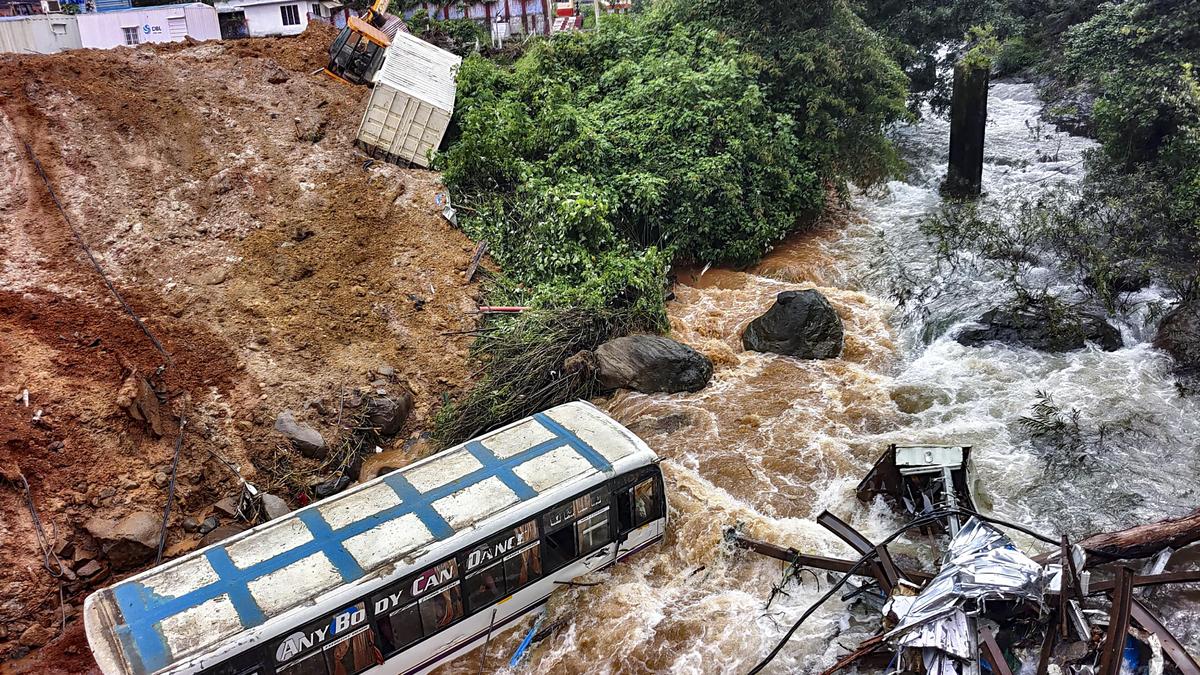
A devastating mudslide in Wayanad, Kerala, was triggered by heavy rains and poor construction practices, resulting in multiple casualties.
The Wayanad Catastrophe: A Convergence of Nature and Negligence
The devastating mudslides in Wayanad, Kerala, represent a tragic intersection of extreme meteorological events and systemic failures in land management. While the immediate trigger was the torrential rainfall characteristic of the region's monsoon season, the scale of the disaster was significantly amplified by human intervention. The tragedy underscores the precarious nature of habitation in the Western Ghats, where the delicate balance between ecological stability and human development has been dangerously disrupted.
The Role of Saturated Terrain and Undisposed Debris
At the heart of this disaster was the saturation of the soil, which reached a critical tipping point due to unrelenting rains. However, the presence of "undisposed mud" and construction debris played a lethal role. When soil is loosened during construction and left uncovered or improperly managed on steep slopes, it loses its structural integrity. This accumulated debris acts as a catalyst during heavy rains, transforming from stationary earth into a fast-moving slurry of mud and rock that crushes everything in its path. The physics of the landslide were worsened by this added mass, which increased the momentum and destructive power of the debris flow.
Systemic Failures in Construction Practices
Beyond the immediate debris, the broader issue of poor construction practices in the hilly terrains of Wayanad cannot be ignored. The development of infrastructure—ranging from roads to residential buildings—often involves cutting into the natural slope of the mountains. Without the implementation of rigorous engineering standards, such as the construction of reinforced retaining walls and efficient drainage systems, these modifications create inherent instabilities. The failure to adhere to sustainable building codes in ecologically sensitive zones has effectively turned residential areas into high-risk zones, where a single extreme weather event can trigger a total collapse of the hillside.
Ecological Degradation of the Western Ghats
To understand the Wayanad disaster, one must look at the historical ecological context of the Western Ghats. This UNESCO World Heritage site is known for its biodiversity, but decades of deforestation and the conversion of natural forests into monoculture plantations have stripped the land of its natural defenses. Tree roots act as a biological anchor, holding the soil together and absorbing excess rainwater. The removal of this vegetative cover, coupled with the aforementioned construction activities, has left the slopes vulnerable to erosion and mass wasting, making the region a powder keg waiting for a trigger.
The Amplification Effect of Climate Change
This event is not an isolated incident but part of a worrying trend of increasing rainfall intensity in Kerala. Climate change has altered the patterns of the South West Monsoon, leading to "cloudburst-like" events where a month's worth of rain falls in a matter of hours. When these extreme precipitation events hit terrain already weakened by poor construction and deforestation, the result is catastrophic. The Wayanad mudslides serve as a stark warning that traditional knowledge of weather patterns is no longer sufficient, and that infrastructure must be redesigned to withstand a new era of climate volatility.
Socio-Economic Implications and Human Cost
The human toll of the Wayanad disaster is profound, with multiple casualties and the displacement of entire communities. The tragedy highlights a socio-economic divide, as those living on the most precarious slopes are often the most vulnerable populations with the least access to safe housing. The loss of life and property is not just a statistic but a reflection of the failure to implement early warning systems and evacuation protocols that are tailored to the specific topography of the Ghats. The psychological trauma and economic ruin left in the wake of the debris will take years to recover.
Conclusion: The Path Toward Sustainable Resilience
In summary, the Wayanad mudslides were the result of a lethal synergy between natural rainfall and human negligence. To prevent future tragedies, there must be a paradigm shift in how the state approaches development in the Western Ghats. This includes a strict ban on unregulated construction on steep slopes, the mandatory restoration of degraded forests, and the implementation of a high-resolution landslide early warning system. Only by aligning human habitation with the ecological realities of the landscape can the region hope to mitigate the risks of future disasters.
Verification Required?