West Bengal professors oppose Govt.’s inter-university transfer Bill, call it an attack on education
Source Entity
India Latest News: Top National Headlines Today & Breaking News | The Hindu
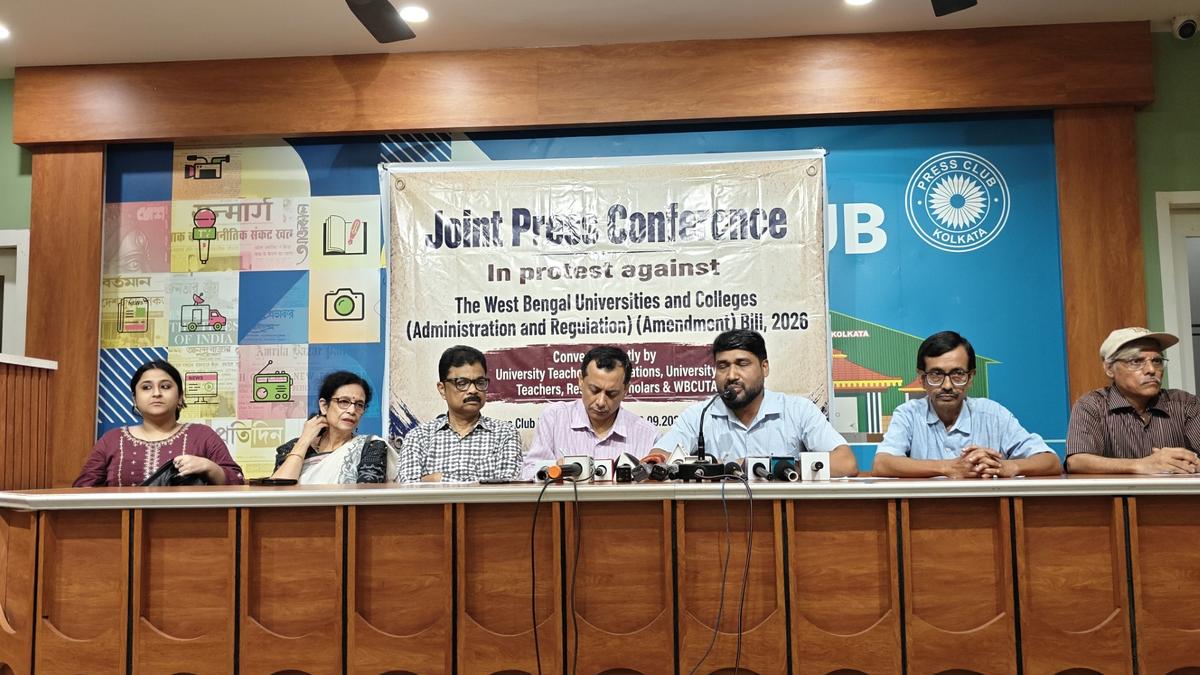
The West Bengal College and University Teachers’ Association is protesting the proposed 2026 University Transfer Bill. They argue it threatens academic autonomy and exacerbates existing faculty shortages.
The Controversy Over the West Bengal University Transfer Bill
The academic landscape in West Bengal is facing significant turbulence following the introduction of the West Bengal Universities and Colleges (Administration and Regulation) Amendment Bill, 2026. Tabled by Higher Education Minister Jagannath Chattopadhyay, the proposed legislation has ignited sharp criticism from the West Bengal College and University Teachers’ Association (WBCUTA). The association views this move as a systemic attack on the autonomy of higher education institutions, prompting a vow to intensify their protest if the Bill is not retracted.
The Impact of Faculty Shortages
At the core of the opposition lies the critical issue of human resource management within the state's universities. The WBCUTA has highlighted that most higher education institutes in West Bengal are currently operating with only 40-60% of their sanctioned teaching strength. Critics argue that implementing a transfer policy under such severe staffing deficits will destabilize departments, disrupt research continuity, and hinder the delivery of quality education to students who are already navigating resource-constrained environments.
Concerns Over Institutional Autonomy
Academic independence remains a central pillar of the discourse surrounding this Bill. Professor Partha Pratim Roy of Jadavpur University, a prominent member of the WBCUTA, has characterized the legislation as a direct assault on the institutional autonomy of universities. The fear is that arbitrary transfers will undermine the unique academic atmosphere of individual centers of excellence, effectively diluting the specific pedagogical cultures that define institutions like Jadavpur University.
The Role of the Chancellor
In response to the legislative tabling, the WBCUTA has adopted a strategy of procedural engagement. The association intends to formally appeal to the Governor of West Bengal, who holds the constitutional position of Chancellor of Universities. By leveraging this channel, the teachers' body hopes to exert pressure on the administration to reconsider the implications of the Bill before it progresses further through the legislative process.
Broader Implications and Future Trends
This conflict reflects a broader national tension between state-level administrative control and the preservation of academic freedom within higher education. If the Bill is passed in its current form, it may set a precedent for increased bureaucratic oversight in university affairs. The future of this movement likely depends on the Chancellor’s intervention and the ability of the WBCUTA to mobilize broader support, potentially setting the stage for a prolonged standoff between the state government and the teaching community regarding the governance of higher education in West Bengal.
Verification Required?