Review: Who Owns the Past? by Shaan Kashyap
Source Entity
Latest News: Todays Latest News Headlines from India & World | Hindustan Times | Hindustan Times
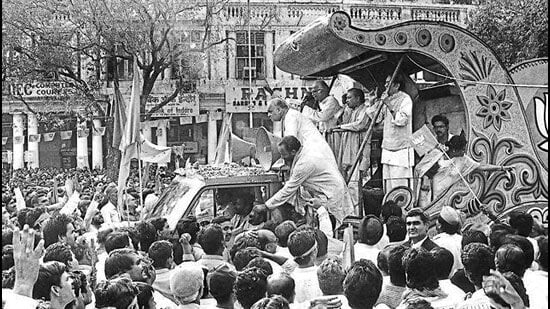
Shaan Kashyap's 'Who Owns the Past?' examines the contentious struggle for historical narrative control in India. The book explores how politicians, historians, and the public vie for authority over India's complex and often turbulent heritage.
The Battle for India's Historical Narrative
Shaan Kashyap’s latest work, Who Owns the Past?, serves as a critical examination of the volatile intersection between historical scholarship and political legitimacy in India. The book meticulously traces the evolution of modern Indian historiography, highlighting how the past is rarely a static record but rather a dynamic, often weaponized entity. Kashyap argues that in the Indian context, historical interpretation is not merely an academic exercise; it is a central pillar of national identity and political discourse.
The Fragmentation of Authority
Kashyap identifies a fractured landscape where professional historians, who once held a near-monopoly on interpretive authority, now find themselves competing with a diverse array of actors. From politicians seeking to cement their legitimacy through historical revisionism to popular writers and social media influencers who simplify or dramatize complex events, the authority to define 'the truth' has become increasingly decentralized. This shift has turned history into a site of constant conflict, where even minor details—a textbook passage or a campus lecture—can ignite national debate.
Historical Conflict as a Political Tool
Central to the book's analysis is the role of political mobilization in shaping public perception of history. Kashyap cites the 1990 Ram Rath Yatra, initiated by LK Advani from Somnath, as a watershed moment that fundamentally altered the relationship between historical memory and electoral politics. By linking the Ram Janmabhoomi movement to a wider public consciousness, the Yatra demonstrated how historical grievances could be leveraged to build significant, sustained political support, effectively turning the past into a catalyst for modern political change.
The Impact of Modern Media
Kashyap further explores how media platforms have accelerated the polarization of historical narratives. Television serials, which often simplify complex historical nuances, and social media, which frequently weaponizes isolated facts to serve contemporary agendas, have moved history from the library to the public square. This democratization of the past, while seemingly inclusive, has often led to the erosion of nuanced scholarship, as popular sentiment frequently overrides rigorous historical analysis.
Conclusion: The Future of Historical Memory
Ultimately, Who Owns the Past? serves as a poignant reminder that history in India is a living, breathing, and often painful component of the present. As religious movements continue to sanctify certain narratives and political entities seek to instrumentalize others, the public remains caught in the middle of a struggle for ownership. Kashyap’s work invites readers to critically engage with how their own understanding of history is being shaped, manipulated, and curated by the competing interests of modern India.
Verification Required?